
This is a big glossy wall calendar with beautiful photos of gardens around the world on lovely thick paper, and I originally planned to take it apart and use the photos to make some journal pages, which I then never got around to doing. Here's how each page in the calendar looked:

I took out the two staples holding all the pages together and cut each one in half to separate the pictures:

It took a while to figure out how to use the pictures. I knew I didn't want to use the monthly grids, and I thought of all the craft blogs I've seen use old calendars to make pretty envelopes. That sparked the light bulb for me, and I folded each picture over in half, then in half again so that the grid was on the inside, and the photo faced out:

This produced twelve rather gorgeous signatures:

Once I had them folded I could see how to make each signature into two pockets. First I stitched each open end of the signatures with some embroidery floss:


Once I had all the signatures stitched up, I used the sewing machine to stitch them to a long piece of the calendar's cardboard cover, which I cut and folded into a cover for my pockets. Sewing down the fold of each signature created two pockets (and if you try this, remember to keep the open/unstitched end up as you sew each signature to the cover):

Once all the signatures were stitched to the cover, I had a completed journal. It came out so nice I used last year's Victorian calendar to make another one, and this time I used the sewing machine for all the stitching:

Here's the inside of the garden calendar pocket journal:

And the inside of the one I made from the Victorian calendar:

What can you do with a pocket journal? Save the little stuff! I'm going to use one of mine for some ribbon and Venise lace I frequently use, but you can also pocket your mementos, receipts, notes, photos, postcards, cookie fortunes, letters, or index cards in this type of journal. As a gift for a writer pal you could make one and stuff the pockets with writing prompts, or recipes for a friend who likes your cooking:

What I learned from this project is to keep in mind what purpose you want your recycled journal to serve, and take your time figuring out how to use your materials in interesting ways. Total project time: 2 nights @ 4 hours for the garden journal, and 1 night @ 4 hours for the Victorian journal.


 My second book from Library Thing's Early Reviewers program is The Cybrarian's Web 2 ~ An A-Z Guide to Free Social Media Tools, Apps and Other Resources by


 I don't often put non-writing contests on the blog, but PBW has a lot of quilters and fabric fans who visit, so this one might tempt some of you:
 Just as I'm settling in with the new computer, our modem decided to start acting up. We've replaced the problem component but if for any reason I'm not around to approve comments it's likely because I am temporarily out of internet access.
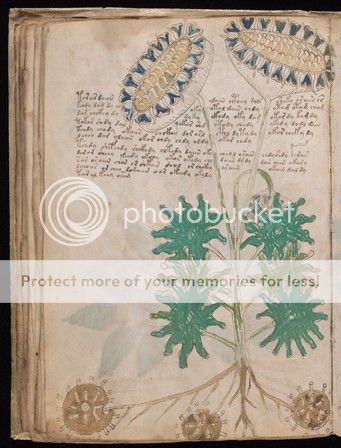 Books with mysterious reps, bizarre origins or that contain puzzles of any kind fascinate me. What's not to like about the world's longest secret novel, created by the incredible self-taught writer/illustrator
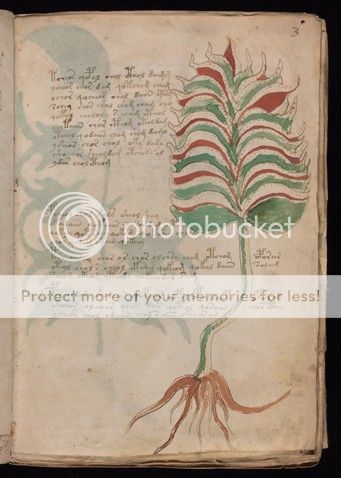 The Voynich manuscript likely predates the Gutenberg printing press, and I agree with experts who don't believe it is a hoax or gibberish because back then it was very time-consuming and expensive to create books. All the work had to be done by hand, often by monks in monasteries. This book doesn't have that Eau de Scriptorium about it, however. It's no Da Vinci notebook, either, but it reminds me of him.


 I've finally got the new computer up and running, and the usable parts of the old one here will be donated to our pubic high school. I'm also checking with a local group that recycles old/scrap computer stuff to see if they can do something with the old tower.


 If you could step into a time machine and visit any SF universe (including your own), what would you choose as your destination, and why?


