I spotted a couple of new anthology listings over at Ralan.com that I thought I'd pass along:
Bete Noire magazine has an open call for their second annual anthology For all Eternity ~ Tales of the Seven Deadly Sins: "We will be looking for stroies base on ONE of the following sins: Envy, Greed, Gluttonly, Lust, Pride, Sloth, and Wrath. We're sorry, but for the concept we're going for here we are not accepting poetry, reprints or artwork for this anthology. Our guidelines are simple. All stories MUST be based on ONE and ONLY ONE sin. Since we are accepting only seven stories for this project our acceptable word count has changed." Length: 3-6K (firm); Payment: "1 cent a word US, plus one copy." Electronic submission only, see guidelines for more details. Deadline: "July 31st or until filled."
The Future Fire has an open call for their We See a Different Frontier anthology, and would like submissions of: "...new speculative fiction stories in which the viewpoint is that of the colonized, not the invader. We want to see stories that remind us that neither readers nor writers are a homogeneous club of white, male, Christian, hetero, cis, monoglot anglophone, able-bodied Westerners. We want the cultures, languages and literatures of colonized peoples and recombocultural individuals to be heard, not to show the White Man learning the error of his ways, or Anglos defending the world from colonizing extraterrestrials. We want stories that neither exoticize nor culturally appropriate the non-western settings and characters in them." Length: 3-6K, Payment: "$0.05 per word, with a minimum payment of $50, plus the possibility of royalties if sales are good enough." On reprints: "We are unlikely to be interested in reprints unless they were published only in a market that is not well-known to an anglo-american SF audience, but in any case please query before sending a reprint, explaining when and where the story has appeared before." Electronic submissions only, see guidelines for more details. Deadline: midnight GMT, September 14th, 2012.
Also, for our writer pals on the other side of the planet: The city of Rockingham (located in Western Australia) is holding a short fiction contest, details here. From what I can make out you write a story to fit the theme of an image provided on the submission form; entry length is 1-3½k, and there is no fee involved. They have a number of nice cash prizes and gifts for the winners, although they don't want to see any reprints or electronic submissions. Do check out the guidelines for more details. Deadline for this one is October 12th, 2012.
Saturday, July 21, 2012


Friday, July 20, 2012
Making Books Interactive
Here's an interesting glimpse of one possible future for children's e-books; a video ad for an iPad app that allows the reader to interact with a story as they read it (also has some background music):
The Fantastic Flying Books of Mr. Morris Lessmore iPad App Trailer from Moonbot Studios on Vimeo.
Thursday, July 19, 2012
Worth a Hundred Thousand Words
Sorry I'm late posting today; Photobucket is being ornery for some reason.
 While sorting through a box of photos at my favorite art store I found this uncredited image for sale. At first glance it looked like an illustration of that old chestnut take a long walk off a short pier. Something about it nudged my imagination in a different direction, though, so I added it to my stack of stuff.
Inspiration and imagination combined always produce some interesting results. Although the image seems grim, it delighted me. I've walked along a hundred piers like this because I've always loved the sea at night. I can't even tell you how much of my life I've spent sitting on the sand or perched on the end of a pier watching the moonlight on the water. One of my earliest memories became a journal entry about how as kids we used to spend hours running around after dark rescuing newborn loggerheads. My happy associations then blossomed into a poem about my guy and our magical first date, also at the beach. Now it's starting to grow into a story, and while I'm not sure where it's going, I've learned to leave it alone and give it time to percolate.
A few years ago I took this photo by the sea:

Some of you might even remember the blog post I wrote about it. The inspiration didn't end there; it kept growing in my head until I had the beginnings of a story. As I was outlining the original idea I realized my story pic was bigger than a short -- much bigger. While I had my doubts, I went along for the ride, taking notes as characters and situations began to take shape. As they did the grafitti took on new meaning, which became the flow of the plot as I asked and answered all the questions it brought to me: What makes us master ourselves? What drives us to take control of our lives? What happens to those who won't, or can't? What if someone had the ability to steal that from you, and take you over at any moment, and make you do anything they wanted?
Interested in more? You can read the rest of the story by investing in my novel Nightbred, due out in December.
Expecting a single photo or image inspiration to grow into a book is unrealistic, of course. Sometimes an appealing picture is just that -- a picture that you enjoy or that invokes happy memories. Every now and then, however, you will find an image that is more than a visual delight -- and you'll know it because it opens a kind of window in your head and expands as it shows you what no one else can see. Your job as a storyteller is to show others what you've seen through that window.
You can't do that if you only take a few seconds to look, so give it time. Make a hard copy of the image or photo and keep it over your desk or make it the cover of a notebook. Don't put yourself on a time limit, either; with my Master Yourself photo it took about four years from the day I took the shot to the day I wrote the last word of the novel it inspired. Keep looking at your image, keep thinking about it, and in time you may find an entire new world waiting to be explored.
While sorting through a box of photos at my favorite art store I found this uncredited image for sale. At first glance it looked like an illustration of that old chestnut take a long walk off a short pier. Something about it nudged my imagination in a different direction, though, so I added it to my stack of stuff.Inspiration and imagination combined always produce some interesting results. Although the image seems grim, it delighted me. I've walked along a hundred piers like this because I've always loved the sea at night. I can't even tell you how much of my life I've spent sitting on the sand or perched on the end of a pier watching the moonlight on the water. One of my earliest memories became a journal entry about how as kids we used to spend hours running around after dark rescuing newborn loggerheads. My happy associations then blossomed into a poem about my guy and our magical first date, also at the beach. Now it's starting to grow into a story, and while I'm not sure where it's going, I've learned to leave it alone and give it time to percolate.
A few years ago I took this photo by the sea:
Some of you might even remember the blog post I wrote about it. The inspiration didn't end there; it kept growing in my head until I had the beginnings of a story. As I was outlining the original idea I realized my story pic was bigger than a short -- much bigger. While I had my doubts, I went along for the ride, taking notes as characters and situations began to take shape. As they did the grafitti took on new meaning, which became the flow of the plot as I asked and answered all the questions it brought to me: What makes us master ourselves? What drives us to take control of our lives? What happens to those who won't, or can't? What if someone had the ability to steal that from you, and take you over at any moment, and make you do anything they wanted?
Interested in more? You can read the rest of the story by investing in my novel Nightbred, due out in December.
Expecting a single photo or image inspiration to grow into a book is unrealistic, of course. Sometimes an appealing picture is just that -- a picture that you enjoy or that invokes happy memories. Every now and then, however, you will find an image that is more than a visual delight -- and you'll know it because it opens a kind of window in your head and expands as it shows you what no one else can see. Your job as a storyteller is to show others what you've seen through that window.
You can't do that if you only take a few seconds to look, so give it time. Make a hard copy of the image or photo and keep it over your desk or make it the cover of a notebook. Don't put yourself on a time limit, either; with my Master Yourself photo it took about four years from the day I took the shot to the day I wrote the last word of the novel it inspired. Keep looking at your image, keep thinking about it, and in time you may find an entire new world waiting to be explored.
Wednesday, July 18, 2012
Now or Later
 I've noticed something about the times in which we live: we can get everything we want, often instantly, without leaving home. Need to talk to someone? Text or call them on their smart phone. Want to watch a movie? Get it on demand on your TV or by streaming download online. Need to gift shop? Buy from the internet and have it shipped to your house. Want a newly released book? Get it in five seconds by wireless download on your e-reader. Want a romance? Go to an online dating site and be "matched" with those most likely to appeal to your heart (or attend one of those speed-dating sessions and meet ten or twenty prospects in under an hour.)
It seems like everything we need has become or is becoming immediate and utterly convenient. Considering how volatile fuel prices are I think this is (somewhat) a good thing. Telecommuting jobs are becoming more available, too. Someday soon we might not need cars or a job away from home. One day we might not have to step one foot out of the front door for anything but our own pleasure.
If we have any time left for it, that is.
The downside to this right-now, can't wait, must-have culture of immediacy is less noticeable, but it's there, lurking in the shadows behind the touch pads and the one-cup coffeemakers. We have no time for ourselves anymore. All the time people save with these time-saving devices and services is spent doing more stuff rather than less.
Technology has made privacy and personal time obsolete. If you're not telling the world your thoughts and activities by the minute, or making yourself accessible to others 24/7, people actually become angry with you. They regard it as a form of insult. Ask someone to turn off their phone for a day -- just 12 hours -- and they'll likely tell you they can't. Someone might text them, and woe be on the head of anyone who doesn't text back immediately.
I've also observed that with so many choices to make everyone is becoming collectively indecisive. I think it's sheer confusion combined with mental exhaustion. With all the stuff you have to do, how can anyone keep it straight? Just think about what we do online. Have you checked your Twitter, your Facebook, your e-mail, your LinkedIn, your blog, your comments today? How many hours will you spend trying to keep up with all of it? How much defeat and guilt do you feel when you can't? I mean, hey, everyone else does it . . .
I don't, but even I fell victim to the culture of immediacy earlier this year when I allowed myself to be inundated by the must-have-it-now needs of others. Somehow I was persuaded to juggle two deadlines, a contract negotiation, a book production, a variety of domestic crises and various projects others needed me to do for them. As a result I didn't have time to update my events calendar, but I was sure I had everything straight in my head. I was so tired and frazzled that I didn't realize I'd inverted two dates in my memory. As a result I missed by one weekend one of my favorite annual events; one I have attended faithfully the last seven years. That was a sign to me that I needed to stop, think, regroup and reorganize my time, and weed out some of the unnecessary activities inflicted by others to focus on those that were important to me and my well-being.
Unless the planet is hit by a massive EMP I don't see it getting better anytime soon, so it's up to us to deal with this problem. If you find you're being stretched too thin by all that's expected of you, here are some suggestions on how to eliminate the unnecessary, make better decisions and take back at least some of all that time you're supposed to be saving:
Deviceless Day: We used to have these things called weekends, during which we were off duty and free to do pretty much whatever we liked. Remember those? I won't be so crass as to suggest we return to that lovely practice, but it doesn't hurt to choose one day each week to shut off all the phones, computers and other electronics and make it your personal Deviceless Day. To avoid affronting your coworkers, family and friends, let everyone know in advance that on that day you will not be available to them at all.
Live By the 1:2 Time Ratio: For every hour you give up to the culture of immediacy, reserve two hours for yourself. That means if you spend an hour tonight online updating stuff, you should spend two hours doing something that relaxes you or that you personally enjoy.
Narrow Your Choices: Often people have towering stacks of books, movies, CDs and games that they never read, watch, listen to or play because they can't decide what they want. Since you can get practically anything immediately it is tempting to hoard stuff. To combat this, use the finish-first approach by not buying new books or other forms of entertainment until you've finished your latest purchase. This is tough to do, but if you stick with it you'll find you spend less and enjoy more.
Ward off the Immediacy of Others by Making Decisions: Someone has to make a decision; it might as well be you. For example, I've always asked my family what they'd like for dinner, but often they couldn't give me an answer. Every night I had conversations like this: Italian? Maybe. Asian? Well . . . Burgers and fries? Hmmmm. Not sure. They tried at first to counter my question by giving me that Magic 8-Ball answer of saying they'd let me know later. And then they tried to wait to the very last minute. Since I happen to be decisive, and I'm running a home, not a restaurant, gradually I began ignoring their stall tactics and making the choices myself. When there were objections, I told them that anyone who complains about what I make is then given dinner-making duty for the next night. Now they either let me know what they want, or eat what I choose without a peep. Apply the same logic to any immediacy problem your family or loved ones present to you and you'll find it solves it rather quickly.
Work Your Passions While Accepting Your Limitations: For many reasons I am not suited to participating in social media; thus I have never texted, Twittered, Facebooked or any of that stuff. I know it can be fun, it's a decent promotional tool, and I would probably sell a few more copies of my books if I devoted myself to all the various aspects of it. I also envy other authors who handle it so well. That said, I understand that it's not for me, and I've accepted that unhappy fact. So I devote the time I would spend on it doing what I am good at it, which is writing books, talking about books, teaching, finding free resources and helping other writers when I can -- all the things about which I'm passionate and (unlike social media) that I love. By doing this I've inadvertently developed my own form of social media; this blog, the connections I've made through writer friendships and getting to know my colleagues in a less conventional manner. Bottom line: do what you love and you never regret a single second of the time and energy you spend on it.
Photo credit: David Hughes
Tuesday, July 17, 2012
Roll With It
Most writers are familiar with haiku, a form of Japanese poetry composed in three lines of words that total seventeen syllables (five in the first line, seven in the second, and five in the third.) Haiku are deceptively simple-looking; at first glance they seem like little more than small snapshot observations of nature or life. Then the underlying meaning starts to sink into your brain and spread out, often swelling into something of cosmic proportions.
I often write haiku, and while I've never aspired to create the cosmic variety I enjoy the challenge of the form. I regularly use the nature photographs I take as inspiration (all really great haiku have some allusion to nature in them.) Until my last run to the art store I've never seen anything about haiku except a few books, and then I passed a sale table and spotted this:

Haikubes are made by Forrest-Pruzan Creative, and distributed by Chronicle Books (the same publisher I've been stalking for their journals.) Basically this is a box of 63 word cubes which you roll like dice and then arrange into haiku:

Each word haikube contains five words, and whichever one lands face up is the one you can use for your poem (two of the cubes have words that offer a specific direction and theme to inspire and guide you, and the rest are your poem building blocks.) All of the word cubes also have a blank side. When the blank face came up during one of my rolls, I interpreted that as cosmic permission to use any of the five words on the cube; one could also use it to create a blank space in a line to fill in with a word of your choice.
Once you've perfected your poem and are ready to put your haikubes away you can arrange the set to display your haiku on the very top layer of the box, like so:

Poetry is a creative battery-charger for me; like journaling it's the writing I do most often for myself. Composing haiku helps me get more in tune with the world around me as well as my inner worlds, and seems to restore a balance between my perceptions and my emotions. As a storyteller I find it valuable, too. When I'm having a difficult time with a character, occasionally I'll write a haiku about them or from their POV, and that tends to shift my focus around the problem I'm having to what I need to know to solve it.
Haikubes aren't cheap -- the set lists online for $24.95 at the publisher's site. I got mine for 50% off, and now that I've tried them I'm going to make another trip to the art store to see if I can get a couple more sets for a future giveaway (I know, I should have grabbed them while I was there, but I wanted to test drive the set first.)
Meanwhile I do have another online giveaway to steer you to -- Tiger Pens Blog is giving away a Kaweco Classic Sport fountain pen in blue (the nibs on these pens are especially nice and have a beautiful flow.) They're also willing to ship internationally, so everyone has a chance. If you'd like a shot at winning, stop in and leave a comment on the giveaway post here.
I often write haiku, and while I've never aspired to create the cosmic variety I enjoy the challenge of the form. I regularly use the nature photographs I take as inspiration (all really great haiku have some allusion to nature in them.) Until my last run to the art store I've never seen anything about haiku except a few books, and then I passed a sale table and spotted this:
Haikubes are made by Forrest-Pruzan Creative, and distributed by Chronicle Books (the same publisher I've been stalking for their journals.) Basically this is a box of 63 word cubes which you roll like dice and then arrange into haiku:
Each word haikube contains five words, and whichever one lands face up is the one you can use for your poem (two of the cubes have words that offer a specific direction and theme to inspire and guide you, and the rest are your poem building blocks.) All of the word cubes also have a blank side. When the blank face came up during one of my rolls, I interpreted that as cosmic permission to use any of the five words on the cube; one could also use it to create a blank space in a line to fill in with a word of your choice.
Once you've perfected your poem and are ready to put your haikubes away you can arrange the set to display your haiku on the very top layer of the box, like so:
Poetry is a creative battery-charger for me; like journaling it's the writing I do most often for myself. Composing haiku helps me get more in tune with the world around me as well as my inner worlds, and seems to restore a balance between my perceptions and my emotions. As a storyteller I find it valuable, too. When I'm having a difficult time with a character, occasionally I'll write a haiku about them or from their POV, and that tends to shift my focus around the problem I'm having to what I need to know to solve it.
Haikubes aren't cheap -- the set lists online for $24.95 at the publisher's site. I got mine for 50% off, and now that I've tried them I'm going to make another trip to the art store to see if I can get a couple more sets for a future giveaway (I know, I should have grabbed them while I was there, but I wanted to test drive the set first.)
Meanwhile I do have another online giveaway to steer you to -- Tiger Pens Blog is giving away a Kaweco Classic Sport fountain pen in blue (the nibs on these pens are especially nice and have a beautiful flow.) They're also willing to ship internationally, so everyone has a chance. If you'd like a shot at winning, stop in and leave a comment on the giveaway post here.
Monday, July 16, 2012
Winners
Thanks to all of you who volunteered to be my lab rats test subjects for the book drop experiment giveaway. This was so much fun I'm definitely going to do it again.
In the meantime, we cranked up the magic hat, and the winners are:
Margarent M. Fisk, who is "in it for the story, so it's hard to limit." (Limits? Hey, we don't need no limits)
Kaplooey Mom, who likes "books where the hero or heronine saves the day/world/universe and gets their romantic interest of choice. Humor is a bonus. All else is brain candy." (I am so stealing that last phrase.)
DeeCee, who refused to accept defeat by Google Chrome, and likes "UF/PNR that have multiple book story arcs with fewer than 10 TSTL moments." (Now I want to borrow some of your books.)
Winners, when you have a chance please send your full name and ship-to address to LynnViehl@aol.com, and I will commence the book drops. My thanks to everyone for joining in, and I'll report back on the winners' reactions once they have a chance to read their books.
Sunday, July 15, 2012
They Finally Got Me

It's mine, thanks to my lovely family, who decided to drag me into the twenty-first century and the E-Future by giving it to me for my birthday. So now I have to learn how to use one.
Here's a peek at the first book I bought (which is ridiculously easy, and now I get why people are buying so many e-books):

Works of e.e. cummings, which is not a complete works (which I would have preferred) but includes The Enormous Room, the one novel he wrote that I've never read. I also wanted Edward to be the first author on my e-reader; he's always brought me luck.
My other purchases: Marjorie Liu's Hunter Kiss novels, because that's the one series I want to take with me wherever I go, and I assume this thing will be traveling with me. I also invested in Carolyn Jewel's Free Fall as my first indie author buy.
So now I'm curious -- if you have an e-reader, what was the first book you bought for it, and why?
Saturday, July 14, 2012
Book Dropping
I read a neat article this morning about a dedicated knitter in Cambridge who participates in yarnbombing -- the practice of anonymously leaving or covering something in a public place with knitted or crocheted work. Some of these projects aren't small, either; I've seen a photo of a tank covered by a yarnbombing (which you can check out too if you scroll down here.) While some people don't care for the practice I think it's charming.
I've often handed out my books to strangers in public a few times, but I always ask first if they'd like one. Just shoving a book into someone's hands seems a bit rude to me. I've also read about releasing books in the wild, ala Book Crossing, but I've never purposely left books in a public place to be found by anyone (accidentally, however, I have -- and I apologize to whoever found my old copy of Brave New World on that park bench three years ago.) I think my main hesitation is the prospect of a child too young to be reading my adult fiction picking up the book and reading it without letting Mom and Dad know. Under those circumstances some books can be like Pandora's box.
I most like finding out what people enjoy reading and without warning giving them books I think they'll appreciate. I think of those as book drops -- the gift of a story I believe is suited to the recipient but that they don't expect. I have pretty good luck with matching the book to the person, too.
Today I want to try a controlled book drop experiment -- on you all, of course. In comments to this post let me know in general what sort of stories you enjoy reading (and it seems to work better if you don't tell me the names of your favorite titles or authors, but instead describe the type of story) by midnight EST on Sunday, July 15th, 2012. I'll choose three names at random from everyone who provides me with a description, and send the winners a book I think they'll enjoy reading. In return, I ask that the winners tell me after they've read the book what they thought of it so I can post the answers here on the blog. This giveaway is open to everyone on the planet, even if you've won something at PBW in the past.
Friday, July 13, 2012
Survival Kits
The last time I went book shopping at BAM I also found an odd little survival kit:

How many items useful for survival purposes could you fit in a sardine can, anyway? To find out I brought it home and popped it open:

It's cute, but from my ex-military POV it's not really practical. The matches, compass, razor blade and the can itself are okay, but I'd probably dump the rest and replace them with a decent Swiss Army knife, water purification tablets and as many high-calorie food bars as I could fit in the can. Or I'd give up all of it for a knife, a comprehensive medical kit and a functioning personal locator beacon.
When I travel I always take the things I can't live without while I'm away from home in my own personal sanity survival kit: my camera, a journal, a notebook, a variety of pens, a paperback to read, a small sewing or quilting project, music CDs or an audio book for the car, a partial manuscript to edit and a smart keyboard. I can usually fit all that into a small tote bag, but if I have to sacrifice anything I'll give up the paperback (as long as I know I can get to a book store at my destination.) If I have extra room, I'll add a research book or a new magazine.
What do you need to survive when you travel? Let us know in comments.
How many items useful for survival purposes could you fit in a sardine can, anyway? To find out I brought it home and popped it open:
It's cute, but from my ex-military POV it's not really practical. The matches, compass, razor blade and the can itself are okay, but I'd probably dump the rest and replace them with a decent Swiss Army knife, water purification tablets and as many high-calorie food bars as I could fit in the can. Or I'd give up all of it for a knife, a comprehensive medical kit and a functioning personal locator beacon.
When I travel I always take the things I can't live without while I'm away from home in my own personal sanity survival kit: my camera, a journal, a notebook, a variety of pens, a paperback to read, a small sewing or quilting project, music CDs or an audio book for the car, a partial manuscript to edit and a smart keyboard. I can usually fit all that into a small tote bag, but if I have to sacrifice anything I'll give up the paperback (as long as I know I can get to a book store at my destination.) If I have extra room, I'll add a research book or a new magazine.
What do you need to survive when you travel? Let us know in comments.
Thursday, July 12, 2012
Not So Blank Books Part II
As I mentioned last month, my latest quest is to explore the latest types of ready-made journals and find those that offer a little more for the user than the usual blank pages. Last time Diana Gillette recommended in comments the terrific journals published by Chronicle Books, and now that I've hunted down some of their offerings I'll definitely second her opinion.
Here are my latest finds:

Chronicle Books' Treetop Journal. Colored and decorated pages in ten different repeating theme designs. I like the quality of the paper and the size, and the playful design of the pages has universal appeal. $9.95 list; I got mine for $8.96 at BAM.

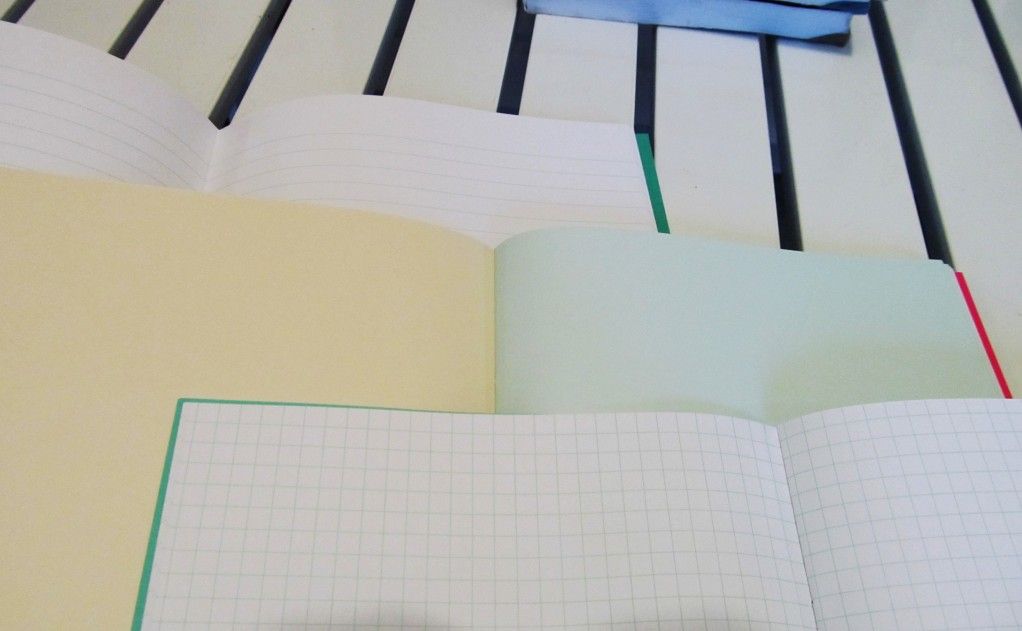
Liberty Art Fabrics Journal Set from Chronicle Books. Three slender notebooks, each with covers depicting various patterns from Liberty Arts Fabrics. One is ruled, one is blank colored pages, and the third has graph paper. I thought these would be handy for research trips; a writer could jot down notes in the ruled book, make sketches in the unlined book, and chart or map locations in the graph book. $14.95 for the set of three; I bought this set for $13.45 at BAM.
(From here click on the links to see photos of the journals and their pages.)
My Listography Journal, published by Chronicle Books' Kid division. I've seen variations of these guided journals everywhere; they offer prompts on every page for making lists. This one is personally themed, so you'd use it to list all the stuff about you in response to the prompts (what you dislike, places you've vacationed, your favorite bands, etc.) This one would be excellent for first-time journalers as well as writers (the journal would be a fun way to get to know one of your characters better by filling it out for them instead of yourself) $12.95; I bought mine for $11.65 at BAM.
I Heart Every Thing journal, also from Chronicle Books. This one has unruled white pages with lightly decorated borders; a great journal for writers who sketch or want to use visuals. Discounted at BAM for $5.00; I got it for $4.50.
Mental Floss journals with ruled white pages and elastic corner closure bands. Every couple of pages you'll find a bit of oddball trivia to inspire you. BAM has these discounted at $5.00 each (originally $12.99) and my discount card brought them down to $4.50 each. Note on the condition of these two: because they were in the discount bin and not covered with protective cello they were a bit dinged on the covers and had some light soiling on the page edges. To deal with wear and tear like this I remove the soiling with a kneaded eraser and hide the worst of the dings with a book cover or added embellishments.
Next up: Like journals, notebooks are also evolving, and I'm in the process of collecting some very unusual examples. Stay tuned for part three of my quest report, and you'll have a chance to win your own not-so-blank book.
Here are my latest finds:
Chronicle Books' Treetop Journal. Colored and decorated pages in ten different repeating theme designs. I like the quality of the paper and the size, and the playful design of the pages has universal appeal. $9.95 list; I got mine for $8.96 at BAM.
Liberty Art Fabrics Journal Set from Chronicle Books. Three slender notebooks, each with covers depicting various patterns from Liberty Arts Fabrics. One is ruled, one is blank colored pages, and the third has graph paper. I thought these would be handy for research trips; a writer could jot down notes in the ruled book, make sketches in the unlined book, and chart or map locations in the graph book. $14.95 for the set of three; I bought this set for $13.45 at BAM.
(From here click on the links to see photos of the journals and their pages.)
My Listography Journal, published by Chronicle Books' Kid division. I've seen variations of these guided journals everywhere; they offer prompts on every page for making lists. This one is personally themed, so you'd use it to list all the stuff about you in response to the prompts (what you dislike, places you've vacationed, your favorite bands, etc.) This one would be excellent for first-time journalers as well as writers (the journal would be a fun way to get to know one of your characters better by filling it out for them instead of yourself) $12.95; I bought mine for $11.65 at BAM.
I Heart Every Thing journal, also from Chronicle Books. This one has unruled white pages with lightly decorated borders; a great journal for writers who sketch or want to use visuals. Discounted at BAM for $5.00; I got it for $4.50.
Mental Floss journals with ruled white pages and elastic corner closure bands. Every couple of pages you'll find a bit of oddball trivia to inspire you. BAM has these discounted at $5.00 each (originally $12.99) and my discount card brought them down to $4.50 each. Note on the condition of these two: because they were in the discount bin and not covered with protective cello they were a bit dinged on the covers and had some light soiling on the page edges. To deal with wear and tear like this I remove the soiling with a kneaded eraser and hide the worst of the dings with a book cover or added embellishments.
Next up: Like journals, notebooks are also evolving, and I'm in the process of collecting some very unusual examples. Stay tuned for part three of my quest report, and you'll have a chance to win your own not-so-blank book.
Wednesday, July 11, 2012
Off to Play
I'm taking the day off to hang with my other people and enjoy some summer fun. While I'm out, do check out this very cool video from Glen Milner about the birth of a book, UK style.
Birth of a Book from Glen Milner on Vimeo.
Tuesday, July 10, 2012
LEGO® Logic
Whoever invented LEGO® blocks understood that there is a little world-builder in every kid, one who needs only a simple but intriguing set of materials to create something amazing. Anyone who has ever built a LEGO® creation knows how satisfying it is to fit those pegged blocks together while figuring out the construct. The best part is the creation never has to be permanent; you can use the same blocks over and over to make new worlds.
 The same is true of storytelling. Words are our building blocks, and they can be sorted and combined and recombined to form an infinite number of characters, plots and worlds. Because we all build according to our imaginations we don't need a new set of construction materials every time we start a story. You can give the same set of words or story ideas to ten writers, and you'll get back ten different creations.
Today I'm going to apply some LEGO® logic to our characters. As with everything in the story, they are created from a series of components that when fitted together form a person. Here I've put together a little male protagonist, aka Our Hero. At first glance he seems like a happy if somewhat fashion-challenged dude. Irish, likes green, needs a shave. We'll call him Lucky, which he really won't be.
Lucky is made up of very specific parts: physical characteristics, personality, personal talents, intelligence, experience, etc. If we were to sort these character components into four major groups using the word LEGO as our inspiration, we might call them this:
Liabilities -- the flaws, limitations and other aspects of the character that in some way handicap or hinder.
Extras -- the assets, talents and other aspects of the character that in some way help or facilitate.
Goals -- any or all of the character's desires and ambitions.
Obstacles -- that which stands between the character and the goals.
Naturally characters are much more complex than this, but to create them you can use these four categories as a starting place or foundation on which you can build. Let's look at Lucky again and sort him out according to our LEGO categories:
 Liabilities: he doesn't blend in too well in our world. He has problems relating to other people. He seems over-confident, probably because he relies on magic to deal with his problems.
Extras: he's cute, which makes everyone think he's harmless. When people see him they think they've found a treasure. As long as his magic hold ups, he's financially independent.
Goals: Lucky wants to hang on to his wealth, meet a nice Irish girl and settle down somewhere at the end of the rainbow.
Obstacles: Girls don't take him seriously. Everyone else thinks they're entitled to his gold and are constantly hunting for him. The magic that he's always taken for granted is about to fail him.
 Lucky wouldn't be much of a protagonist without some challenges, so he needs this guy: our antagonist, Gruesome. As dark as Lucky is light, Grue is a scowling, black-hearted fully-armed disaster waiting to happen. Grue doesn't much like Lucky, and he'll be happy to relieve him of that beanpot of gold, his hat and, if Lucky stands still long enough, his head.
 But why is Grue such a bad guy? He's made up of the same parts as Lucky; his are just different:
Liabilities: Grue has an attitude problem, a rotten temper and a terrible case of perpetual halitosis.
Extras: He has a sword of unimaginable power, a lair filled with minions, and black magic.
Goals: Lucky's gold, Lucky's magic and any girl Lucky manages to snare.
Obstacles: No one is ever happy to see Grue. His armor is one size too small. The minute he opens his mouth everyone runs.
 Lucky will have to deal with Grue, but he may also have another character running major interference in his life. For some of us that's a secondary protagonist like Hilda here. Don't let her easy smile or silly costume fool you; she's a tough chick. As the third side of a story character triad Hilda brings her own personality to the table. She may be Lucky's polar opposite, but you can be sure that on some level she has a bond with her fellow protagonist -- even if the only thing they have in common is not liking Grue.
I'd sort out Hilda like this:
Liabilities: Hilda's had her heart broken so she doesn't trust anyone. Her suspicious nature borders on paranoid. She's so broke she's agreed to wear a silly costume and dance on the side of the road to make rent money.
Extras: Hilda is honest and compassionate. The costume she puts on endows her with magical abilities. Using her last buck she buys a ticket that has the winning numbers for PowerBall.
Goals: To get over herself, find a nice guy worthy of her trust and get season tickets for the opera.
Obstacles: Grue's lust, Lucky's gold, and her own fear of commitment.
 Too many main characters muddle a story, so to flesh out your cast you're going to need secondary characters. Our girl Fanny here is one of the support cast that make up the other people in the story. Because she's not created to occupy center stage she won't own as much of the story as your main characters, but she's surprising adaptable to any number of roles; she can be anyone from Lucky's ex-squeeze to Grue's minion. She may be in the story to be Hilda's best friend or worst enemy. The key to figuring Fanny (and the rest of the support cast crew) is to build her according to your main characters' and story's needs, using the same LEGO logic to figure out what her components are.
Liabilities: Fanny has no self-esteem. She uses hostility to hide her vulnerability. She has terrible taste in men.
Extras: She's smart, resourceful and loyal.
Goals: She wants to be loved, respected and cherished, first by Grue and then (after he dumps her) by Lucky.
Obstacles: Grue's evil plans, Lucky's gold, and her BFF Hilda, whom she's never really liked.
No matter how you build your characters, or how many you put into your story, there is always one who is in the middle of everything. One who calls all the shots, finalizes all the decisions and makes or breaks the story. One who knows everything about the characters including the stuff no one else knows. Your first reader, your first editor, and your storymaster all rolled into one. A presence that should always be there but never be noticeable: the storyteller, you.

The same is true of storytelling. Words are our building blocks, and they can be sorted and combined and recombined to form an infinite number of characters, plots and worlds. Because we all build according to our imaginations we don't need a new set of construction materials every time we start a story. You can give the same set of words or story ideas to ten writers, and you'll get back ten different creations.Today I'm going to apply some LEGO® logic to our characters. As with everything in the story, they are created from a series of components that when fitted together form a person. Here I've put together a little male protagonist, aka Our Hero. At first glance he seems like a happy if somewhat fashion-challenged dude. Irish, likes green, needs a shave. We'll call him Lucky, which he really won't be.
Lucky is made up of very specific parts: physical characteristics, personality, personal talents, intelligence, experience, etc. If we were to sort these character components into four major groups using the word LEGO as our inspiration, we might call them this:
Liabilities -- the flaws, limitations and other aspects of the character that in some way handicap or hinder.
Extras -- the assets, talents and other aspects of the character that in some way help or facilitate.
Goals -- any or all of the character's desires and ambitions.
Obstacles -- that which stands between the character and the goals.
Naturally characters are much more complex than this, but to create them you can use these four categories as a starting place or foundation on which you can build. Let's look at Lucky again and sort him out according to our LEGO categories:
Liabilities: he doesn't blend in too well in our world. He has problems relating to other people. He seems over-confident, probably because he relies on magic to deal with his problems.Extras: he's cute, which makes everyone think he's harmless. When people see him they think they've found a treasure. As long as his magic hold ups, he's financially independent.
Goals: Lucky wants to hang on to his wealth, meet a nice Irish girl and settle down somewhere at the end of the rainbow.
Obstacles: Girls don't take him seriously. Everyone else thinks they're entitled to his gold and are constantly hunting for him. The magic that he's always taken for granted is about to fail him.
Lucky wouldn't be much of a protagonist without some challenges, so he needs this guy: our antagonist, Gruesome. As dark as Lucky is light, Grue is a scowling, black-hearted fully-armed disaster waiting to happen. Grue doesn't much like Lucky, and he'll be happy to relieve him of that beanpot of gold, his hat and, if Lucky stands still long enough, his head.But why is Grue such a bad guy? He's made up of the same parts as Lucky; his are just different:Liabilities: Grue has an attitude problem, a rotten temper and a terrible case of perpetual halitosis.
Extras: He has a sword of unimaginable power, a lair filled with minions, and black magic.
Goals: Lucky's gold, Lucky's magic and any girl Lucky manages to snare.
Obstacles: No one is ever happy to see Grue. His armor is one size too small. The minute he opens his mouth everyone runs.
Lucky will have to deal with Grue, but he may also have another character running major interference in his life. For some of us that's a secondary protagonist like Hilda here. Don't let her easy smile or silly costume fool you; she's a tough chick. As the third side of a story character triad Hilda brings her own personality to the table. She may be Lucky's polar opposite, but you can be sure that on some level she has a bond with her fellow protagonist -- even if the only thing they have in common is not liking Grue.I'd sort out Hilda like this:
Liabilities: Hilda's had her heart broken so she doesn't trust anyone. Her suspicious nature borders on paranoid. She's so broke she's agreed to wear a silly costume and dance on the side of the road to make rent money.
Extras: Hilda is honest and compassionate. The costume she puts on endows her with magical abilities. Using her last buck she buys a ticket that has the winning numbers for PowerBall.
Goals: To get over herself, find a nice guy worthy of her trust and get season tickets for the opera.
Obstacles: Grue's lust, Lucky's gold, and her own fear of commitment.
Too many main characters muddle a story, so to flesh out your cast you're going to need secondary characters. Our girl Fanny here is one of the support cast that make up the other people in the story. Because she's not created to occupy center stage she won't own as much of the story as your main characters, but she's surprising adaptable to any number of roles; she can be anyone from Lucky's ex-squeeze to Grue's minion. She may be in the story to be Hilda's best friend or worst enemy. The key to figuring Fanny (and the rest of the support cast crew) is to build her according to your main characters' and story's needs, using the same LEGO logic to figure out what her components are.Liabilities: Fanny has no self-esteem. She uses hostility to hide her vulnerability. She has terrible taste in men.
Extras: She's smart, resourceful and loyal.
Goals: She wants to be loved, respected and cherished, first by Grue and then (after he dumps her) by Lucky.
Obstacles: Grue's evil plans, Lucky's gold, and her BFF Hilda, whom she's never really liked.
No matter how you build your characters, or how many you put into your story, there is always one who is in the middle of everything. One who calls all the shots, finalizes all the decisions and makes or breaks the story. One who knows everything about the characters including the stuff no one else knows. Your first reader, your first editor, and your storymaster all rolled into one. A presence that should always be there but never be noticeable: the storyteller, you.
Monday, July 09, 2012
Zero Cost Ten
Ten Things You Can Have for Free
(Freeware caution: always scan free downloads of anything for bugs and other threats before dumping the programs into your hard drive.)
7 Sticky Notes is a "good 100% free desktop notes software that creates Sticky Notes directly on your Desktop. It has a really good-looking realistic sticky note appearance for ultimate user experience and it offers amazing and cool features that makes 7 Sticky Notes at the same time powerful, simple to use, reliable, and light" (OS: Windows 2000/XP/Vista/7)
Creative Docs .NET is "a vector-based graphic design tool with support for rich text, ideal to quickly write short documents, manuals, posters, illustrations, schemas, plans, flow charts.Creative Docs .NET tools are simple, yet powerful.A color gradient, for instance, can be modified directly by dragging its handles in the document window" (OS: Windows)
Instant Writing Resources Toolbar provides "instant access to free writing resources and writing links. Developed by Rowdy Rhodes its primary use is to provide access to the massive writing resource site Freelance Writing Organization - Int'l. which was established in 1999. The Tool Bar Includes Thousands of Resources, Freelance Writing Jobs, Job Search, Global Sponsors, RSS Feeds, Online Text Formatter and Character Counter, Dictionary, How-To-Write Library, Encyclopedia, Chat, Software, Writing Courses, over 55 Online Games and Gadgets, a Writers Radio Station by Writers for Writers, Forums, a Writers Store with Over 50,000+ Writing Products from Four Separate Suppliers, Writers Site News Archives, Windows Tray Alerts Announcing New Resources and Jobs, POP3 Email Notifier for All Your Email Accounts and a Help Desk. Feel free to use the Tool Bar as a giveaway / incentive on your site" (OS: Windows2000, Windows Vista Home Basic, Windows Vista Home Premium, 2000, Vista, XP, WinXP; Also designer notes "This software works with Internet Explorer, FireFox, and Safari.")
Keep Writing is a word processor that works like an old school typewriter: it doesn't let you delete. If you really, really have to, you can type over mistakes just like with a real typewriter. The idea is that this will let you focus on productivity (instead of endless polishing) and on reaching your word count goals. It simply encourages you to Keep Writing" (OS: Windows)
You can get a free demo of The Name Dropper, a program "designed to generate random names. Using US census data from the last century, The Name Dropper can create over 115 million different male names, and over 370 million female names. The Name Dropper uses a special randomization process which insures that you get different names each time you run the application" (OS: Windows XP, Windows 2000)
Q10 is "a simple but powerful text editor designed and built with writers in mind. Q10 is small, fast and keeps out of your way" that provides "full screen editing by default. A target word count feature and a timer alarm, customizable autosave and typewriter sound effects" (OS: Windows)
The free version of Rainlendar is a "customizable calendar application which stays out of your way but keeps all your important events and tasks always visible on your desktop" (OS: Windows, Mac OS X and Linux)
SSuite Writer's D'Lite offers "just enough functionality to start you on writing that important novel, short-story or article, without any bells and whistles to distract you. Get writing from the first moment you start the application. It has all the important functions and text formatting needed to get you busy. It also has custom page settings for easier viewing of your document. Full statistics are visible on the status bar, keeping you abreast of your text document as you type. No java or .Net required to run this application, keeping it very small and portable and very useful. Has all the necessary editing short-cut keys for power users" (OS: Windows All 32Bit/64Bit)
SuperMemo is a "speed-learning application" that "helps you collect, read and process important knowledge in the process called incremental reading and remember it indefinitely with the help of so-called spaced repetition" (OS: Win 98/NT/2K/XP/2K3/Vista/7)
WritersFocus is a full-screen, distraction-free writing environment that offers "The perfect moment for a writer. You sit down at your computer and just start writing. Your words flow easily out through the keyboard onto your screen. Your mind is focused. You're in the zone. You're only thinking about what you're writing. Welcome to WritersFocus. This small piece of software was written to create a world on your Notebook just for writing, without interruption. Without Distraction. WritersFocus blocks all Alerts from other software and instant messages. There is no fancy interface with umpteen icons in your face. Just a blank screen with only the words you are writing. Just sit down and write. No fancy interface. No popup's, No interruptions" (OS: Windows XP and Vista)
Sunday, July 08, 2012
Winners
I've got a whole new list of books to check out on my next shopping trip, thanks to the many authors and titles mentioned for the Obsessed giveaway.
Tonight we cranked up the magic hat, and the winners are:
terlee, who recommends Discovery of Witches, the first book in the All Souls trilogy by Deborah Harkness
Megan, who is reading Dennis Lehane's Shutter Island (that one will keep you up all night, too)
LJCohen, who needs a new book to keep her guessing.
Winners, when you have a chance please send your full name and ship-to info to LynnViehl@aol.com so I can get your books out to you. My thanks to everyone for joining in.
Saturday, July 07, 2012
Obsessed
 Now that I've waded out from under (most) of the summer's workload, I have time to explore the shelves and discover new authors. Because I was a good scribe and got the work done first I think the Book Gods rewarded me by steering me to a number of great reads, beginning with Shawntelle Madison's impressive urban fantasy Coveted.
You know how often you want a well-written book with a great cast of characters and all the elemental perks but a different story line? Not the same old tired tried-and-true genre tropes but genuinely distinctive; something fresh and unique that reaffirms your faith in fiction? Add to that one which makes you happy about what's being written by the next generation of writers? This is one of those books.
To give you a little on the story: Natalya Stravinsky is a werewolf with two problems. One is Thorn, the son of the local pack leader, an old love who has recently come back to town and of whom great things are expected. Unfortunately getting involved with Natalya isn't one of them.
Natalya also has OCD. Please note, she doesn't have the shallow, occasionally mentioned, pretty, put-there-just-to-give-her-a-nice-flaw variety of OCD; this is the real deal. It's woven in her personality, it got her kicked out of her pack, it's filled her house with Christmas ornaments, and it's seriously screwing with her life. Natalya knows this, and she does want to do something about it. So she returns to group therapy with other extraordinary creatures -- among them, a succubus who can't get a date, a mermaid who's afraid of the sea, a giant-size dwarf, and a handsome hoarder of a wizard. The group is run by a therapist who is also a wizard capable of handling both his patients' special problems and providing ways for them find solutions. Only Natalya has a lot more to cope with than simply her disorder. Someone wants her dead.
Coveted is odd, funny, original and not at all what you'd expect. The writing is excellent, the characters come off so realistic they should have their own reality show, and the story is authentic and original (and I believe this is the author's debut novel, which makes it even more impressive.)
And as always, you don't have to take my word for it. In comments to this post, name the last author or book you've read that kept you guessing (or if you can't think of any, just toss your name in the hat) by midnight EST tonight,
*Added to correct, and sorry about posting the wrong month. Apparently my head is still in June.
Friday, July 06, 2012
Color Pick Your Career
AOL Jobs has an interesting article here on how to determine your career path based on your favorite colors (with a free test you can take on CareerPath.com here).
It's a little late for me to make a drastic career move, but I thought I'd try the test and see if I've taken the right path. Here are my results:
Best Occupational Category
You're a RESEARCHER
Keywords: Independent, Self-Motivated, Reserved, Introspective, Analytical, and Curious
These investigative types gather information, analyze and interpret data, and inquire to uncover new facts. They have a strong scientific orientation, enjoy academic or research environments and prefer self-reliant jobs. Dislikes are group projects, selling, and repetitive activities.
RESEARCHER OCCUPATIONS
Suggested careers are College Professor, Physician, Psychologist, Pharmacist, Chemist, Marketing Research, Inventor, Sales Forecasting, Project Engineer, Dentist, Identifying Consumer Demand, Chiropractor, Dentist, Medical Technician, Optometrist, Research & Development Manager, Respiratory Therapist, Real Estate Appraiser, Chiropractor, Veterinarian, Geologist, Physicist, Science Teacher, Medical Technologist, and Author of Technical Books.
RESEARCHER WORKPLACES
Task-oriented careers where you can become absorbed in the job, be original and creative, and not conform to rigid company rules will work best for you. Unstructured organizations, for example, that allow you to sail your own ship are vital.
Suggested Researcher workplaces are universities and colleges, home office positions, medical facilities, computer-related industries, scientific foundations and think tanks, research firms, and design laboratories.
2nd Best Occupational Category
You're a CREATOR
Keywords: Nonconforming, Impulsive, Expressive, Romantic, Intuitive, Sensitive, and Emotional
These original types place a high value on self-expression. They enjoy working independently, being creative, using their imagination, and constantly learning something new. Areas of interest are far beyond the expected fields of art, drama, music, and writing. There are many occupations that allow creators to express, assemble, or implement ideas and maximize resources.
So it seems I've made the right choice after all.
If you're not inclined to color your own career, this might be a fun test to try for your characters, to consider personality quirks and possibly occupations on the color palettes you've put together for them.
Thursday, July 05, 2012
Can We Talk?
Whether you're a reader or a writer, reading poorly-written dialogue is the same as being a musician and listening to music being played off-key. There's only so much of that you can take before it becomes almost painful -- and I think that's why so often bad dialogue is a book killer.
No one is a master of dialogue; a few authors come close but it's not something I believe can be mastered. We all wrestle with it, crafting it, reading it out loud, listening to it, trying to shape it into what it should be: something effortless and natural on which everyone wants to eavesdrop. If good dialogue is tough to compose, great dialogue is insanely difficult to bring to the page. I'm probably more forgiving than most writers when it comes to encountering bad dialogue because of this. Absolutely I will let pass the occasional "Hi, how are you?" and "Isn't the weather nice?" in order to get to the good stuff -- assuming there is some good stuff.
I wish I could sprinkle every writer with magic dialogue dust, but it doesn't exist. Like everything with writing, dialogue requires thought, practice and hard work. For me dialogue comes from a combination of listening and picking up rhythms in real life, letting that constantly percolate, and then pouring all of it into the characters and allowing them to draw on it to speak to me rather than me putting words in their mouth. While I'm listening to the character, I also have to be in their head, in their point of view, which puts me literally inside and outside the character. This is why head-hopping never works for me -- I can't switch back and forth within a scene; I'm too invested in the POV character.
Like any story element dialogue can be over-thought and over-written, and when that happens it loses the natural rhythm of speaking and engaging and becomes trapped atop a soapbox of stilted monologue-type speech making. Everything is grammatically correct, all the i's are dotted and the t's crossed, and it looks perfect because it is. The problem is none of us speak perfectly. We use bad grammar. We drop and pick up thoughts in mid-sentence. We bitch, we complain, we laugh through the shouts and we sob between the whispers. We're emotional creatures, often we don't think before we open our mouths, we react. Those reactions are raw and imperfect and real.
Every person has a distinct voice, too; what we say is unique to us, like a fingerprint. Ask twenty people to describe to you an event they all attended, and you'll get twenty different descriptions. Their word choices, statement structures, tonal emphasis, focal points and memories will all be slightly different. Some will go on and on about one thing; others will be more general. Their emotions will play a part as well. Did they event excite them, bore them, make them happy or push them into despair? What did they bring to the event? Was it after a bad day, a great day, or a nothing day in their lives? Were they happy to get out of the house, or did they wish they'd never left?
If you want to tap into your subconscious, which is where I think all great dialogue originates, considering all these very conscious things should happen before you begin writing. Let it all process, but when you begin writing, set the conscious things aside entirely. Put your characters in the scene, watch them, listen to them, and record it on the page. Once you've finished, take a break and disengage. Then, when your head is out of the story, edit the scene.
The primary dialogue litmus test I use for dialogue is my own awareness of it. If I know I'm reading dialogue, then I flag it. If I forget I'm reading and hear the characters in my head, I don't. The dialogue should flow across the page. If it doesn't, I don't fiddle with it too much; I don't think flow can be forced. When I find a line I don't like, I usually delete it. Once I've edited the rest the scene, I go back to the beginning, re-read and put myself back in the character's head to again listen and record what I hear from them.
For writing practice, you might take a pen and pocket notebook with you the next time you're going to be around a lot of people. Eavesdrop (discreetly) and jot down every interesting thing you hear someone else say. I do this all the time; here are some lines I overheard during my travels just the other day:
I wish I had them power tools.
You can fit anything into the bags. A truck if you wanted.
Those eggs look a little dark.
No more nuts. I mean it. Not a one.
She's been waiting a while so I'm gonna take her before you.
When you get home, take the best lines you heard in the real world, and turn them into a conversation between two of your characters. Another lesson I often give my students is to watch a recorded, new-to-them movie or television show, stop it in the middle of a conversation and write the rest of it as they imagine it might go, then start the show again and compare the results.
Emerson said In good writing, words become one with things. If dialogue should be one with anything, it's your ear. Don't just write it, listen to it, the way you would music, or birdsong, or the beat of a heart -- it should sound just as natural, and just as real.
Related links:
PBW's Ten Things to Help Writers with Dialogue and Ten Things I Think about Your Dialogue Tags.
Author Amy Rose Davis talks about the rhythm of dialogue here.
When does dialogue overwhelm a story? Editor Beth Hill has some suggestions in her blog post Dialogue ~ My Characters Talk Too Much.
Julie Musil's blog post Dialogue ~ Make It Matter invokes how-to author James Scott Bell and offers some interesting tips on what dialogue should do for your fiction. (Added: sorry about the link not working; I messed up the code -- it should take you there now.)
(outside links gleaned from the wonderful writers' search engine over at The Writers Knowledge Base)
Wednesday, July 04, 2012
Tuesday, July 03, 2012
The Gems
An update on our latest front yard drama; Octomom decided to deposit another egg in her nest to make this her third batch of twins:

She also really didn't care for me snapping shots of her with the camera, so I left her alone for the last weeks of June. During which time these little darlings hatched:

Like their many sibs before them, the babies are very quiet and never utter a peep. Their mom leaves them alone for only short periods of time so I had to be quick and take these pics when she left one morning to grab breakfast.

This nest is in a tricky position, so in order not to disturb them I've stopped watering the plant. It may not survive this time, but one look at these little faces makes it worth losing one sweet potato vine.

Because they're so identical I've named them Castor and Polydeuces. Cute, yes?
She also really didn't care for me snapping shots of her with the camera, so I left her alone for the last weeks of June. During which time these little darlings hatched:
Like their many sibs before them, the babies are very quiet and never utter a peep. Their mom leaves them alone for only short periods of time so I had to be quick and take these pics when she left one morning to grab breakfast.
This nest is in a tricky position, so in order not to disturb them I've stopped watering the plant. It may not survive this time, but one look at these little faces makes it worth losing one sweet potato vine.
Because they're so identical I've named them Castor and Polydeuces. Cute, yes?
Monday, July 02, 2012
Sub Ops Ten
Aurora Regency, an imprint of Musa Publishing, has an open call for Regency romance fiction submissions: "Do you have a sweet, traditional Regency romance that you've written but haven't found a publisher that specializes in Regency romance any longer? Do you have a rights reverted traditional Regency that you'd like to see back in publication? Have you always wanted to write a traditional Regency but didn't spend the time to do it because you thought no one published them any more? Aurora Regency is actively seeking submissions for ALL traditional Regency romance for our 2012/2013 release schedule." Editor also notes: "Traditional Regency romance, which means sweet. No pre-marital sex, and the bedroom door is firmly closed for the final *ahem* event." and "We will consider reprints to rights reverted stories." and "Also ***Special call for Christmas and New Years' themed Regencies!*** Please submit by July 31, 2012 for Holiday 2012 release consideration." Length: 5-120K, Payment: Not specified, but I pulled this from the publisher's web site: "Musa is a royalty-paying small publisher. Musa does not charge fees for set up, printing, or anything else. Money flows to the author, not the other way around." [PBW notes: before you submit you might first query on what percentage they pay and terms.] Obviously reprints okay, electronic submissions only, see call to submit post and publisher's web page for more details.
Editor Silvia Moreno-Garcia has an open call for Exile Editions' Dead North, an anthology of zombie stories set in Canada: "Smart, quirky and unique takes on zombies. Silvia loves stories with strong heroes, non-linear plots and multicultural characters. Yes, we want to know if the Inuit would cope with the zombie apocalypse with no major issues or if Chinese-Canadians have a secret recipe to deal with zombie disasters. Was the wendigo really a zombie? Was the Great Fire of 1886 started by zombie hunters? Would zombies freeze in the Manitoba winter? Would a hockey stick make a good defensive weapon against the undead? You tell us. Canadian writers, Aboriginal writers, culturally diverse writers, new generation writers, Francophone writers and female writers are strongly encouraged to submit." Length: 2-10K; Payment: "2 cents (CAD) per word and two contributor copies." Reprints okay, electronic submissions only, see guidelines for more details. Deadline: September 30th, 2012.
White Cat Publications has an open call for romantic fiction submissions to be published in their upcoming debut quarterly Insatiable ~ the Magazine of Paranormal Desires print and e-zine: "We are accepting all manner of supernatural, paranormal, weirdness, oddities, and whatnot so long as there is a romantic plot element. Time period is not a sticking point. Modern, period, complete fantasy/alternate reality all will be looked at. We want imaginative, well-written stories that are crafted with care. Not to knock it because there is a place for every good word out there, but porn without plot will not be accepted. Sex is good and natural and fun but it must move the plot forward. We at Insatiable are more interested with emotional content and that “oomph” that good writing evokes in the reader. Also, we are not afraid of humor. Just because there’s love involved doesn’t mean it can’t be funny." Length: up to 5K (query for longer); Payment: "3 cents per word. For reprints, we pay 1 cent per word." Reprints obviously okay, electronic submissions only, see guidelines for more details.
Kaleidotrope magazine's summer reading period opened July 1st, and here's the sort of submissions they'd like to see: "Kaleidotrope tends heavily towards the speculative — towards science fiction, fantasy and horror — but we like an eclectic mix and are therefore always eager to read interesting work that falls outside those categories. Man does not live on space ships, elves and ghostly axe murderers alone, after all. We’d suggest picking up a recent issue to familiarize yourself with the zine, and/or checking out other work by our past contributors, to get a sense of what we’re looking for and what we like. In the end, what we want is interesting and unconventional work, well-written stories and poems that surprise and amuse us, shock and disturb us, that tell us things we didn’t know or reveal old truths in brand new ways. We want strange visions of distant shores, of imaginary countries and ordinary people, and work that doesn’t lose sight of entertainment and the joy of good writing." Length: "We have no maximum word limit, although anything over 10,000 words may be a tougher sell. We do like well crafted flash fiction, too, although preferably not under 250 words." Payment: "we will pay $0.01/word (1 cent a word) USD. For poetry, we offer a flat rate of $5 USD per accepted piece; for artwork, $10." Query on reprints, electronic and snail mail submissions okay, see guidelines for more details. Current reading period closes in September (no particular date specified so I'd assume the 1st.)
Lamplight, a Horror annual print and quarterly e-zine, is likewise looking for submissions: "We want your best. But then, doesn’t everyone? We print both short stories and flash fiction. We are looking for horror, dark speculative fiction and noir. No specific sub-genres or themes, just good stories. That being said, we prefer the Shining over the Dark Half. Excessive gore and sexuality should be avoided unless it is essential to the story. We are not taking vampire or zombie stories at this time. The quarterly is published as an ebook, and at the end of the year all the quarterlies are bound together in an annual collection. We are asking for non-exclusive, worldwide, serial rights to your work for both electronic and print. We want to publish it, we don’t want to own it. Length: "1000 words or less, consider it flash fiction; 2000 words or more, consider it short story. In-between? Send it over and we can talk." Payment: "For short stories we pay $150 per story. For flash fiction, we pay $50." Reading periods: "As Lamplight is a quarterly, there are some reading dates associated with it. While we take submissions year round, there are cut off dates for the individual issues: Spring – 15 January; Summer – 15 April; Fall – 15 July; Winter – 15 October. Reprints okay, electronic submissions only, see guidelines for more details.
Luna Station Press is looking for submissions from female writers only: "We publish speculative fiction by women writers. (Sorry, Gents!) We love stories in any form, novels, novellas, short stories, etc. and we think women have strong, but unheard voices in speculative literature. Help us give them a voice. We also publish select poetry collections and are open to all forms, with the only criteria being that we like it. Science fiction and fantasy poetry, fairy tales in poetic form, or straight-up introspection, we’d love to see it. Finally, we publish non-fiction. We do our best to hunt down quirky, interesting and unique books and authors with unique voices. Have something interesting and unique to say to the world? Let us know. We accept short story collections, novels, novellas, and just about everything in between, so long as it’s woman-authored. Series will be considered, but please note if your manuscript is part of one and include details on your thoughts for the rest of the series (length, basic plot ideas, etc.). Speculative fiction is preferred, but we will leave what defines ‘speculative’ up to you. Space Opera, Cyberpunk, Slip Stream, Sword and Sorcery, Steampunk, Magical Realism, etc. all are welcome. Young Adult titles are welcome, too! Stuff we don’t want to see: Anything biased toward any religion, race or moral preference; Extreme gore or sexual content (everything in moderation); Fan Fiction (original stories only, please); Bad grammar/punctuation (please proofread and watch your sentence structure!); Plagiarism. Otherwise, just about anything goes. Poetry Guidelines: Have something a bit unusual to share? Awesome. Send it, we would love to see it. Genre poetry collections are welcome, as are more traditional forms. We would love to publish someone’s epic tale in verse form. Non-Fiction Guidelines: Once again, just about anything goes. Crafting books, memoirs, travel diaries, guidebooks, creative non-fiction, etc. Your manuscript can be a concise treatise on a particular topic, or as wide and rambling as a life fully-lived. Payment: "Our payment terms are simple. Authors get 50% of the NET profits. That’s not the list price, that’s factoring all the weird fees charged by distributors, that’s regardless of format (electronic or paperback). If you google around a bit, you will find that we offer a great royalty rate. We do this because we think it’s fair, taking into account the work we put into everything we produce and the work you have already put into your art. Royalties are paid quarterly via PayPal or Amazon Gift Card. Totals under $10 will rollover to the next quarter, but will payout the following quarter, regardless of total." No reprints, electronic submissions only, see guidelines for more details.
Nightmare e-zine wants horror submissions: "Nightmare is seeking original horror and dark fantasy stories of 1500-7500 words. Stories of 5000 words or less are preferred. We pay 5¢/word for original fiction, on acceptance. To see which rights we're seeking, please view our contract template (PDF) for original fiction. All types of horror or dark fantasy are welcome; if in doubt, go ahead and submit it and let our editors decide. No subject should be considered off-limits, and we encourage writers to take chances with their fiction and push the envelope. We believe that the horror genre's diversity is its greatest strength, and we wish that viewpoint to be reflected in our story content and our submission queues; we welcome submissions from writers of every race, religion, nationality, gender, and sexual orientation." Payment: 5 cents per word for original fiction, 1 cent per word for reprints, electronic submissions only, see guidelines for more details.
Specutopia e-zine would like to see submissions of: "...stories by talented writers who are as proficient at the art of writing, as they are the craft. We want beautifully written stories that are skillfully and expertly executed--stories that are powerful, exhilarating, tragic, moving, insightful, edgy, unique. Solid writing mechanics, stunning prose, imaginative settings, compelling characters, and well-thought out plots are all equally important. We're only looking for the best stories from serious writers. We want writers who are not only adept at creating theme, plot, character, and setting, but also able to masterfully intertwine these elements in a way that results in a seamless, cohesive whole. Stories should start strong, develop purposefully, be well paced, and finish with a satisfying and complete ending. Most importantly, a story has to be engaging and impactful. It has to have a consistent and captivating voice. Technical aspects and elements are ultimately employed to support the overall effect of a well-told story. Proficient construction without emotion and meaning fails to achieve the main goal: conveying a story that says something. We're interested in all types of speculative fiction. However, we want stories where the speculative element is clear, meaningful, and integral to the story. By speculative we mean science fiction, fantasy, and the myriad hybrid and cross genres they include. We are not interested in horror. Genre is secondary to quality. What We Don't Want: We don't want trite or gimmicky stories. We don't want stories from writers who are still learning the basics of writing. We don't want stories that aren't polished, edited, or proofread. We don't want clones of other published stories, fan fiction, or clichéd characters, plots, and settings. We don't want stories that have no purpose or meaning. We don't want stories that haven't been sweated and bled over. We put no limitations on tense, viewpoint, or structure. We don't want to limit the creative possibilities of skillful writers. Our philosophy is that any approach can be used well by an experienced writer. And, often, stories require a particular approach to be written most effectively. We are fine with strong language, sexuality, and violence. However, we don't want erotica, rape, or gore for its own sake." Length: Unspecified; Payment: 1 cent per word. No reprints, electronic submissions only, see guidelines for more details.
Undina Press wants submissions of "...well-written, erotic short stories in the science fiction and fantasy genre." Length: "Stories need to be between 4000 and 15,000 words." Payment: "We pay an upfront advance ranging from $20-30 per story for electronic only rights, and then we pay 50% royalties on the sales price for sales from our website, or 50% of what we receive from sales from our third party vendors. We hold these rights for two years with an option to renew." Query on reprints, electronic submissions only, see guidelines for more details.
UFO Publishing has an open call for their anthology Unidentified Funny Objects — An Anthology of Humorous Science Fiction & Fantasy: "We’re looking for speculative stories with a strong humor element. Think Resnick and Sheckley, Fredric Brown and Douglas Adams. We welcome quality flash fiction and non-traditional narratives. Take chances, try something new, just make sure that your story is funny. Puns and stories that are little more than vehicles for delivering a punch line at the end aren’t likely to win us over." Length: 500 words to 4K; Payment: Upon acceptance, "$0.05 per word + contributor copy." No reprints, electronic submissions only, see guidelines for more details. Deadline: August 31, 2012.
Most of the above sub ops were found among the many marvelous market listings over at Ralan.com.
Subscribe to:
Posts (Atom)