One of the many books I read while on hiatus was Slow Stitch: Mindful and Contemplative Textile Art by Claire Wellesey-Smith. For a while now I've been studying various methods of art quilting to learn more about it, but also to navigate where I'm going with my own needle work. Last summer for the first time I made an improvisational art quilt with eco-friendly, sustainable fabrics and threads that really challenged me, and put me on a different path with my quilt work. This book added a lot to that shift in my thinking as well.
 Claire is a textile artist from Yorkshire, UK who doesn't churn out perfect quilts from patterns that a thousand other quilters use. She dyes her own fabrics and threads using seasonal plants that she sources locally. She has an enduring emotional connection with her work and materials, and hand stitches her projects, two things I also feel strongly about as a quilter. She supports using traditional methods in quilting and patchwork, like Kantha and Japanese boro, which are sustainable. The one thing she doesn't do is hurry.
This book is not about utter perfection, over-productivity, or finish line races. There aren't endless pages of complicated projects that you'll never master. In fact, I doubt there's a single straight line of stitching in the whole book. What Claire does is steer textile artists toward taking more time and thought with their work, going green by using recycled materials, and finding inspiration from some lovely traditional methods. She does so with a quiet, elegant honesty that really spoke to me. The slow stitch mindset is very natural, and more grounded in what quilting is for me. Her goal is not to help you finish ten projects in a month, but to find the pleasure in the making of one -- however long it takes.
I highly recommend this book as a wonderful guide and companion for any textile artist who wants to get more out of the journey.


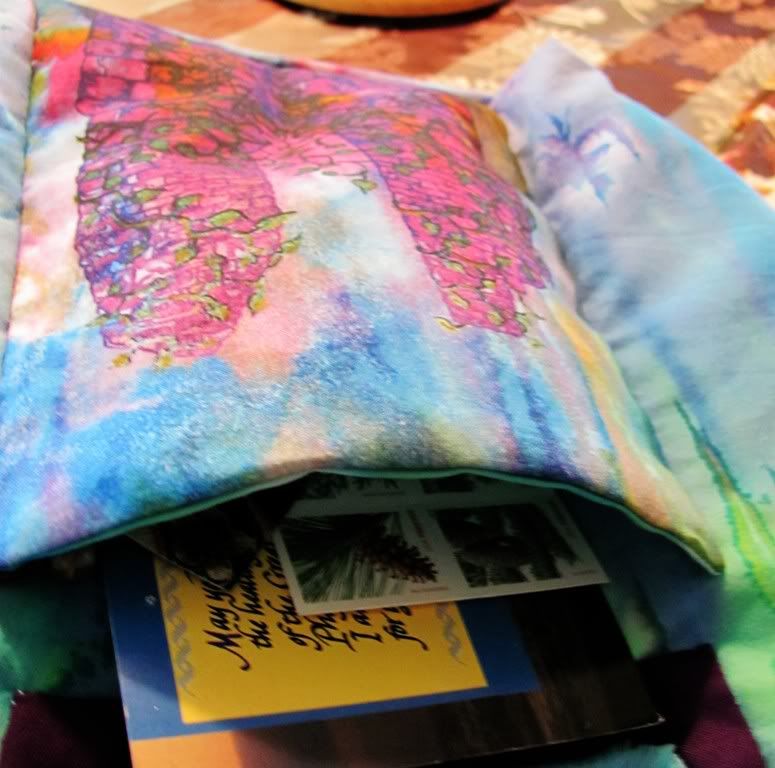
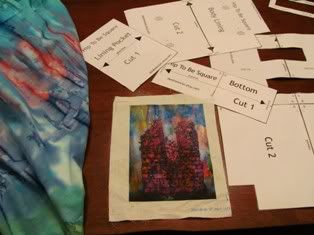 For my final Spoonflower mini-project I decided to make a book bag, and for the design a free pattern I could find available online. I chose this
 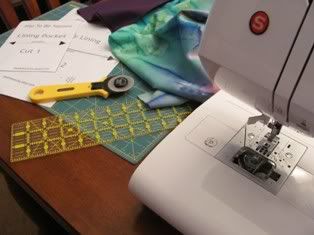 I started cutting and sewing, and quickly discovered that I wasn't putting it together correctly. I'm stubborn, of course, so I ripped out the seams and tried two more times before I finally accepted that no, guessing wasn't going to get the job down, and went back to register with the site to get the printed instructions (registration is free and all they want is your e-mail.)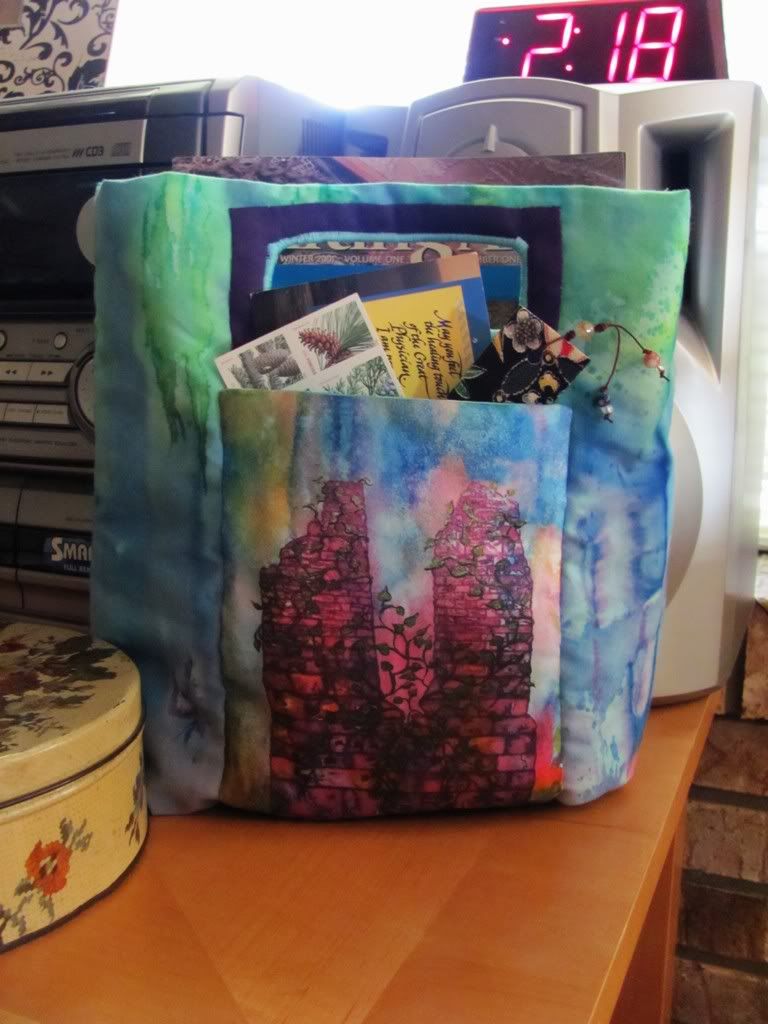
 The things I love about this pattern are that there are no handles to attach; they're built into the bag. The size is good -- almost more like a purse than a tote -- but not so big that it feels like you're carrying luggage. It has a roomy inner pocket you attached to the lining, but you can probably add more to suit your needs. In fact if you're good with altering patterns you could probably make this work for more than just a book bag; with some resizing and different fabrics and notions you could probably use it to make a gift bag, a smaller make-up bag or even a clutch purse.