Showing posts with label vision. Show all posts

Tuesday, September 16, 2014

The View

One of the questions I've been asked most frequently since having my surgeries is "So how bad was it before?" It's tough to put into words, of course, and I wasn't completely aware of just how poor my sight was until after the operations. Glasses helped for a while, and I think with some eye issues over time you get used to them. Plus I was in denial, big time.

Losing the ability to recognize certain colors was what brought me back to reality. Black and dark blue slowly began looking the same, and then I couldn't distinguish any difference between orange, pink or red. I lost green and blue after that. I work with color every day with my art and sewing and quilting, so I couldn't pretend everything was okay anymore.

To give you something of a visual, this approximates what I was seeing from my left and right eye, without glasses, when I finally realized I had a problem:


Six months later this is all I could see with my glasses on:


If you're wondering how much better I am post-surgery, here is the same view with what I can see now:


Other than being able to see colors again and focus, I think the most startling difference is that I can see white again. I don't think I have in a couple of years. Now the world seems dazzling, as if I've been transported to another planet where everything is bright and beautiful.

I also had no idea my bathrooms were so clean, either. What do you know, I am a good housekeeper.

All kidding aside, if you are having problems with your eyes, go and get them checked as soon as you can. I actually procrastinated a bit with mine, first thinking I was just depressed, and then blaming menopause and age. On some level I knew something was seriously wrong, but I didn't want to think about it. I had to go almost blind before I went to the doctor, and now that I can see clearly again, I know I was a complete idiot to put it off -- so don't make the same mistake.

Thursday, January 27, 2011

Vision and Visibility

Last night I had an epiphany moment while I was re-reading Journaling Without Borders, an article Carrie Todd wrote in the Summer 2010 issue of Art Journaling. I'd gone back to the magazine to study a technique, and then read the rest just for fun. See, I don't save all these magazines for nothing, I do re-read them. It only takes a couple years to work my way through the collection.

Anyway, on one of her journal pages in the issue Carrie had glued a surrealistic circus figure, the word "bizarre" in all caps, and had written a short passage about her own reaction to another article in Rolling Stone about U2's frontman Bono, and the motto he lives by: "Vision over Visibility" (a bit more on that here.) Magazines, especially creative-theme ones, often have that quasi-droste effect: one good article always makes me want to read another.

The motto poses an interesting dilemma for a writer: Which comes first, your vision, or your visibility?

Vision has been a cornerstone of professional writing, or at least it was before visibility became so important. The first time I read an agent talking about the vital importance of a writer's "platform" over the work itself, I knew vision had taken a backseat to visibility. If things keep going in that direction, craft, quality and personal commitment will be joining it. Or at least the old lady storyteller inside me is muttering that under her breath.

Publishing wants visibility over vision. It's the foundation of the business attitude, and it makes a lot of money. We might not like it, but no one can deny that visibility is important to us as well. As professionals we want to sell what we write, and if no one notices what we've published, we don't sell. Every year the market becomes more crowded, and now that no-cost digital self-publishing has successfully eliminated the submission process, I expect the number of titles available will soar right out of the stratosphere.

I think you can have the best of both worlds -- vision and visibility -- if you don't compromise on one for the sake of the other. If you are so exhausted from spending all your time networking and socializing and getting your name out there, you're not going to write well, if at all. Same goes for walling yourself away in your ivory writing tower and spending all your time with the work -- you lose touch with the market, what the competition and the publishers are doing; you fall behind the times.

I'm not in either camp. I believe one can combine vision and visibility and make them work together. You're looking at what I do almost every day to have a professional presence online. It's simply one thing, and I know every other author does a lot more, but sometimes just one thing is enough. PBW has become an integral part of my writing life, one that allows me to be visible and yet do exactly what I want at the same time. Over the years doing just this one thing has not only brought new readers for my books, it's provided me with a global circle of friends and colleagues who share their visions, too.

Just last week I got an e-mail from a writer who is being published for the first time. The story will appear in an anthology that had an open call I listed in one of my sub ops posts last fall. That's visibility. The writer discovered the opportunity here, wrote a story for it, and now is turning pro. That's vision.

It goes both ways, too. A comment one of you left here about a year ago led me to a piece written by an editor I didn't know. It was a terrific piece, and impressed me so much that I printed it out and put it in my editor info file. I keep that file because I never know who I might be working with, and having a little info in advance helps. A few weeks ago when I lost my editor, I pulled my file, re-read that article, did a bit more research and decided to request that editor. Now we're working together. It definitely wouldn't have happened if I hadn't read that article.

Now it's your turn: which do you think is more important, vision or visibility? How are you juggling them, if at all? Let us know in comments.

Saturday, January 22, 2011

Max Your Dreams

Pepcid AC is advergaming the new maximum-strength version of their product with Max My Dream*, which takes a brief description of your dream and generates a visual interpretation of it. I tried it several times, and while they were right on the money with my I-can-fly! dream, they didn't really nail me witnessing the Apocalypse via incurable plague or the one where I'm conscious during open-heart surgery. For which I'm pretty grateful, actually.
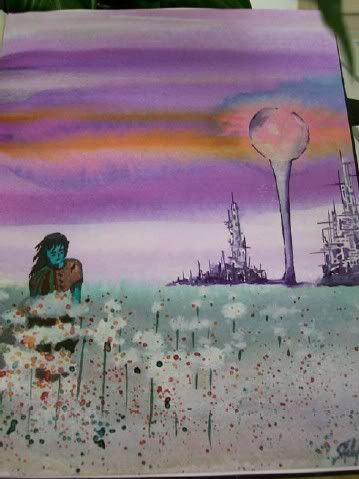
Visualization of a concept is an important part of writing for me. If I can see a scene in my head, I can write it, and my imagination is already pretty well-stocked with faces, places and things. Painting, sketching and photo-shopping also help when I have an idea I want to turn into a visual reference, particularly with settings and characters (as was the case with creating this watercolor from a StarDoc novel scene for a long letter I sent a friend.) Creating art is a great way to get to know the story element you're depicting and serves as a jog for little details that might otherwise slip your mind while you're at the keyboard.

Mood and style are integral to vivid visualization. For mood, I always go to music because it fires my imagination and sets a tone in my head. Instrumental tunes work best for me because I'm not distracted by a singer's voice or derailed by the lyrics. They also offer a wider range of interpretation; often I can use one piece for several different scenes or books. Poetry is also another mood-setter for me, and I have a collection of poems and poets I'll read specifically to tap into different parts of my emotions.
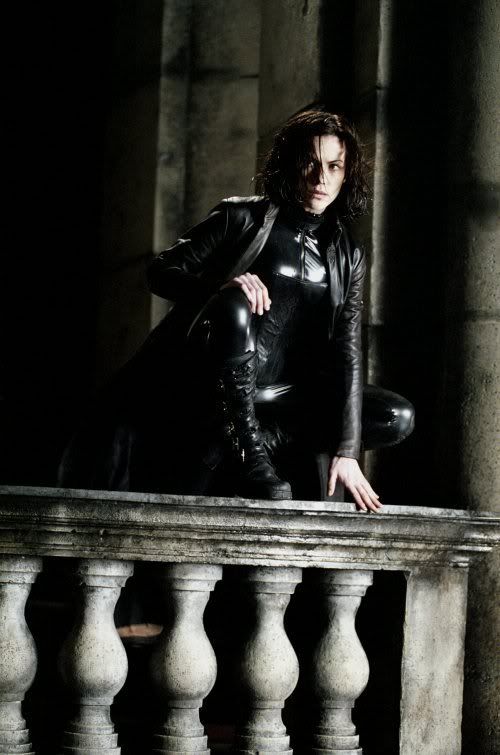
Style is all about the forest, not the trees, of imagery. One thing I really enjoyed about all the Underworld movies was the intricacy and consistency of the dark, bleak dystopian world of the vampires and the Lycan. Here's a still of Selene, the protagonist from the first two Underworld movies, and even something as simple as the marble balcony has that blackened, neglected look to it. Battlestar Galactica (the new series) was another show that offered incredible styling which suited the storyline and bucked the traditional bright-and-shiny Utopian soft-serve SF television shows generally deliver. Battlestar was gritty, realistic and very, very human, especially with the cast choices.

Mood and style are not about perfection, btw, unless you're writing a story about the perfect world of pretty people who all live in palaces. My skin is crawling just typing that line. Sure, I've written my fair share of Pretty People -- most under pressure from editors who didn't like the originals -- but the older I get, the less I want them in my books. They're like Barbie dolls, all smiling and staring at you with those creepy blank eyes. No, give me characters with scars and tattoos and bad haircuts and handicaps. Five foot tall heroes. Heroines who will never ever shop at te 5-7-9 store. And make a few of those Dudley Dastardly mustache-twirling butt-ugly antagonists pretty and perfect instead. Would mix things up a bit if the to-die-for guy is actually the homicidal one, yes?

Some other ways to boost your story visualizations:

Create a visualization journal for your project. Divide it into sections for different story elements: characters, settings, time period, theme and detailing are all good, but tailor it to what you want to explore visually. Then start filling it up with images that illustrate in any manner that particular element -- body models, architecture, paintings, sketches, found objects, fabrics or anything that relates directly to and/or enhances your vision. If there are keywords or notes you want to add, write them as captions to the images. Before you begin writing a scene, go through your journal and refresh your imagination as to the specific look you want.

Build a slideshow of images to follow your storyline. Open it with an image that captures the beginning of your story, and then progress from there (to do one for free online with different formats and theme music, check out Slide.com. The music doesn't seem to play anymore, but you can see the slideshow I made of Darkyn cover art over on the stories blog here.)
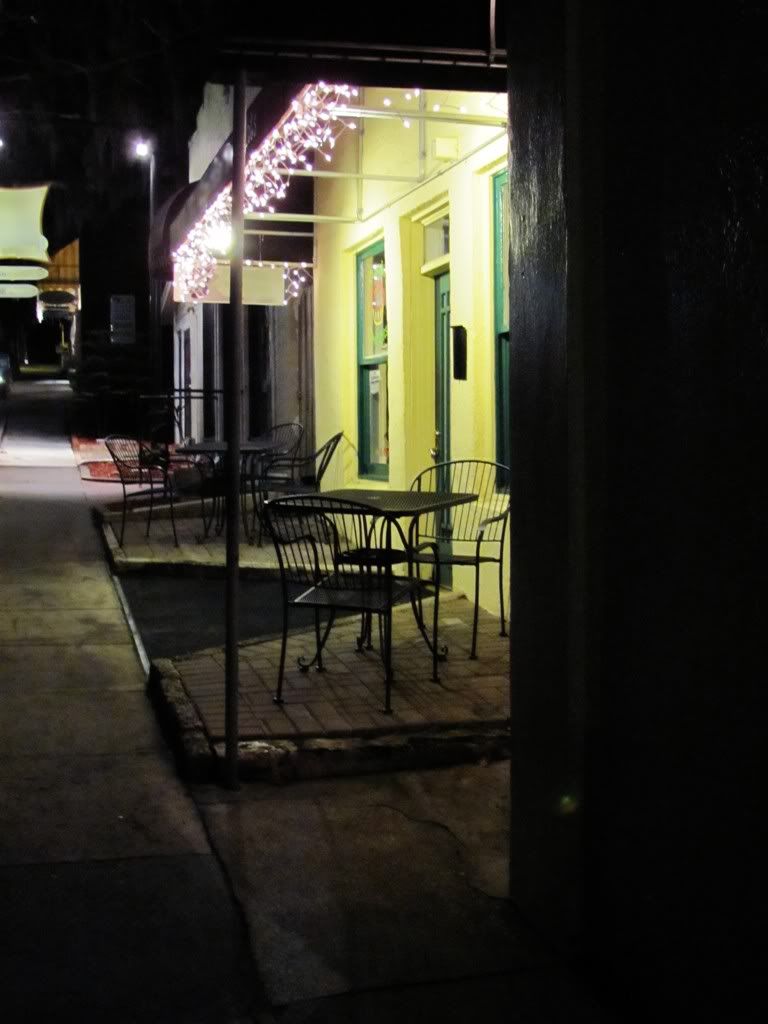
Take one location from your story and try to find one that is similar to it in your area. Pay a visit with a camera and notebook, and take some snapshots of details that you can use in your story. Write down notes on things you see that you didn't think of, and pay special attention to things like light, sounds, smells, textures as well as how being in that place makes you feel. This is a shot I took one night recently while getting some visuals on what a small country town feels like after the shops close and everyone has gone home for the night. Feels a little spooky, especially when dozens of bats began pouring out of one restaurant's chimney -- one place I don't think I will be in a hurry to make reservations at anytime soon.

For those of you who like book videos and have the technical means and know-how, consider making a visualization video that relates to your story. Readers are always making dream cast videos, why not do one of your own for your story? Hunt down photos of models or actors who are good matches for your characters and intersperse them with pics of your setting or places that fit into your world-building. Try finding one image for each chapter.

Do you writers out there do anything interesting or fun to help with your story visualizations? Let us know in comments.

*Link found over at The Presurfer

Thursday, May 15, 2008

Vision Labels

In the April '08 print issue of Watercolor Artist magazine, Michelle Taute has an interesting article, Eyes Wide Open about author and watercolor artist Elizabeth Groves that includes a sidebar explaining Ms. Groves' belief that every painting focuses on one of four different artistic visions: Curious (the what-iffers), Innovative (the remakers), Aesthetic (the awe-inspired) and Practical (the realists.)

I test-drove the idea by mentally thumbing through my favorites of the old masters and trying to see who fit what, as in maybe Michelangelo the Curious, Raphael the Innovative, Rembrandt the Aesthetic, and Da Vinci the Practical. But as cold-blooded as Raphael was, he wasn't a total knockoff artist, and as sensible and scientific as Da Vinci was, he could also get very weird at times. Rembrandt may have cursed us with what would eventually become known as chiaroscuro, but he also brought art down to street level, where ordinary folks didn't just buy and enjoy it, they starred in it. Even Michelangelo, Grand Master of Marble that he was, spent a couple of years painting on his back because a Pope ordered him to -- not a whole lot of what-if involved there.

Then Picasso declined to be classified by a mere woman, Dali wanted to be labeled with an image of an elephant on stilt-legs mating with his ex-wife, and Cézanne called me a Philistine and locked himself in his studio, so I gave up. End result: I don't think great artists can be thus labelled. At least, not by me.

Humans are social critters, though, and when we're not busy slapping neat little tags on each other, we're conforming to common or shared visions and behaviors in order to fit into a certain established group. This isn't always a bad thing; without a certain amount of conformity we'd have nothing but chaos and anarchy, and as a species we generally don't deal too well with that. We fall back on our tribal instincts by needing the security of the group, and the group doesn't accept us unless we do what the group does.

However, stringent conformity discourages individuality, and if we're all doing what everyone else is, there is no opportunity for discovery and true self-expression. We become permanent residents of that cookie-cutter suburb world from L'Engle's A Wrinkle in Time: everyone bounces their little red ball in the same way at the same time -- just as everyone else expects. Not much art in that, is there?

Writers are in the same boat as artists, I think, although we probably have more opportunity to be quietly non-conformist. A painting is right there, in your face; a story usually has to be read over a period of time. We have the chance to persuade the reader that our individual visions aren't the horrors that group-think may have led them to believe. We can't do that if we're serving up the same old tired watery tasteless conformist cabbage soup. We can use the same bowls as the cabbage pushers, but we need to sneak our readers a little gazpacho or miso or even a nice pot of cassoulet whenever possible.

You writers out there, where does your individuality come out in your work? Do you feel the need to conform is more or less important than your vision?

Cool art link: Elizabeth Groves Step-by-Step Demonstration