I have been diligently working on my intense dislike of writing setting by purposely studying how other genre writers do it, trying writing exercises to develop my focus on it, and otherwise forcing myself to deal with it like an adult instead of a whiny toddler. So far I've done okay. I'll probably always think characters are way more interesting to write, but I'm slowly getting away from wishing every novel took place in a featureless void.
During this process I've noticed a couple of things about how a lot of genre novelists deal with setting:
1.
Most of it is largely glorious. Largely. Nine out of ten setting-intensive novels I read have drop-dead gorgeous settings in them that sound like the deserted island you should be living on, preferably half-naked, along with a nubile young sex-crazed adoring partner who wanders around after you all day asking in a sexy European accent if it's time to make love yet.
2.
No unsightly neighborhoods. Trailer parks, slums, crack houses and other undesirable properties evidently do not exist in these worlds. In fact, you'd be hard pressed to find a little crab grass in these parts.
3.
Everyone can comfortably afford to live in these settings. I don't know what these writers have done with the poor, the unemployed and the homeless, but they're not in these settings. I'm kind of wondering if they've been secretly rounded up and auctioned off to the literary writers.
4.
Nothing ever goes wrong in these places. The weather is beautiful, the neighbors are nice, non-gun-toting folks and there aren't any bugs, snakes, wasps, rats, mold, mildew, dust motes, etc. No one has a water pipe burst or a stove blow up, no drug dealers hang sneakers from the telephone wires, and Wal-Mart never builds a superstore directly across the street.
5.
Invisible cleaners secretly arrive to tidy up while everyone is sleeping or making love. Go ahead, laugh, then you give me a reasonable explanation as to why no one in the story ever does any housework and still the places remain 100% immaculate. I'm still waiting to see just one time someone produce a Swiffer or a vacuum or even a Handy-Wipe. No, it seems in these settings dirty dishes and laundry do themselves. Garbage spontaneously disintegrates before it can be identified as garbage. Toilets are never scrubbed, disinfected or even flushed.
I know the fiction world is supposed to be a big fantasy place where we can escape, but any setting that is too perfect just doesn't ring true to me. Maybe it's all technicolor adjectives and superb nouns affecting my vision, but sometimes it reads so fake I feel like I'm watching porn. So how do we keep our settings escape-worthy without turning them into over-idealized, utterly unbelievable porn sets?
I think part of it is in the small details. When I go on a research trip, I try to see as much of a location as I can -- but I don't just focus on the pretty parts; I try to see all of it. Visiting pre-Katrina New Orleans, I went to meet my editor at a fancy French Quarter restaurant, dodging empty go-cups that had been dropped on the sidewalks (which explained why the air smelled like a bar on ladies night) and spotting broken strands of sun-faded Mardi-Gras beads still hanging from some railings and tree branches. I spied hundred-year-old rotting wood door frames squeezed between glittery new gift shops and tired-looking cafes; I noticed some used heroin syringes in the gutter not two feet away from the entrance of that fancy restaurant.
Using senses other than vision can also bring out more realism in setting. The air in downtown Pittsburgh during a hot summer day has an acid tinge to its usual dank industrial waste stench. The old historic buildings in Philadelphia have some wood in them that has been touched so many times over the centuries it feels like glass. People passing you on the street in Miami smell of sweat, suntan oil, or too much perfume. I've heard more car horns blare simultaneously and smelled more urine in New York City than in any other spot on the planet. Every outdoor surface that had not been regularly swept or cleaned in Chicago has this dark grit on it, like finely-ground gun powder. Visit any small town in Central Florida in early spring and you'll almost get drunk on the heavy scent of orange blossoms. Sometimes in the heart of downtown Fort Lauderdale (around three a.m.) if you listen closely you can hear the waves hitting the beach.
Every location has its own feel to it. I used to compare one spot in Colorado to Disney World; incredibly clean, filled with colorful characters, but at the end of the day, all facade and way too expensive. In another town I lived everyone was so nice and polite I wondered if they were dumping Prozac in the water supply (the happiness in that place was so relentless it was creepy.)
I'm still figuring it out. In the meantime, I will keep working on not only how I write setting, but also what I think should go into setting to keep it realistic without dispelling all the fantasy/escapism for the reader.
Now it's your turn: what do you think needs to go into setting to prevent it from morphing into porn? Or would you rather have the porn? Let us know in comments.
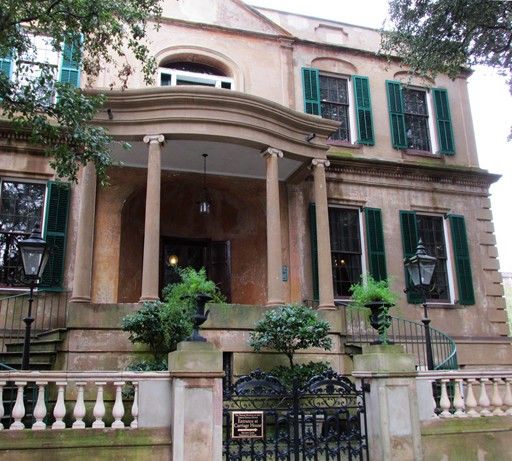
 The Owens-Thomas House may not be as pretty or popular as some of the other fabulous homes in the city, but it's haunted me since the first time I saw it. Why? I don't know. It's just one of those places where place + person = mystery connection.

 Home for Setting Starters