The winner of the Get Back to Writing Journal giveaway is:
Marina, who wrote: My desk looks like an unfortunate accident
in a craft shop.
Marina, when you have a chance please send your full name and ship-to info to LynnViehl@aol.com so I can get your package out to you. My thanks to everyone for joining in.
Showing posts with label get back to writing week. Show all posts
Showing posts with label get back to writing week. Show all posts
Sunday, September 09, 2012


Saturday, September 08, 2012
Winner
The winner of the Get Back to Writing Blog giveaway is:
Gigi, who wrote: I'm contemplating starting a secong blog about the rural life and using it to promote rural communities as the next new place to live.
Gigi, when you have a chance please send your full name and ship-to info to LynnViehl@aol.com so I can get your package out to you. My thanks to everyone for joining in.
Gigi, who wrote: I'm contemplating starting a secong blog about the rural life and using it to promote rural communities as the next new place to live.
Gigi, when you have a chance please send your full name and ship-to info to LynnViehl@aol.com so I can get your package out to you. My thanks to everyone for joining in.
Friday, September 07, 2012
Get Back to Writing Week: Journal
The winner of the Get Back to Writing Week Short Story giveaway is:
Vetta, whose first line was You're no good and neither am I. That's why we deserve each other.
Vetta, when you have a chance please send your full name and ship-to info to LynnViehl@aol.com so I can get your package out to you. My thanks to everyone for joining in.
 This morning I got up at 5 a.m. Once I'd attended to the first tasks of the day, I retreated to the porch to hang out with the pups and the birds. After meditating for thirty minutes (something that helps clear out the head cobwebs and centers me) I wrote this entry in my personal journal. Journaling is part of my daily writing routine, and it helped me warm up for composing this blog post. Once this is finished I'll deal with some correspondence, biz stuff, and then tackle the day's fiction work schedule. I think of it as a cascade writing effect -- beginning with an easy flow and then building on the momentum that creates.
I journal first each day because it's very undemanding writing. I can write whatever I want, in any style I want, and it doesn't have to make sense to anyone but me. I don't have to edit it, polish it or make it presentable. I usually write with my favorite fountain pen, which gives me that lovely feeling of creating art with words. Personal journaling provides me with daily opportunities to quietly wonder while I chronicle things important to me as a person. In that sense the personal journal can be like your private treasure chest, in which you can store gems of inspiration, pearls of writing wisdom and the beautiful things we craft from our own experiences with the work.
Writing in a journal is writing for yourself, and that offers a bit of creative breathing room. As a professional my work is always subject to scrutiny and opinion coming at me from all directions: the agent, editors, writer friends, readers and everyone else metaphorically reading over my shoulder. Since I'm a storyteller I don't mind the attention -- naturally the work is meant to be shared -- but having twenty minutes of writing liberty via journaling makes me calmer, more focused and better able to cope with being under the microscope the rest of the time.
Before you dive back into writing fiction after a long break, it can help to open a blank book, notebook or make your own journal, and write for yourself for a time. Whatever caused you to give up the work, as well as why you want to get back to it, could be the perfect place to start. While I don't think you should use a journal simply to vent 24/7, it does give you the right place to get out any negative thoughts that might otherwise interfere with the work (as well as put you in a better mood to write what you do want others to read.)
 There are no rules with journaling, no deadlines, no marketing, no pressure. You certainly don't have to journal every day, nor do you have to tell anyone about your journal. If you really want to protect the contents, once it's filled you can always destroy it (which I recommend for any journal with contents that for whatever reason you never want to be read by anyone else.)
A journal also doesn't have to be in diary form. I've written a couple that were simply long letters to friends, which I mailed off to them after they were filled. You can use a guided journal as a daily writing exercise workbook, or write your journal as one of your characters (I did one for Lucan from the Darkyn books, and it was not only fun writing in his voice -- excellent practice for dialogue tone, too -- but helped me better understand him.)
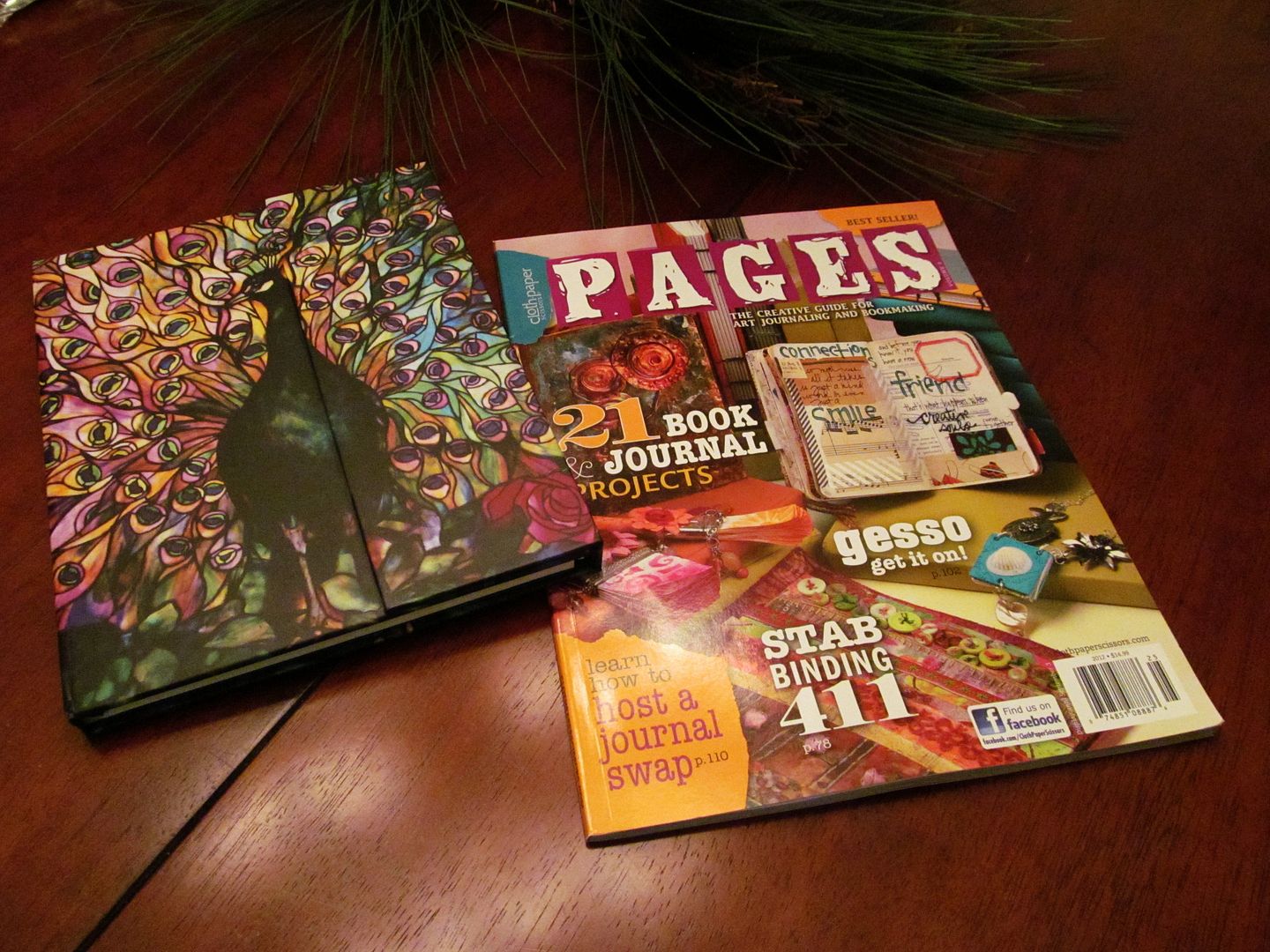
To get back to writing by journaling, in comments to this post write the first line of a journal entry you'd make today by midnight EST on Saturday, September 8th, 2012. I'll draw one name at random from everyone who participates and send the winner a copy of the second issue of Pages magazine, this lovely Peacock blank journal, and a surprise. This giveaway is open to everyone on the planet, even if you've won something here at PBW in the past.
Vetta, whose first line was You're no good and neither am I. That's why we deserve each other.
Vetta, when you have a chance please send your full name and ship-to info to LynnViehl@aol.com so I can get your package out to you. My thanks to everyone for joining in.
This morning I got up at 5 a.m. Once I'd attended to the first tasks of the day, I retreated to the porch to hang out with the pups and the birds. After meditating for thirty minutes (something that helps clear out the head cobwebs and centers me) I wrote this entry in my personal journal. Journaling is part of my daily writing routine, and it helped me warm up for composing this blog post. Once this is finished I'll deal with some correspondence, biz stuff, and then tackle the day's fiction work schedule. I think of it as a cascade writing effect -- beginning with an easy flow and then building on the momentum that creates.I journal first each day because it's very undemanding writing. I can write whatever I want, in any style I want, and it doesn't have to make sense to anyone but me. I don't have to edit it, polish it or make it presentable. I usually write with my favorite fountain pen, which gives me that lovely feeling of creating art with words. Personal journaling provides me with daily opportunities to quietly wonder while I chronicle things important to me as a person. In that sense the personal journal can be like your private treasure chest, in which you can store gems of inspiration, pearls of writing wisdom and the beautiful things we craft from our own experiences with the work.
Writing in a journal is writing for yourself, and that offers a bit of creative breathing room. As a professional my work is always subject to scrutiny and opinion coming at me from all directions: the agent, editors, writer friends, readers and everyone else metaphorically reading over my shoulder. Since I'm a storyteller I don't mind the attention -- naturally the work is meant to be shared -- but having twenty minutes of writing liberty via journaling makes me calmer, more focused and better able to cope with being under the microscope the rest of the time.
Before you dive back into writing fiction after a long break, it can help to open a blank book, notebook or make your own journal, and write for yourself for a time. Whatever caused you to give up the work, as well as why you want to get back to it, could be the perfect place to start. While I don't think you should use a journal simply to vent 24/7, it does give you the right place to get out any negative thoughts that might otherwise interfere with the work (as well as put you in a better mood to write what you do want others to read.)
There are no rules with journaling, no deadlines, no marketing, no pressure. You certainly don't have to journal every day, nor do you have to tell anyone about your journal. If you really want to protect the contents, once it's filled you can always destroy it (which I recommend for any journal with contents that for whatever reason you never want to be read by anyone else.)
A journal also doesn't have to be in diary form. I've written a couple that were simply long letters to friends, which I mailed off to them after they were filled. You can use a guided journal as a daily writing exercise workbook, or write your journal as one of your characters (I did one for Lucan from the Darkyn books, and it was not only fun writing in his voice -- excellent practice for dialogue tone, too -- but helped me better understand him.)
To get back to writing by journaling, in comments to this post write the first line of a journal entry you'd make today by midnight EST on Saturday, September 8th, 2012. I'll draw one name at random from everyone who participates and send the winner a copy of the second issue of Pages magazine, this lovely Peacock blank journal, and a surprise. This giveaway is open to everyone on the planet, even if you've won something here at PBW in the past.
Thursday, September 06, 2012
Get Back to Writing Week: Blog
The winner of the Get Back to Writing Week Poetry giveaway is:
Charlene Teglia, who offered this haiku:
All my kids are sick
I can't get my writing done
Poetry might help.
Charlene, when you have a chance please send your ship-to info to Lynn Viehl@aol.com so I can get your package out to you. My thanks to everyone for joining in, and keep writing those haiku and other poems -- they really do help.
Taking a long break from writing generally makes for a difficult return; trying to go back to it after you've quit writing, unplugged from the internet, and actively avoided your writer friends, NetPubLand, and basically anyone and everything to do with writing is probably the toughest road back. I know because I stopped writing -- and everything related to it -- for a year.
When I quit I was pretty ruthless about it; I shut down my blog, stopped teaching online classes, dropped out of my writer organization, quit going to cons and having booksignings, and even stopped submitting proposals to publishers. To generate some income I went off to work as a bookseller and moonlight as an antique quilt restorer, two things I loved. My old writer pals, however, kept e-mailing to nag me to come back and start blogging and teaching again (in hindsight I probably should have shut down the e-mail, too.)
At the time no one but our family knew that my guy had just been diagnosed with cancer, and I intended to keep it that way. Helping him through his surgery, treatment and recovery was all I cared about; I knew the writing would wait. As for the biz, it could go hang itself.
My writer friends didn't let up, and once my guy was out of danger one of them convinced me to (partially) reconsider my shutdown. While I still felt fed up with the biz, I'd never lost my love of sharing ideas and resources with other writers. I was even writing a little again, too. My friend suggested I start another blog. The idea appealed to me; it would be a way to get in some writing practice and maybe teach while still preserving my privacy. What the heck, I thought, I could write about the real writing life. Maybe five or ten writers would read the thing; we'd all get tired of it in a couple of months and I could finally quit the biz for good.
That was ten years ago, and here I am, still posting away.
Blogging brought me back to writing because it provided me with the motivation I needed to return to a writing routine. Posting every day meant not only writing about writing, but thinking about it again, and letting it back into my life. I didn't have to write much, but as a lifelong journaler I felt an obligation to write something. I also wanted it to be useful, so as not to waste my visitors' time, or at the very least offer them some entertaining content; otherwise why do it?
Gradually I recognized that by blogging I was meeting like-minded people who cared about the same things I did: appreciating the art of story, reading great books, improving the craft, protecting the work and finding new opportunities. These were the other writers I'd always hoped to find but until then never had. Blogging about the writing life turned out to be the writing life I'd dreamed of but hadn't found anywhere else. As epiphanies go, that one was pretty major.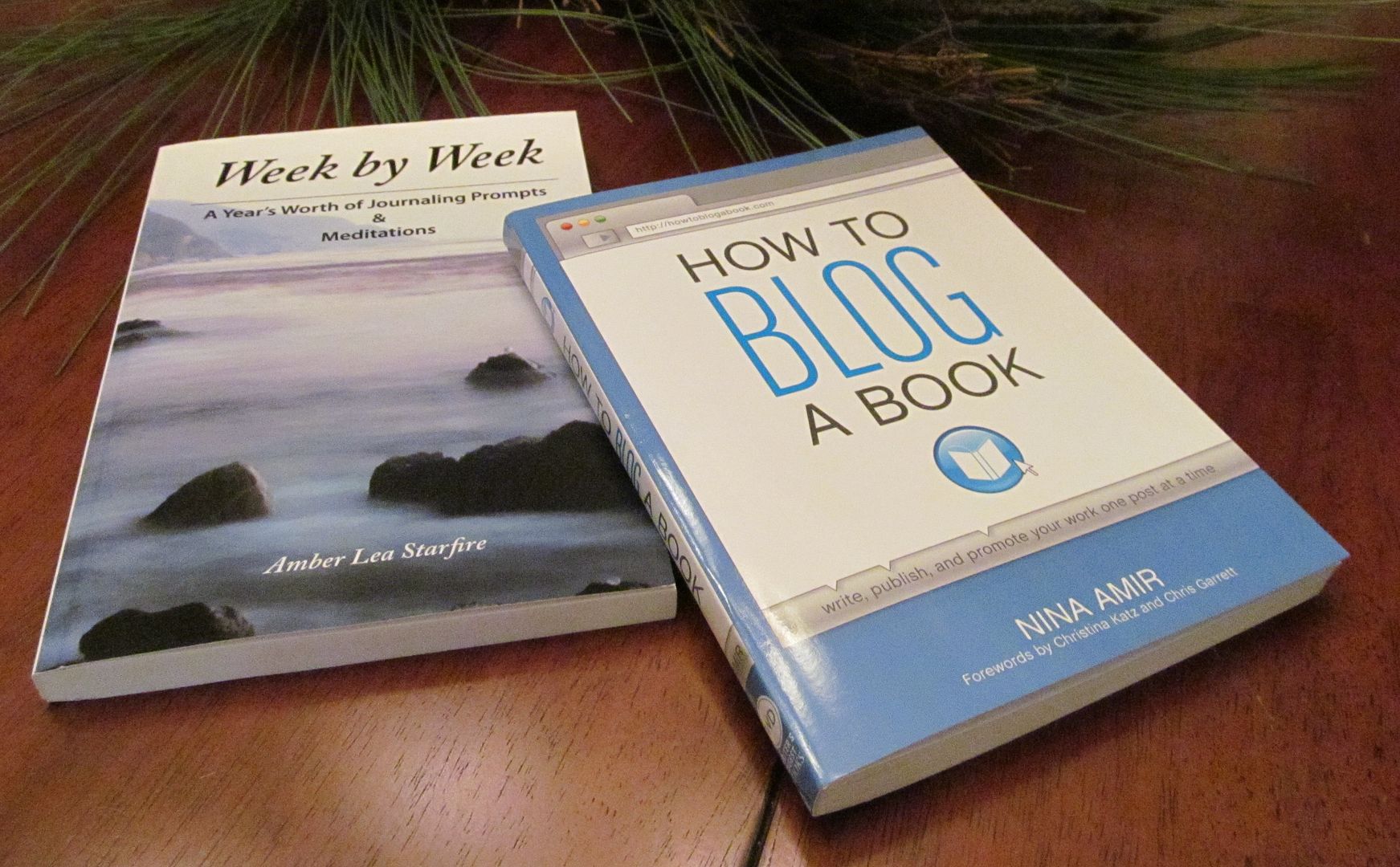
This is why I'm proof that blogging can provide a solid avenue to get back into a writing routine. If you've never tried blogging, try creating one and commit to posting twice a week. If you've neglected an old blog for some time, dust it off and restart it. Try a new blog skin or template to give it a fresh look. If the prospect of going it alone intimidates you, talk to your writer friends about starting a new group blog. You don't have to write about writing; write about anything. Go to a site with blogging prompts or invest in a how-to book with writing sparks. Let people know what's been happening with you, what you've been reading lately or what else grabs your interest. You can even chronicle your journey back to writing as it happens.
To further tempt you to get back to writing by blogging, in comments to this post name a topic you'd like to write about on a blog by midnight EST on Friday, September 7th, 2012. I'll choose one name at random from everyone who participates and send the winner unsigned copies of Week by Week ~ a Year's Worth of Journaling Prompts and Meditations by Amber Lea Starfire and How to Blog a Book by Nina Amir. This giveaway is open to everyone on the planet, even if you've won something here at PBW in the past.
Charlene Teglia, who offered this haiku:
All my kids are sick
I can't get my writing done
Poetry might help.
Charlene, when you have a chance please send your ship-to info to Lynn Viehl@aol.com so I can get your package out to you. My thanks to everyone for joining in, and keep writing those haiku and other poems -- they really do help.
Taking a long break from writing generally makes for a difficult return; trying to go back to it after you've quit writing, unplugged from the internet, and actively avoided your writer friends, NetPubLand, and basically anyone and everything to do with writing is probably the toughest road back. I know because I stopped writing -- and everything related to it -- for a year.
When I quit I was pretty ruthless about it; I shut down my blog, stopped teaching online classes, dropped out of my writer organization, quit going to cons and having booksignings, and even stopped submitting proposals to publishers. To generate some income I went off to work as a bookseller and moonlight as an antique quilt restorer, two things I loved. My old writer pals, however, kept e-mailing to nag me to come back and start blogging and teaching again (in hindsight I probably should have shut down the e-mail, too.)
At the time no one but our family knew that my guy had just been diagnosed with cancer, and I intended to keep it that way. Helping him through his surgery, treatment and recovery was all I cared about; I knew the writing would wait. As for the biz, it could go hang itself.
My writer friends didn't let up, and once my guy was out of danger one of them convinced me to (partially) reconsider my shutdown. While I still felt fed up with the biz, I'd never lost my love of sharing ideas and resources with other writers. I was even writing a little again, too. My friend suggested I start another blog. The idea appealed to me; it would be a way to get in some writing practice and maybe teach while still preserving my privacy. What the heck, I thought, I could write about the real writing life. Maybe five or ten writers would read the thing; we'd all get tired of it in a couple of months and I could finally quit the biz for good.
That was ten years ago, and here I am, still posting away.
Blogging brought me back to writing because it provided me with the motivation I needed to return to a writing routine. Posting every day meant not only writing about writing, but thinking about it again, and letting it back into my life. I didn't have to write much, but as a lifelong journaler I felt an obligation to write something. I also wanted it to be useful, so as not to waste my visitors' time, or at the very least offer them some entertaining content; otherwise why do it?
Gradually I recognized that by blogging I was meeting like-minded people who cared about the same things I did: appreciating the art of story, reading great books, improving the craft, protecting the work and finding new opportunities. These were the other writers I'd always hoped to find but until then never had. Blogging about the writing life turned out to be the writing life I'd dreamed of but hadn't found anywhere else. As epiphanies go, that one was pretty major.
This is why I'm proof that blogging can provide a solid avenue to get back into a writing routine. If you've never tried blogging, try creating one and commit to posting twice a week. If you've neglected an old blog for some time, dust it off and restart it. Try a new blog skin or template to give it a fresh look. If the prospect of going it alone intimidates you, talk to your writer friends about starting a new group blog. You don't have to write about writing; write about anything. Go to a site with blogging prompts or invest in a how-to book with writing sparks. Let people know what's been happening with you, what you've been reading lately or what else grabs your interest. You can even chronicle your journey back to writing as it happens.
To further tempt you to get back to writing by blogging, in comments to this post name a topic you'd like to write about on a blog by midnight EST on Friday, September 7th, 2012. I'll choose one name at random from everyone who participates and send the winner unsigned copies of Week by Week ~ a Year's Worth of Journaling Prompts and Meditations by Amber Lea Starfire and How to Blog a Book by Nina Amir. This giveaway is open to everyone on the planet, even if you've won something here at PBW in the past.
Wednesday, September 05, 2012
Get Back to Writing Week: Short Story
Novels are like theme parks, in that they hold a lot of characters, surprises around every corner, neat rides to go on and other cool things to do. As a reader you can spend days wandering around and basking in the excitement of these places.
As a writer, you can do that, too, but you have to build them first.
This kind of fiction construction takes tons of ideas and tools and plans plus all the time it requires to actually gather the materials, put it together, troubleshoot it, polish it up and get it ready for others to enjoy. It's why we call it world-building; writing novels means you really do build a world and everything in it from scratch.
If you've taken a hiatus from writing, the sheer size of that kind of project can seem especially daunting. So can the very good odds that you'll do all that work and get nothing in return. What if you choose the wrong theme for your novel park? What if the cast members are a bunch of boring wall flowers who just stand around and talk to each other about housekeeping stuff? Those doubts and fears often convince writers to put it off until next week, next month, or next year (when -- for mysterious reasons that I've never understood -- it's supposed to be easier.)
To get back to writing after a long break it's sometimes good to start with a project that isn't as long as a book. One option is to write some flash fiction, or a story told in a very minimal amount of words (some folks say it has to be less than 300, but I've also seen it defined as less than 1000 words.) This sort of writing can be a great form for people who want to work in shorter sessions in order to ease their way back into a daily or weekly writing routine. If you're a fast, focused writer, you can probably knock out at least one or two flash fiction stories per day; if you're slower or want to explore the form you still won't have to deal with a lot of blank pages to fill; four is about tops.
My personal favorite go-to short fiction form is the short story. A short story is like a roller coaster in the great theme park of fiction; they can be fast, fun and full of thrills. I've always written them for practice purposes as well as to get a feel for characters and scenes, and I think they're the best way to test-drive characters and novel ideas before I commit to writing a book about them. Both the StarDoc and the Darkyn series were based on short stories I wrote for fun, so for me this kind of writing practice also regularly leads to bigger and better projects.
The easiest subject for a short story is a day in the life of one of your characters (this gives you 24 hours to follow them around and get to know them, so it's a terrific method for exploring your characterizations.) You can write a short story about the worst or best day in your character's life, the day their world came crashing to a halt, or the day their second chance arrived. Likewise your character can do anything in this 24 hours: witness a crime, discover a secret, or win the lottery.
If nothing like that comes to mind, here's one of my personal tricks for writing practice: grab the nearest nonfiction book you love, turn to any page at random and jot down the first sentence you see on the page. The line you write down will be the opening sentence for the story (and just a note for those who may choose to pursue publishing a practice story written this way; you should remove the opening line before submitting, obtain the author's permission to use the line, or footnote it.)
Here's an example: from page 79 of The Medieval Underworld by Andrew McCall:
As was usual then, with medieval justice, a prison sentence meant one thing to those who were rich or influential and quite another to those who were not.
 This is a great opening line for a short story; I'd use it to tell the tale of how two prisoners (one rich, one poor) live out one day of their sentence. I'd find a way to have them meet, of course, and hate each other, and then for some drastic reason become dependent on each other in a moment of crisis. I'd find out who they really are beneath the wealth and the poverty; one could be guilty of the crime for which the other was actually convicted. I might have them be in love with the same woman; I might have them fall in love with each other. That one line is just a door opening to endless possibilities.
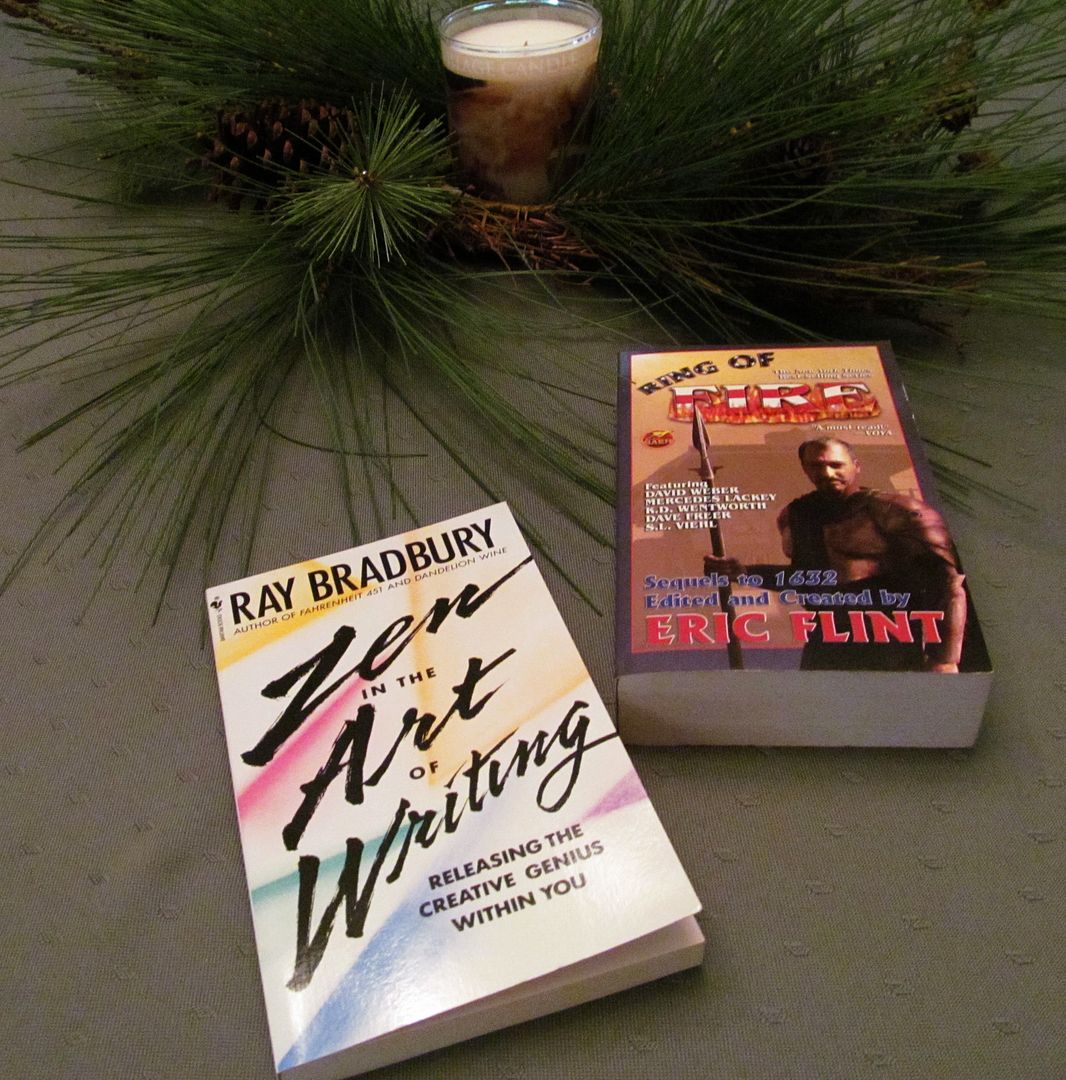
To get you back to writing via short stories, in comments to this post give us the first line of a short story you'd like to write (or if you can't think of one, just toss your name in the hat) by midnight EST on Thursday, September 6th, 2012. I'll choose one name at random from everyone who participates and send the winner an unsigned copy of Zen in the Art of Writing by Ray Bradbury, one of my favorite how-to books by my favorite short story writer, and a signed-by-me copy of Ring of Fire, a short story anthology which includes A Matter of Consultation by Yours Truly writing as S.L. Viehl. This giveaway is open to everyone on the planet, even if you've won something here at PBW in the past.
As a writer, you can do that, too, but you have to build them first.
This kind of fiction construction takes tons of ideas and tools and plans plus all the time it requires to actually gather the materials, put it together, troubleshoot it, polish it up and get it ready for others to enjoy. It's why we call it world-building; writing novels means you really do build a world and everything in it from scratch.
If you've taken a hiatus from writing, the sheer size of that kind of project can seem especially daunting. So can the very good odds that you'll do all that work and get nothing in return. What if you choose the wrong theme for your novel park? What if the cast members are a bunch of boring wall flowers who just stand around and talk to each other about housekeeping stuff? Those doubts and fears often convince writers to put it off until next week, next month, or next year (when -- for mysterious reasons that I've never understood -- it's supposed to be easier.)
To get back to writing after a long break it's sometimes good to start with a project that isn't as long as a book. One option is to write some flash fiction, or a story told in a very minimal amount of words (some folks say it has to be less than 300, but I've also seen it defined as less than 1000 words.) This sort of writing can be a great form for people who want to work in shorter sessions in order to ease their way back into a daily or weekly writing routine. If you're a fast, focused writer, you can probably knock out at least one or two flash fiction stories per day; if you're slower or want to explore the form you still won't have to deal with a lot of blank pages to fill; four is about tops.
My personal favorite go-to short fiction form is the short story. A short story is like a roller coaster in the great theme park of fiction; they can be fast, fun and full of thrills. I've always written them for practice purposes as well as to get a feel for characters and scenes, and I think they're the best way to test-drive characters and novel ideas before I commit to writing a book about them. Both the StarDoc and the Darkyn series were based on short stories I wrote for fun, so for me this kind of writing practice also regularly leads to bigger and better projects.
The easiest subject for a short story is a day in the life of one of your characters (this gives you 24 hours to follow them around and get to know them, so it's a terrific method for exploring your characterizations.) You can write a short story about the worst or best day in your character's life, the day their world came crashing to a halt, or the day their second chance arrived. Likewise your character can do anything in this 24 hours: witness a crime, discover a secret, or win the lottery.
If nothing like that comes to mind, here's one of my personal tricks for writing practice: grab the nearest nonfiction book you love, turn to any page at random and jot down the first sentence you see on the page. The line you write down will be the opening sentence for the story (and just a note for those who may choose to pursue publishing a practice story written this way; you should remove the opening line before submitting, obtain the author's permission to use the line, or footnote it.)
Here's an example: from page 79 of The Medieval Underworld by Andrew McCall:
As was usual then, with medieval justice, a prison sentence meant one thing to those who were rich or influential and quite another to those who were not.
This is a great opening line for a short story; I'd use it to tell the tale of how two prisoners (one rich, one poor) live out one day of their sentence. I'd find a way to have them meet, of course, and hate each other, and then for some drastic reason become dependent on each other in a moment of crisis. I'd find out who they really are beneath the wealth and the poverty; one could be guilty of the crime for which the other was actually convicted. I might have them be in love with the same woman; I might have them fall in love with each other. That one line is just a door opening to endless possibilities.To get you back to writing via short stories, in comments to this post give us the first line of a short story you'd like to write (or if you can't think of one, just toss your name in the hat) by midnight EST on Thursday, September 6th, 2012. I'll choose one name at random from everyone who participates and send the winner an unsigned copy of Zen in the Art of Writing by Ray Bradbury, one of my favorite how-to books by my favorite short story writer, and a signed-by-me copy of Ring of Fire, a short story anthology which includes A Matter of Consultation by Yours Truly writing as S.L. Viehl. This giveaway is open to everyone on the planet, even if you've won something here at PBW in the past.
Tuesday, September 04, 2012
Get Back to Writing Week: Poetry
A lot of writers are not writing; this I know because it's the most common complaint I hear lately from my fellow scribe pals. Whether it's caused by the demands of life, too much involvement in social media, or some biz-related despair, not-writing seems to be acquiring the dimensions of a plague. But then you can always find a good reason not to write. You can put it off for now and instead deal with whatever is messing with you. Of course you'll get back to it, you tell yourself, maybe tomorrow. Then tomorrow turns into next week, next month, next year, etc.
Sometimes that is what you have to do: stop writing, deal with whatever, and then go back to it. I've done it more than once myself; no judgment here.
I find that the toughest task is the going back after a long time of not-writing. When writing is no longer part of your daily or weekly routine it has to be reintegrated. Since every spare moment we have these days seems to be dedicated to doing something else time has to be made for it. Then there's the picking up where you left off or starting fresh on something new. Often you have to do this with the reason(s) you stopped writing in the first place still hovering in the background, waiting to distract you -- and railroad you -- again.
If you're wrestling with this problem, there are plenty of ways to cope. National Novel Writing Month is less than two months away now, and there is no better time to seriously dive into your writing than NaNoWriMo. Before you commit to producing a novel in a month, however, you might consider dusting off your muse and warming up your writerly muscles by getting back to writing right now. Pick a simple project and get to it: write a poem, a short story, update your blog, start a handwritten journal or research and outline your NaNo novel. Do this, stick with it and by the time November arrives I'll bet you'll have a lot more confidence in yourself and your writing.
 In my toughest times with writing I often turn to poetry to inspire and renew me, and of all the poetic forms haiku is my favorite for this. It's brief, it's beautiful and it's fun, and it doesn't require a huge amount of time to practice. Try starting a haiku journal, and commit to writing one new poem in it every day for a week. You can also take your favorite nature photographs and use them as inspiration. If you have a set of magnetic poetry, try writing haiku with it on your fridge. Once you've built up a nice collection of haiku you can use them for other things, too; I've made mine into bookmarks and holiday cards; I've also embroidered them into quilts and added them to artwork for artist trading cards.
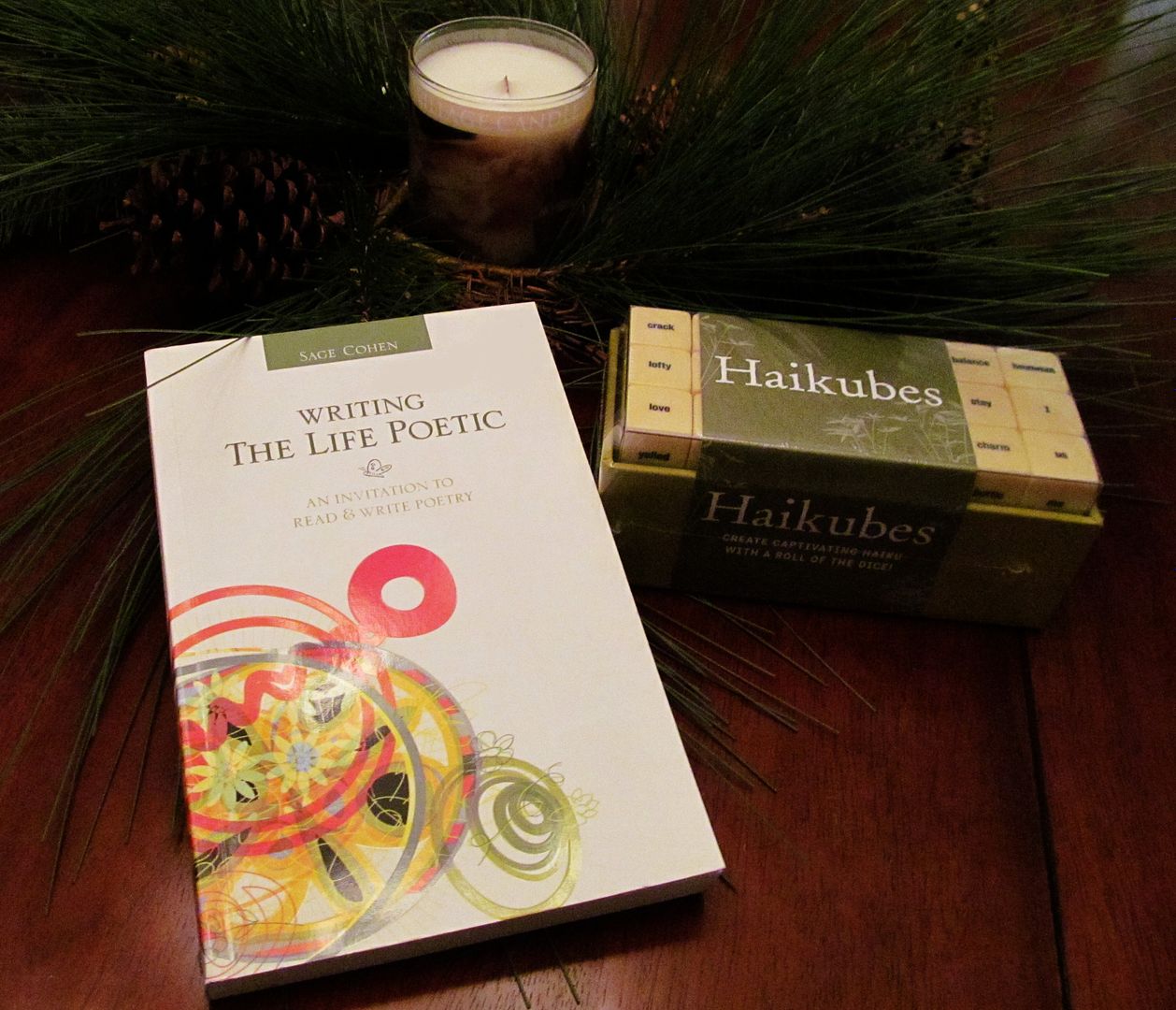
You can start getting back to your writing via haiku right now, too. In comments to this post write a haiku (or if you can't come up with one, toss your name in the hat) by midnight EST on Wednesday, September 5th, 2012. I'll draw one name at random from everyone who participates and send the winner a set of Haikubes and an unsigned copy of Writing the Life Poetic by Sage Cohen. This giveaway is open to everyone on the planet, even if you've won something at PBW in the past.
Sometimes that is what you have to do: stop writing, deal with whatever, and then go back to it. I've done it more than once myself; no judgment here.
I find that the toughest task is the going back after a long time of not-writing. When writing is no longer part of your daily or weekly routine it has to be reintegrated. Since every spare moment we have these days seems to be dedicated to doing something else time has to be made for it. Then there's the picking up where you left off or starting fresh on something new. Often you have to do this with the reason(s) you stopped writing in the first place still hovering in the background, waiting to distract you -- and railroad you -- again.
If you're wrestling with this problem, there are plenty of ways to cope. National Novel Writing Month is less than two months away now, and there is no better time to seriously dive into your writing than NaNoWriMo. Before you commit to producing a novel in a month, however, you might consider dusting off your muse and warming up your writerly muscles by getting back to writing right now. Pick a simple project and get to it: write a poem, a short story, update your blog, start a handwritten journal or research and outline your NaNo novel. Do this, stick with it and by the time November arrives I'll bet you'll have a lot more confidence in yourself and your writing.
In my toughest times with writing I often turn to poetry to inspire and renew me, and of all the poetic forms haiku is my favorite for this. It's brief, it's beautiful and it's fun, and it doesn't require a huge amount of time to practice. Try starting a haiku journal, and commit to writing one new poem in it every day for a week. You can also take your favorite nature photographs and use them as inspiration. If you have a set of magnetic poetry, try writing haiku with it on your fridge. Once you've built up a nice collection of haiku you can use them for other things, too; I've made mine into bookmarks and holiday cards; I've also embroidered them into quilts and added them to artwork for artist trading cards.You can start getting back to your writing via haiku right now, too. In comments to this post write a haiku (or if you can't come up with one, toss your name in the hat) by midnight EST on Wednesday, September 5th, 2012. I'll draw one name at random from everyone who participates and send the winner a set of Haikubes and an unsigned copy of Writing the Life Poetic by Sage Cohen. This giveaway is open to everyone on the planet, even if you've won something at PBW in the past.
Subscribe to:
Posts (Atom)
