 Guided journals, or blank books that include specific prompts or instructions on what to write in them, can provide an interesting journaling challenge and plenty of no-sweat writing practice. They're great for youngsters but I think adults can get a lot out of them, too. If you ever feel blocked, unable to focus or otherwise cut off from the work, a guide journal can be like jumper cables for your creativity. You still have to think and write, but it's nice to have your direction mapped out in advance for you.
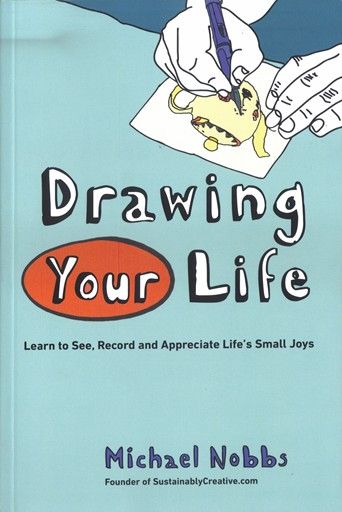
On a recent trip to BAM I picked up two newly-published guided journals: Michael Nobbs's Drawing Your Life and The Pocket Scavenger by Keri Smith. Michael, who is the founder of SustainablyCreative.com, has tackled guided journal via impromptu art by putting together a book of drawing challenges.
I struggle most with sketching, and when I spotted Michael's jourrnal I thought it would be geared more toward experienced/confident artists. But while flipping through it I discovered Michael has disabled since the late nineties and learned to draw himself as a way to come to terms with his health challenges. That comes through in the journal, as he puts it: I hope this book will encourage you to draw YOUR LIFE and perhaps show you a way you can enjoy each day just a little bit more. To me the fact that he not only wrote but also illustrated the book convinced me to invest; I like authors who practice what they preach.
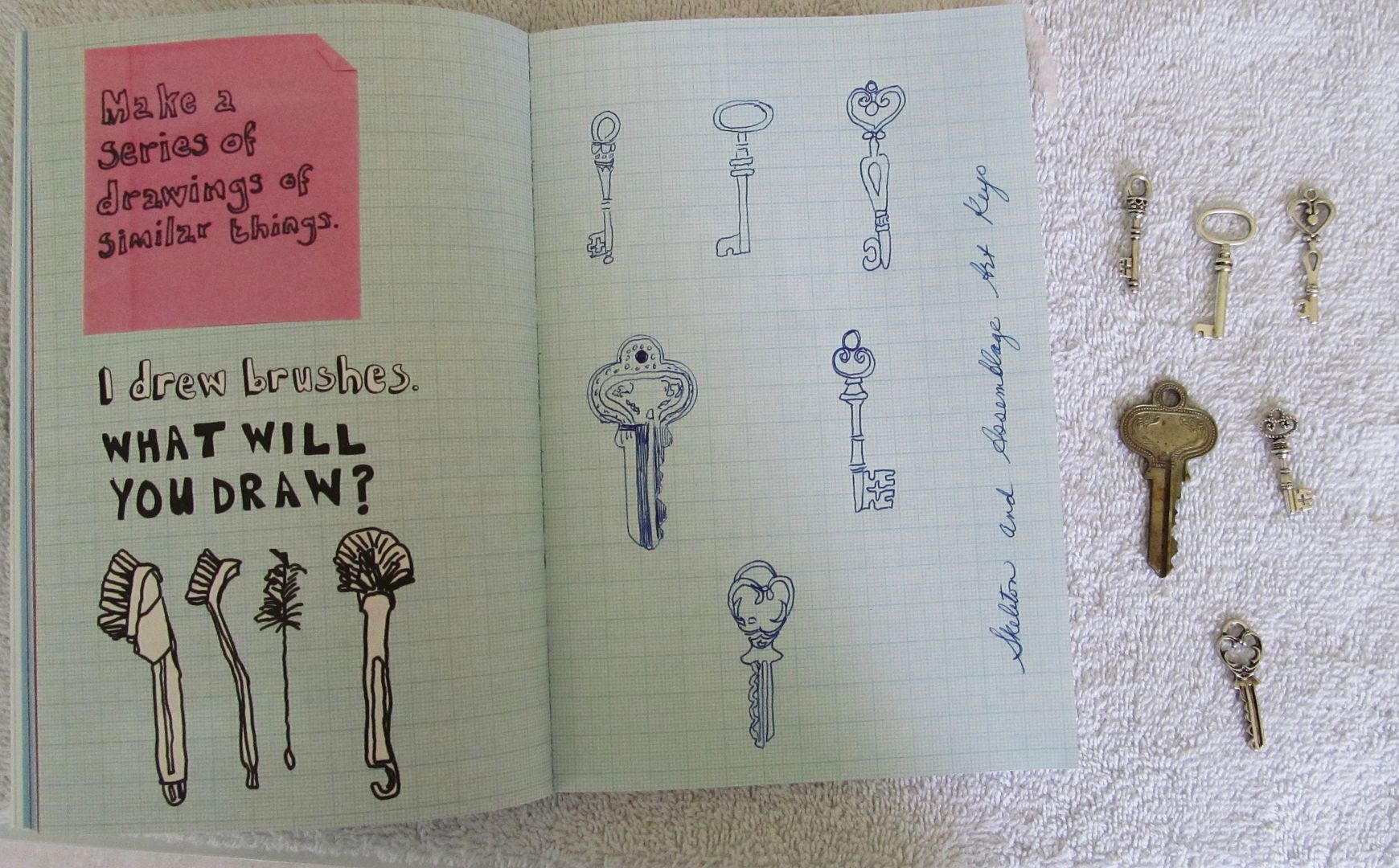
I tried out the journal in the fearless sense -- with a pen -- and freehand drew a bunch of different keys I'd been working with on some BookLoop and art projects earlier that morning:
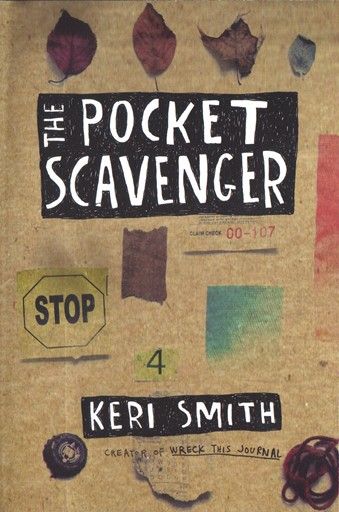 I've already enjoyed working through one of Keri Smith's guided journals, so I had to grab a copy of her latest, The Pocket Scavenger. This journal is a guided treasure hunt through your life where you hunt for ordinary and even mundane objects like postage stamps, buttons, part of a book, a used envelope, something that was given to you -- all of which you add to the journal along with the location, time, date, and a story/notes section where you write a bit about the process of finding the object.
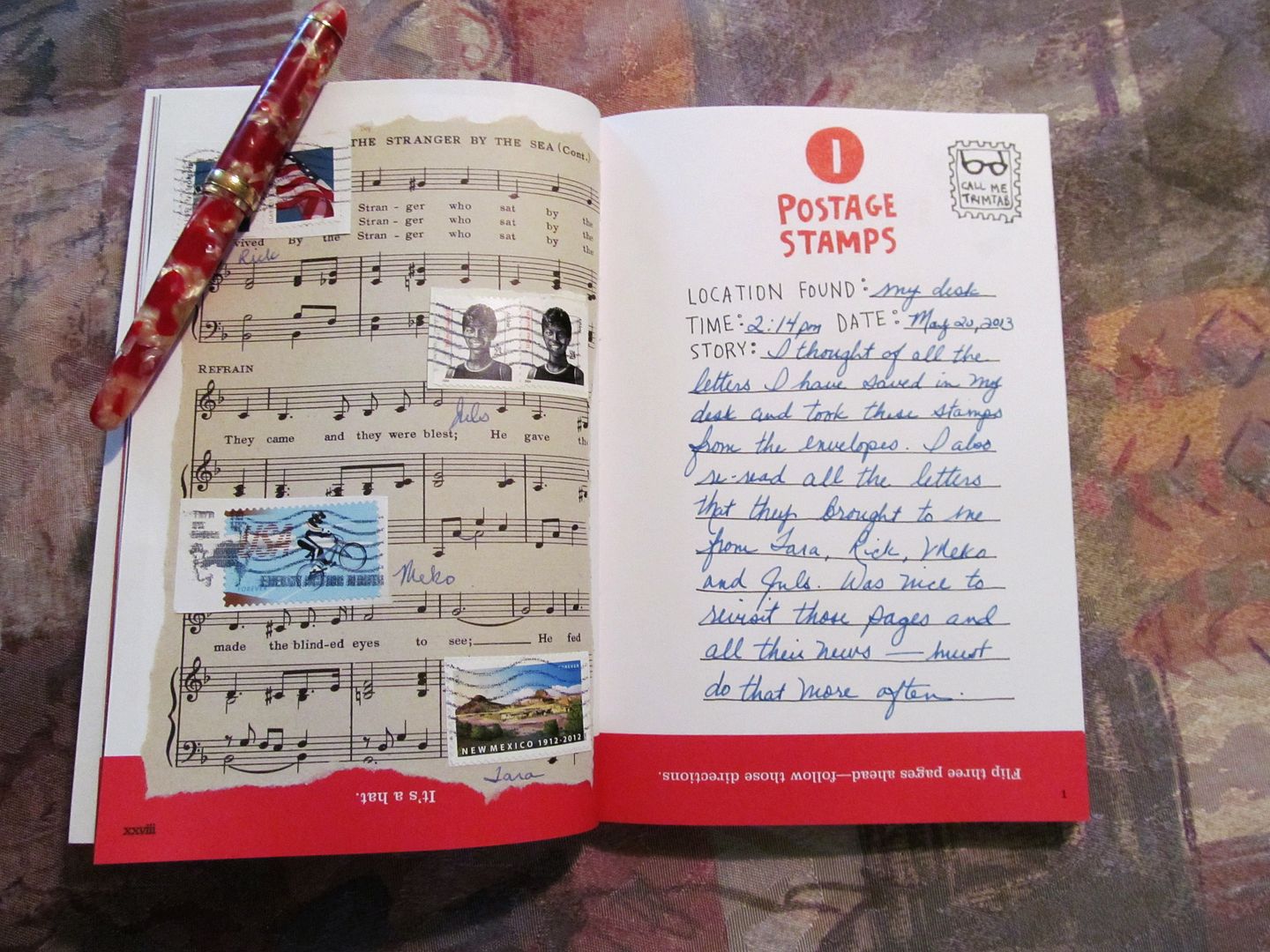
Now to some of you this might sound a little tedious, but wait, there's more to do: once you've found the required treasure, you then flip to a random page in the journal, turn it upside down, and follow the instructions written in the bottom page border to alter the object you found. For example: I found some old postage stamps in my desk. I noted the details of the hunt on that page, then did the flip and got these instructions from the border: add some music. That I interpreted as making the background of my postage stamp page out of some old sheet music from my paper recycling bin. Which then turned the postage stamps into a neat mini-collage:
Both of these guided journals allow anyone, no matter what level of artistic skill they might have, to creatively explore their immediate environment, document their life in an interesting way and journal outside the box. If you've never tried to keep a journal, either one of these could make a great first experience.
As always you don't have to take my word for it. In comments to this post, give us a journaling prompt you think would be interesting to do (or if you can't think of one, just toss your name in the hat) by midnight EST on Friday, May 24th, 2013. I'll draw two names at random from everyone who participates and send the winners an unsigned new copy of either The Pocket Scavenger by Keri Smith or Drawing Your Life by Michael Nobbs (to keep it fun, the winner won't know which until my package arrives.) This giveaway is open to everyone on the planet, even if you've won something at PBW in the past.


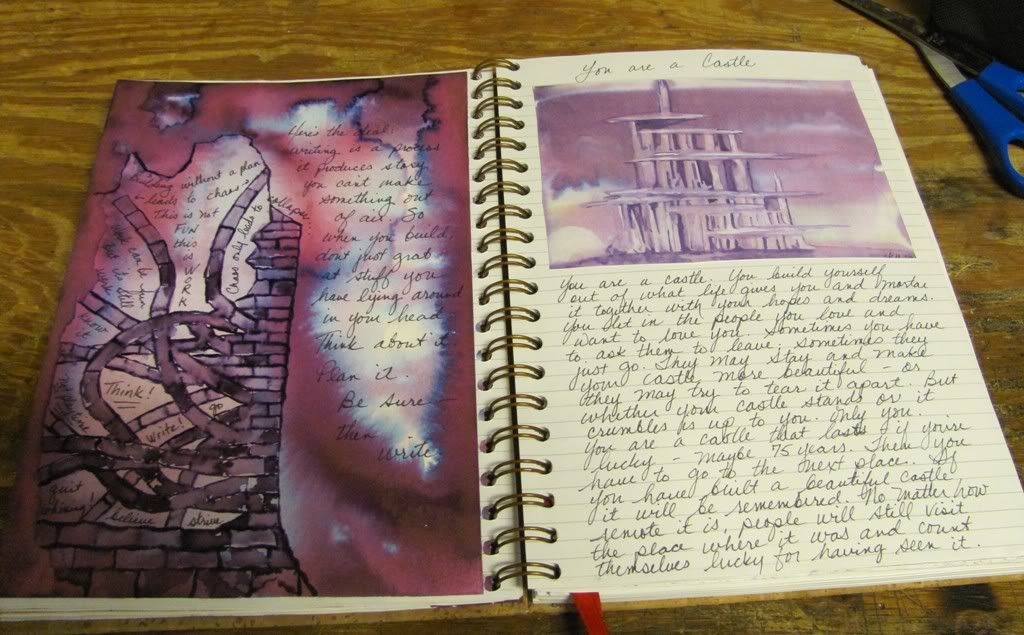 To give you some perspective, here is a typical entry in one of my own journals. I write about my family, friends, books, music, art, world events, my job, and all the ordinary (and probably boring to anyone else) things that go to make up a life. After getting into art journaling a few years back, I also
 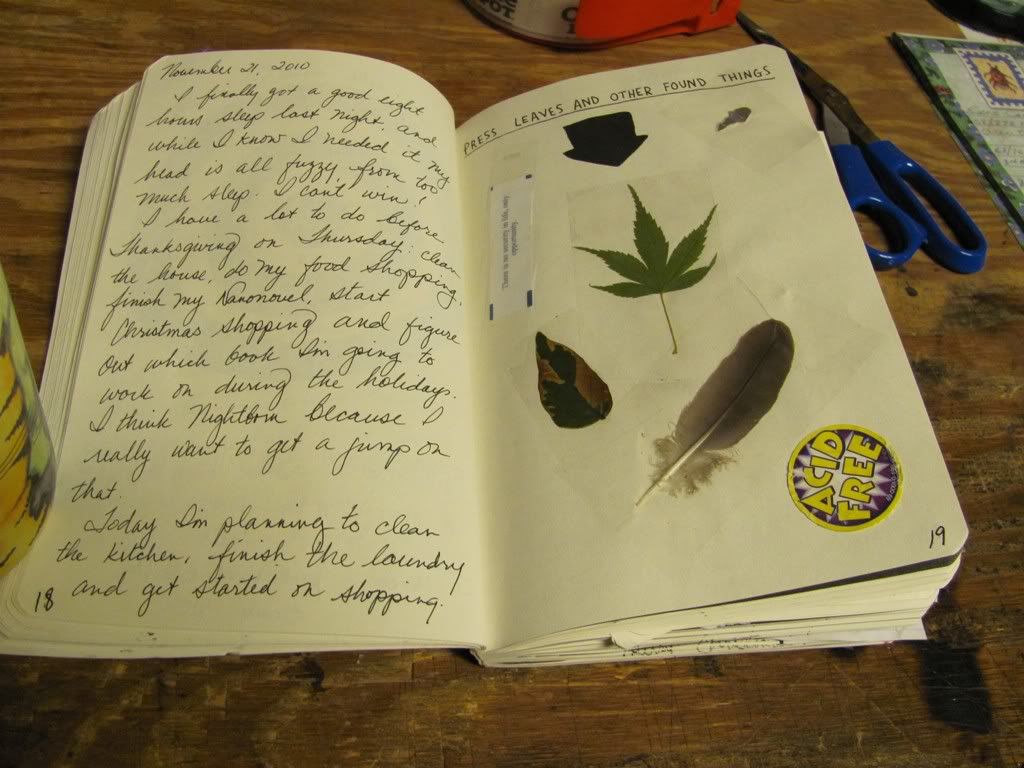 Every other page in Wreck This Journal listed instructions of what to do on that page or to the page, i.e. "drip something here (ink, paint, tea) close the book to make a print" and "tear this page out, put it in your pocket, put it through the wash, stick it back in." I dutifully followed the instructions, going so far as to spend a half hour reconstructing the page my washing machine turned into mush.
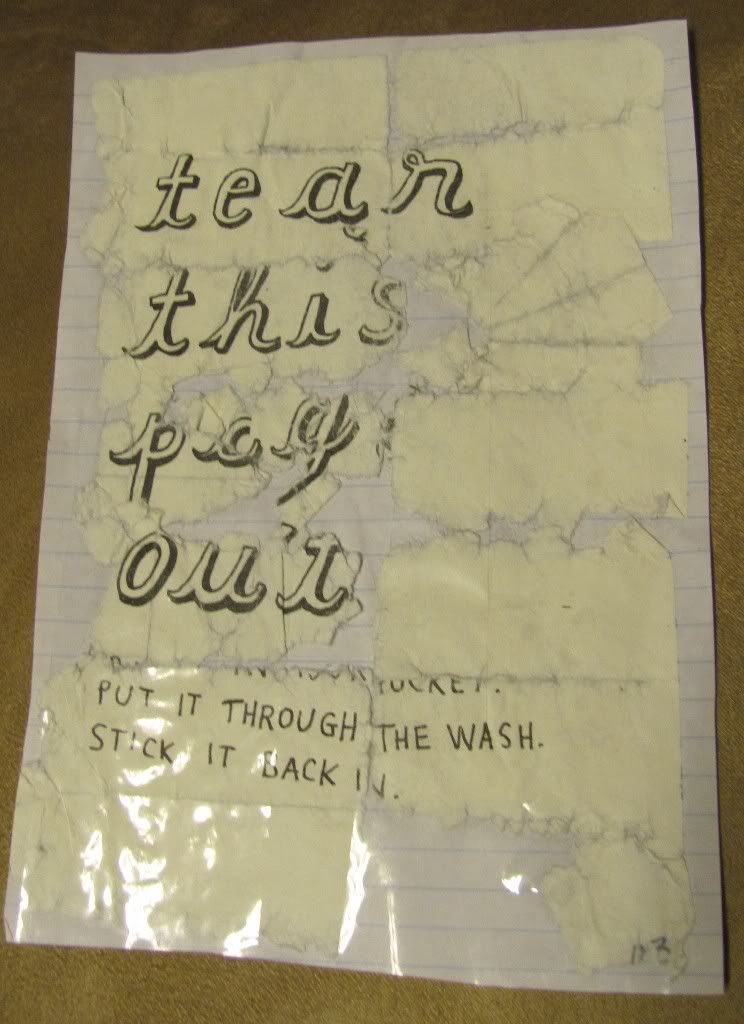 I did things I've never done with journals, though, lots of them. I sewed a page, picked up the journal with my feet, played golf with a page, slept with the journal under my pillow (now there's something I didn't do even when I was a teenager) and covered two pages with office supplies. I also added bird feathers I found in the yard (safely and sanitarily encased & sealed under clear packing tape) and made a drawing using my own hair.
 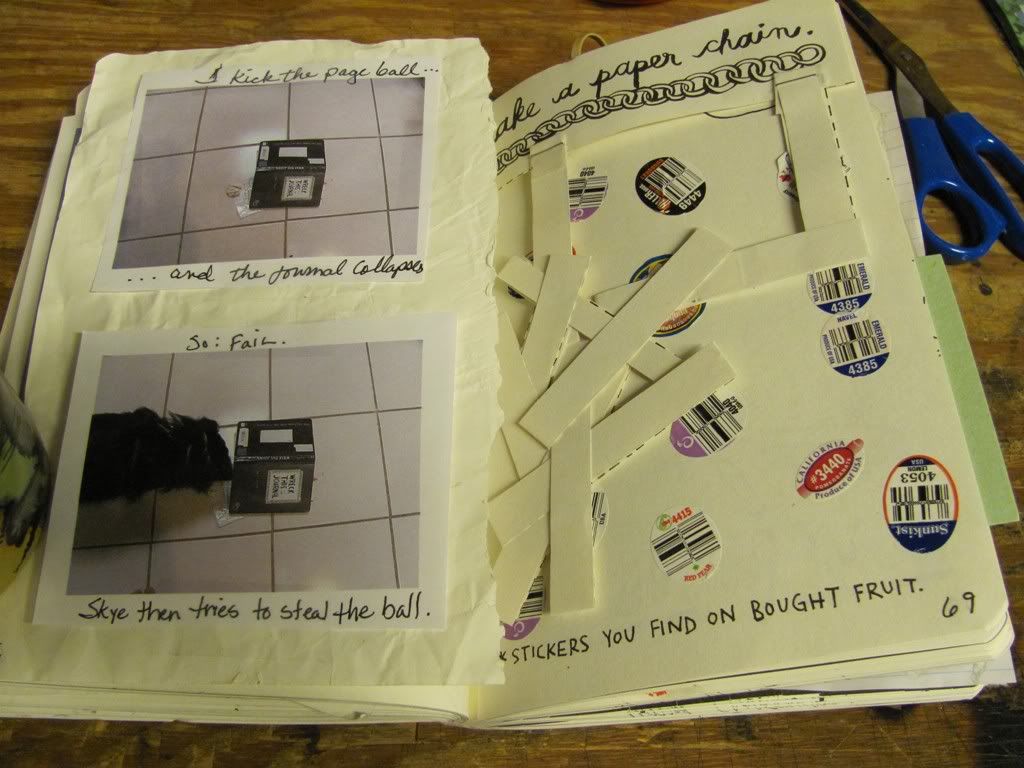 Toward the end of finishing the journal my aversions made a light bulb go off. I've always believed that I write my private journals for myself, but maybe subconsciously I want them to be read by someone else someday. After thirty-six years of keeping a daily journal, you'd think I'd have realized that, but honestly I hadn't.
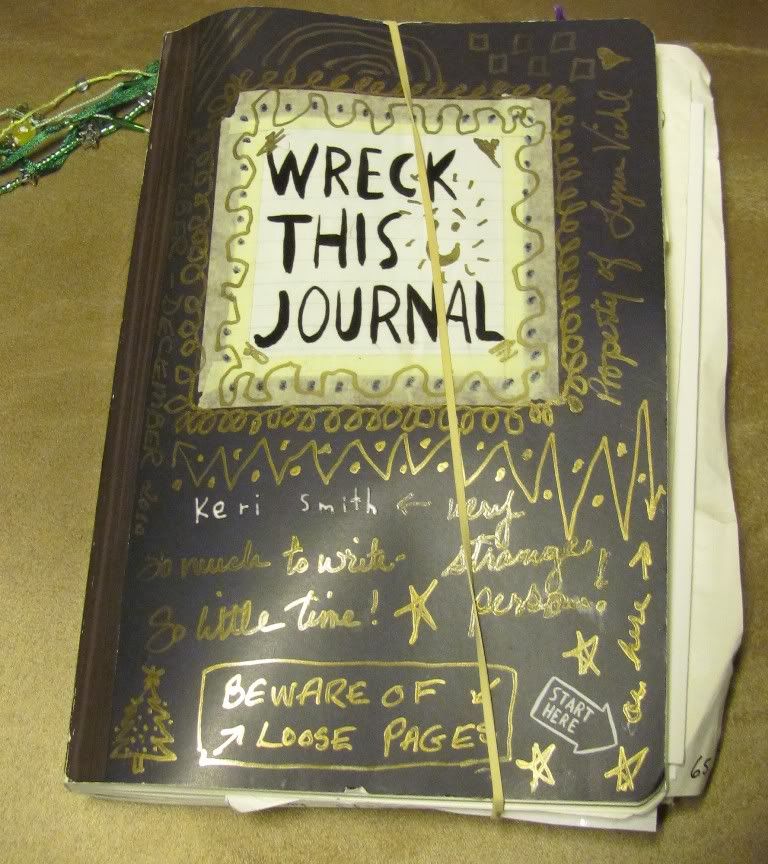 Guided journals often prompt us to vent our worries and explore our imaginations, but Keri Smith invites us to rethink our attitudes toward the journal itself. Through her zany instructions she reminds us that a journal can be more than a thought depository or a sketch book; it can become a golf ball, a pull-toy, a bulls-eye, and just about anything else we want to play with.
 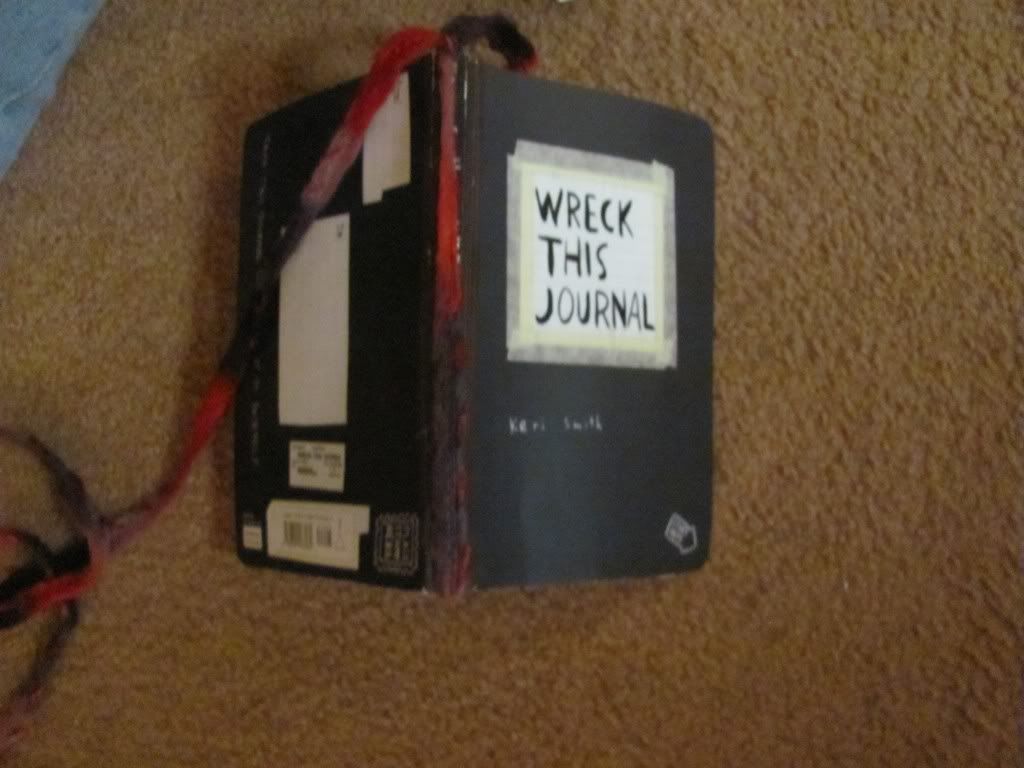 All those empty pages can be intimidating, though, so I also employ guided journals (blank books that come with writing prompts in them) whenever I can find any that are kid-friendly. That's how I discovered
 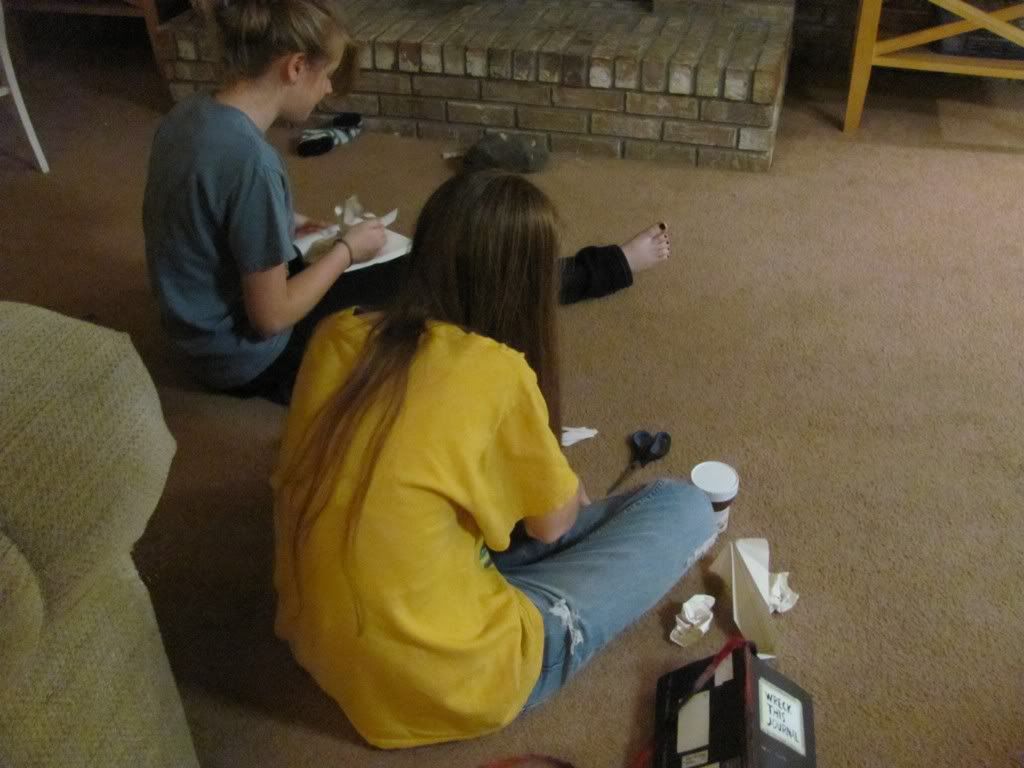 Since then I've given copies to other writers and younger kids, but I've never tried it out on older teens (or myself for that matter.) As I'd like to incorporate it into some of the writing classes I teach, I decided to give it a personal test drive via a controlled experiment. I bought three copies of the book, and gave two to my daughter and her best friend. I then challenged them to join me and work on wrecking the journals this winter with a goal of finishing every page by January 1st, when we'd trade them and see how each other's turned out.
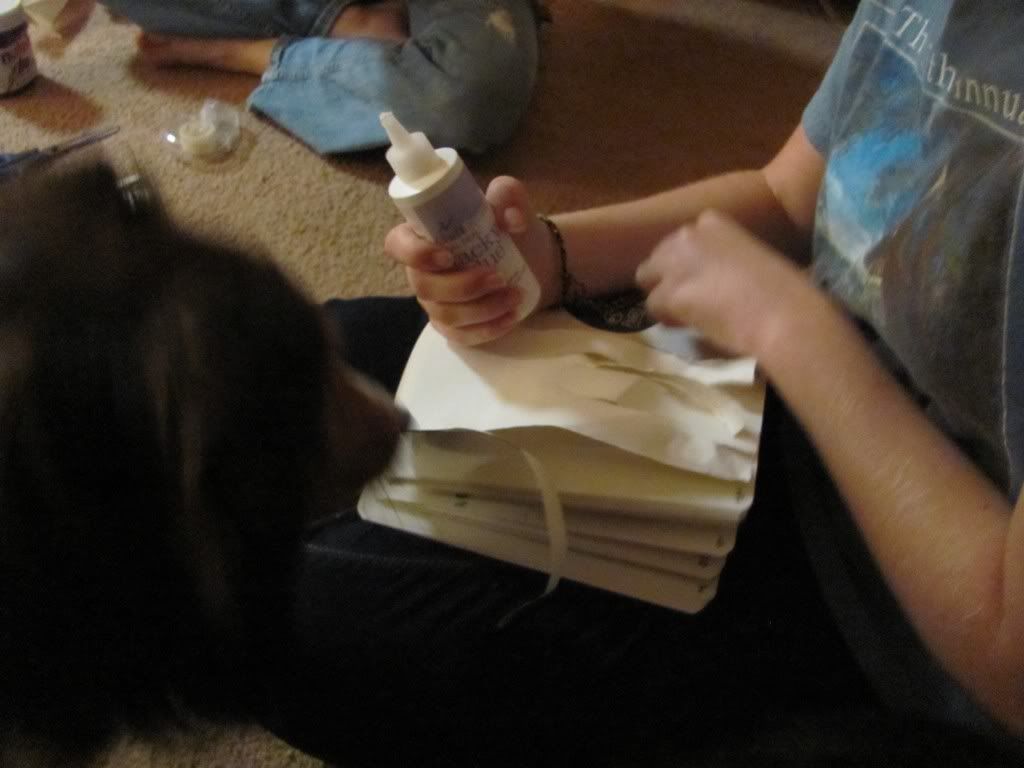 The girls thought it was a neat idea, but they were obviously in no hurry to get started on their journals. I suggested they look through them to see some of the activities involved, and then I left them alone. Within five minutes they were both sitting on the floor with their copies of the journals. They spent a good hour laughing and making suggestions as they ripped, tore, glued and wrecked different pages.
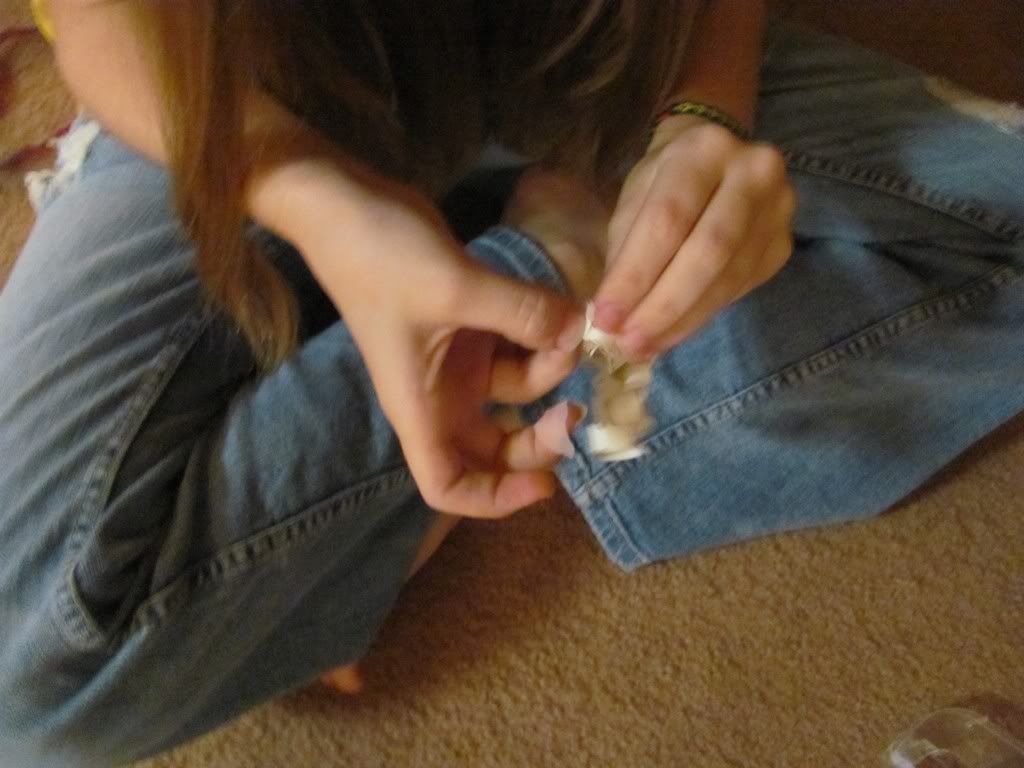 I'm not sure why this guided journal is so much fun, only that I've been pulling my own copy out daily to creatively deface at least one page. I believe books should be protected, not mangled or destroyed, but I think having the author's permission -- and specific instructions on how -- to wreck the journal directly bypasses my lifelong inhibitions. With every page I wreck the journal seems to be morphing into an art project, and while I don't think book-wrecking will ever become my thing, it's weirdly delightful to follow Keri Smith's path of artful havoc.
