Saturday, March 05, 2011

Friendly Power

As I mentioned yesterday (just before I jinxed my good news, which turned out to be bad news, which serves me right) I have two books to talk about, and the first is 100% Charlene Teglia's fault. I say this because she sent me Garden Spells, Sarah Addison Allen's debut novel, which otherwise would not have been touched by any ten-foot pole I own.

I am not a fan of magic stories. A) I don't believe in magic and B) most of the time I find it annoying in fiction. Unless the magic is extremely well-written, logical to the world-building and therefore believable (i.e. anything written by Patricia Briggs, Rob Thurman, Marjorie M. Liu, who are masters at this) reading it for me is exactly like watching porn -- what is supposed to excite just ends up looking fake and silly and rather pathetic.

Much to my dismay Ms. Allen did not write the porn-variety kind of magic novel, and now I have to dine on my chapeau (again.) Garden Spells is actually about more than just magic in the real world, though, and tells the story of the Waverly family, a bunch of oddly-gifted characters who are trying (and not trying) to cope with themselves, the past and life in general. They are alternately helped and hindered by their garden, which grows very special flowers, herbs and one very eccentric apple tree with Biblical powers. This all set in a small town in North Carolina populated by the most wonderful assortment of characters I've read in a long time.

I didn't want to like this book, so to end up falling in love with it really singed my southern regions. Who doesn't hate it when they're wrong? But it's worth the pain, because Garden Spells was exactly the book I needed to read right now. I think that makes Charlene psychic, but that doesn't surprise me. Ms. Allen's debut novel does not read at all like a debut novel, and it's the kind of book you end up sharing with everyone you know, even people who don't like to read, so it can work its magic on them. This is a novel that will rejuvenate your faith in great books, and God, we all need that kind of real magic in our lives.

As always, you don't have to take my word for it. In comments to this post, name an author or title who you think makes something fantastic believable (or if you're still a skeptic, just toss your name in the hat) by midnight EST on Monday, March 7, 2011. I will draw five names at random from everyone who participates, and send the winners an unsigned hardcover copy of Garden Spells by Sarah Addison Allen. This giveaway is open to everyone on the planet, even if you've won something from PBW in the past.

Friday, March 04, 2011

Quilt-Happy


I am bailing on you guys today so I can hang with my non-writer pals at our favorite county quilt show. We do this every year so we can talk (quilting) shop, get high on fabrics, notions and techniques, and generally be like the bird here.

When I get back I have two terrific books to talk about and give away (Charlene is to blame for hooking me one of them) and maybe some news to share. Or maybe not. I'm trying not to jinx it.

See you all tomorrow.

Prize-winning "Today I will be Happy" quilt made by Kelly Wordworth.

Thursday, March 03, 2011

Review SPAM

In amongst my e-mail for my business account today was this SPAM:

Dear Lynn Viehl,

Thank you for purchasing from [online bookseller] three weeks ago.


You're welcome. Now why are you bothering me? I got everything. I paid for everything, too.

According to our records, you haven't yet reviewed everything you bought.

I haven't read everything -- wait a minute. Reviewed? When did I say I'd review anything?

If you enjoyed a title, won't you please take a moment to write your review? Reviews help other [online bookseller] members make more informed purchase decisions and help authors market their books.

Oh, so now you're asking. Or did you change your terms of service so that I have to write a review when I purchase something? Did Scribd.com buy you guys or something?

To write a review, simply follow the link to the book's page and click "Review Book": [Title of novel I purchased] [link]

I just realized: this is review SPAM. I've never gotten review SPAM. Buy my freakin' book SPAM, sure, but Review my freakin book? And it isn't even the author SPAMming me. I'm not sure how to handle this. Do I send it to the author and say "Tell your stupid bookseller to get off my back?" Do I make fun of it? Well, of course I make fun of it, it's SPAM, but otherwise . . . hmmm.

Reviews are also a great way for you to build your own presence on the site.

Yeah, I want my name to be plastered all over a site that used the PayPal address of their unsuspecting buyers to SPAM them. I'd be a complete fool to pass up this incredible opportunity. Sign me up! Now!

Once you write a review, you will be credited as the author of the review and other [online bookseller site] members will be able to click on your screen name to visit your member page, where they can read your other reviews, as well as any other optional information you care to share such as your photo and bio.

What about pictures of my eye surgery last year, now that I've come clean about it? I have them in all stages, from presurgical infected mess to grossly swollen, stitched, oozing mini horrorshow. Or I could just show off some of my other scars. Want to see the knee? It makes strong men weep. Honestly. My doctor doesn't even like to look at it directly anymore. He uses a cardboard box viewer, you know, like when there's an eclipse of the sun?

And of course if you're an author yourself--

Huh? You mean, you don't know that I'm an author? After I offered you all those pictures? I'm hurt. I'm really hurt.

--and fellow readers find your reviews informative--

No, I'm an author, so of course I only write stupid, obtuse reviews that make readers hurl instantaneously. Still want me?

--then your book reviews serve as a nice indirect way to help other readers discover the books you've written when they click on your screenname to view your other reviews.

Jesus Christ. You people are really Machiavellian. I almost like you for it, bless your evil SPAMmy little hearts.

If you no longer wish to receive these reminders--

Duh.

--please click the following link: [link]

Clicking. Link doesn't work. Why am I not surprised?

Thanks for supporting [online bookseller site] authors!

No, thank you for giving me something funny to post on my weblog.

Wednesday, March 02, 2011

Elsewhere

For a chance to win my latest giveaway, aka this lovely Fight Evil Read Books tote and all three Kyndred novels (signed by Yours Truly) you have to leave me now and head over toThe Romance Reviews, where the very nice folks there have posted an interview with me about Frostfire, the Kyndred books and some of my upcoming new releases.

This interview includes some stuff that I rarely talk about, and one thing I've never mentioned, so check it out before it ends up on WikiLeaks. I will also be stopping in to read comments, answer questions and generally be a pest.

You can find the interview here, and the contest page here. TRR will also be running the contest for the entire month of March. Which is also their Grand Opening month, so if you want to join the part, check out this page. and from the front page it looks like they're giving away all kinds of stuff, including a nice bunch of gift cards.

Tuesday, March 01, 2011

Nice Outfit

For all the dog lovers out there: thirty seconds of our best-dressed furry friends, guaranteed to make you smile, right up to the surprise ending (warning for those at work: plays with some background music.)


Video linked swiped from Gerard at The Presurfer.

Monday, February 28, 2011

Keep Your Cash Ten

Ten Things You Can Have for Free

Freeware caution: always scan free downloads of anything for bugs and other threats before dumping the programs into your hard drive.

Books, the original/free version of BookShelf, is "a simple eBook reader for the iPhone. It reads HTML and text files stored in your ~/Media/EBooks folder, and is smart enough to enter subdirectories, if for instance, you've broken a book down by chapters" (Mac OS X)

ClipboardFusion supercharges your clipboard, and allows you to "Remove clipboard text formatting, Remove HTML tags from clipboard, Clipboard string search/replace, Modify clipboard with Macros, Preview clipboard images and HTML colours with a toaster pop-up, HotKeys to manage your clipboard and Sync your clipboard with other computers" (OS: Windows 7 and Vista (32-bit and 64-bit); Windows XP and 2000 [see special requirements on website download page]; Windows Server 2003 & 2008 [32-bit and 64-bit])

DreamScene XP allows you to "use a video as your desktop background, the same way you would have used a regular picture. DreamScene XP is designed for Windows XP customers to extend Windows features to make using your computer more fun. Change your desktop background to a video movie, which runs in a continuous loop to make your desktop come to life" (OS: Windows XP)

Knit Design Studio is "a handy tool for designers who need to make graphs with both common and not-so-common knitting operations. Great for graphing lace patterns, and also cables. When the graph is complete, a key is automatically made of any knitting operations included in the graph. There is also space to type in any needed knitting instructions (such as shaping). Files can be printed, or saved as a picture file (graph only) to be used in another application. Help files are included to aid in use of the program" (OS: Windows XP/Vista/7)

According to MacApper.com, LyX is "is a different kind of word processor. Most word processors let you focus on content and style, giving you inconsistent documents most of the time. LyX allows you to create professional documents while focusing on structure first, and when you’re done, you can export your document as a PDF or web page. This tool is excellent for professional reports, scientific papers and so on" (OS: Mac OS X 10.3.9 and later)

Money Manager Ex is "a free, open-source, cross-platform, easy-to-use personal finance software. It primarily helps organize one's finances and keeps track of where, when and how the money goes. It is also a great tool to get a bird's eye view of your financial worth. Money Manager includes all the basic features that 90% of users would want to see in a personal finance application. The design goals are to concentrate on simplicity and user-friendliness - something one can use everyday" (OS: Windows and Linux and Mac OSX)

NoteLiner "helps you structure and track your work; it provides a place to record meeting and conversation notes, manage todos, and store key project information that might otherwise be scattered about. It is a simple tool that will not slow you down, but will give you a means to stay on top of what you need to do and remember. Noteliner lets you create a hierarchy of notes. You can give these notes follow-up dates, indicate which ones need attention, assign people, prioritize, or mark them complete. Different views allow you to see all the notes assigned to a particular person, those that need follow-up, attention or are dated. You can also specify which notes are part of a To-Do list and then view all To-Dos across your projects along with other items that need attention" (OS: Windows XP; designer notes on web site "It is very stable. I run it on Windows XP but it should be fine on Windows 2000 and more recent.")

Repetition Detector "allows you to detect repetitions in texts. Features: Process text without size limitation; Word and letter count; Top 50 of most frequently used words; Highlight small repetitions (two indentical words which are close); Highlight intermediate repetitions (words used too often inside two or three pages); Highlight each occurrence of a word by clicking on it; Take into account similar words, i.e. with same beginning; Customizable and automatically saved parameters" (OS: Win 98/ME/NT/2K/XP/2K3)

Scribus is "an Open Source program that brings professional page layout to Linux/UNIX, Mac OS X, OS/2 Warp 4/eComStation and Windows desktops with a combination of press-ready output and new approaches to page design. Underneath a modern and user-friendly interface, Scribus supports professional publishing features, such as color separations, CMYK and Spot Color support, ICC color management or versatile PDF creation" (OS: Win NT/2000/XP/2003/Vista/2008/7, Linux, Mac OS X)

Stash is "a personal finance application designed to help you understand how much you spend and where it's going" (OS: Mac OS 10.5/6)

Sunday, February 27, 2011

Character Box Lunches

My daughter is taking a culinary class at school, and one of her homework assignments was to make up a mini-cookbook with recipes and photos of some food she's prepared. She decided to write up one for bento boxes, which lead to a shopping expedition and cooking mini-marathon. Because she's never made a bento box (and neither have I) I was a bit worried at first, but soon discovered it's easy and a lot of fun.

Basically a bento box (or more properly, an obento) is a healthy, homemade lunch that Japanese moms make for their kids. It's also an art form, because the moms shape, decorate and garnish the food to resemble little critters, fairytale creatures and other adorable things. If it's almost too cute to eat, it belongs in a bento box.

Here are some shots of my girl's first finished bento box (click any image to see larger version):


I think she did pretty well for her first attempt. And I didn't help her at all in the kitchen; now that she's a culinary student she's got to wing it solo (and did fine, all the way through to cleaning up after herself.)

Earlier this month I bought a copy of Yum-Yum Bento Box by Crystal Watanabe and Maki Ogawa, which is a fantastic how-to cookbook filled with recipes, tips, ideas, techniques and lots of information about the different types of Japanese foods used for bento boxes. In the intro, the authors mentioned that kids and grownups like to make character-driven bento boxes, which are called charaben or kyaraben. For example, if you want to do a Goldilocks and the Three bears bento, you shape the faces of a little girl and three bears out of the food (there's a cute recipe for this one in the book, too.)

The writer in me immediately jumped on this idea and began thinking of how I'd make a character-driven meal for one of my stories. I wouldn't try to shape the food into any sort of physical representation (too much temptation to do something other than a face) but I know I could put together an assortment of foods and treats that I've used in my stories or that remind me of certain characters. I'd love to do a bento with what I imagine a Jorenian box lunch would be like, too -- some breakfast bread, candied flowers, herbal tea, lots of berries laced with cream . . . God, I hate dieting.

If you're looking for new ways to get to know your characters and/or your stories, you might try putting together a character-driven bento box (or any kind of meal, for that matter.) This would also be something fun to do if you take your lunch to work or plan to do something writing outdoors.

Saturday, February 26, 2011

Twenty Years, Twenty Minutes

Let's take a trip in the KindaWayBack machine to 1989, to when most of the world had yet to discover cyberspace. I started writing in 1974, but I didn't really get serious about pursuing publication until '89.

Back then it was a very different world for writers. Imagine: no internet, no e-mail, no social media, no cell phones, no Twitter or Facebook, no nothing for the writer but the writing and us all alone by ourselves.

I've talked to other writers of my generation, and we all went through pretty much the same thing. We wrote all the time, endlessly, wildly, often shivering with the delight of it because we were so close to it. None of us were perfect, either. We fumbled, we ran out of steam, we crashed, we burned, we resurrected ourselves only to do it all over again. We wrote clunkers and stinkers and failures. We began piling them up along with legal pads filled with even more ideas and story fragments and mini-rants.

After the work stopped sucking quite so much, we decided we were good enough and dared to write up a submission. This we typed on a typewriter with a correcting ribbon, because no matter how thinly we applied it liquid paper (aka white-out) could never look anything but globby. Also, sometimes the ink from the typos would bleed through and leave a little dark ghost of what we never meant to say behind the correct words.

I'll tell you a secret: sometimes I still miss the smell of metal, ink ribbon and white-out. It was our writing perfume.

Anyway, twenty-seven or forty-nine drafts and at least one typewriter ribbon later, we mailed off our submission in an unpadded envelope with rows of stamps we had to lick to make them stick. A week later we went to the mailbox with all our expectations, which were naturally dashed when no response appeared among the bills and junk mail. A month later we started waiting at the box for the postman to arrive. Three months later we suspected the postman had delivered it to the wrong address and went around asking the neighbors if they'd gotten it by mistake.

Six months later we got a thin white business envelope with vertical creases on it from the publisher we'd submitted to. We knew this because it was the SASE we'd sent along with the submission, on which we had neatly written our own address in ink. We put it on the kitchen table and stared at it for at least an hour, afraid to open it for fear it would actually kill us.

When we finally tore into it, the outpouring of praise and admiration we expected was actually a one-page form rejection. Thank you for your blah, it's not for us, good luck yada yada. Sometimes it was even signed. We carefully enshrined that first rejection somewhere so nothing would happen to it (and also so we didn't have to look at it) and then dragged ourselves back to the keyboard. By that night we convinced ourselves of a thousand reasons (all mistaken) for the rejection, and made up the next submission.

Now read the previous paragraph again. Read it ten times, fifty times, a thousand times. We didn't spend a year or two doing that every week. We spent five years, or eight, or ten, until our shrine/hiding place began to overflow with rejections. We shrugged them off in public and wept over them in private. We drove ourselves mad with wondering: What was wrong with these editors? Didn't they read that amazing opening line, the one we spent two years thinking up? And what about the rest? Nobody was doing anything like us. Was that it? Were we too different?

And on and on and on.

The only thing we ever figured out for sure was that no one was going to answer our questions. Ever. We had to find the answers by ourselves.

As the years passed we still wrote endlessly, but the wildness and delight subsided and became a more deliberate, focused quest. We looked at everything in our bag of writing tricks and started sifting and sorting through them. We weeded out what seemed wrong and kept what felt right. We studied how-to books for writers and subscribed to writing magazines (the sum total of available information for poor writers back then.) The more our submissions were rejected, the more determined we became. We would write the book that would sell, by God, or die trying.

New and interesting torture came in the form of editors who would write to request a full manuscript only to reject it three, four, five months later. We began to loathe the words Not what we're looking for and I just didn't love the story. Sometimes -- more often than you imagine -- the responses were personal, and nasty. We stood at the mailbox and imagined socking the postman right in the nose the next time he gave us a sympathetic look. No, what we really wanted to do was call those editors and demand to know what, exactly, they were looking for, and why the hell their love had anything to do with it.

As for the editors who got nasty, we indulged in vengeful thoughts as a kind of anger management self-therapy. We saved all the really inappropriate responses in a special file marked with something like "Send copy of first book" along with more scribbled, rehearsed lines for when we signed it for them: Too bad you passed on this one. Thanks for sending me to a way better publisher. Hey, nitwit -- looks like you were wrong. We prayed our first book would go platinum overnight, not so we'd make a ton of money, but just so we could also include a copy of the Times bestseller list in the nah-nah-nah-nah-nah packages we'd send to every pinheaded editor who'd stomped on, spit at or sneered over our work.

Then something actually happened; usually when we'd hit a really low point, and were thinking about throwing in the towel, admitting defeat, and finally putting an end to the torture. Another envelope with a single page arrived, but this one wasn't a form bounce, or the lukewarm invite for more humiliation.

No, this one was serious. Bizarre, too, for it offered praise mixed in with all the nitpicking. It asked if we were willing to make some changes. It gave us a phone number to call, and a name to ask for, and when we called it, we found ourselves stammering like an idiot and agreeing to everything the editor said because oh dear God the last thing we were going to do was piss off the one person who could make all our dreams come true.

We made the requested changes, and more changes after that, and more changes after that, always frantically cheerful and ridiculously willing. Of course we would change anything, anything at all, because obviously this editor was the smartest one on Earth. It didn't matter how many times we had to redo this or rewrite that, we had his/her attention. Attention meant they liked us. They wanted us. If we did everything right, they would be very pleased and request approval to purchase us.

The final phone call came, and at last the editor uttered the words we had been waiting to hear, praying to hear, working our ass off to hear: "We'd like to make an offer." Once we finished silently shrieking, we dislodged our heart from our tonsils and offered joyous yet still humble thanks. We would not let the editor down no matter what. Then (if we were stupid) we agreed to accept an offer for a manuscript we had been working on for three or four years, an offer that was equal to the pay a worker at McDonald's earned in ninety days, and a month later signed a contract that deprived us of most of our rights as an author. If we were smart, we promised to call back as soon as possible and started (hysterically) looking for an agent to represent us.

Either way, from there we turned pro. The euphoria of selling the first book did give us temporary amnesia, so (fortunately) most of us didn't mail out those F-Y packages to all those cruel editors. If we were lucky, we survived our rookie year. If we were very lucky, we got through everything else Publishing throws at a writer. If we were very very very lucky, we even sold a lot of books.

And then came the internet, and everything began to change.

Today -- right at this very minute -- there is a writer out there who has just received (electronically) their very first rejection. Tonight that same writer will format their rejected manuscript into an e-book, upload it via digital self-publishing to an online bookseller and begin selling it immediately.

Just like that. No muss, no fuss, no heartbreak, no torture, no problem. From there the writer will move on to penning their next work, untroubled by the depression, anger and self-doubt inflicted by the harshness of a lengthy traditional submission process. They need not analyze, improve or even compromise. They might even get lucky and sell a lot of books.

When a writer can do in twenty minutes what it took me and other writers who came up before the internet so many years to accomplish, I'm thinking it has to be better. More tempting, too. How could anyone resist something so easy and painless as self-publishing just to put themselves through the innumerable levels of hell that is (even with the internet) still the traditional submission process? Believe me, I totally get why so many writers are abandoning the still-dismal chances of publishing with a major house in the rush to self-publish for profit. If I was part of this generation, I probably would have, too.

Am I sorry I'm not? Nope.

Don't get me wrong, it's not because my twenty years of slogging my way toward publication makes me superior to someone who does the same in twenty minutes. Technology marches on, and even though the Publishing industry has had to be mostly dragged kicking and screaming along with it, things do have to change. If they didn't, we'd still be writing novels in longhand with quills on parchment and vellum (and just imagine what those writers would think of my speedy little manual typewriter.) Also, plenty of writers are still doing things the old-fashioned way, mailing off hard copy submissions to publishers and waiting months if not years for responses. I don't think that will ever go away.

But for all the speed and ease and no-hassle perks that today's technology offers for writers pursuing publication, I feel like something is still missing. I think it's time. For all the hell I went through, I also got a huge amount of time along with it to find out who I am as a writer.

I had -- literally -- two decades to practice and think about the work, and study it, and develop it, and try things and discard things. During the last ten years, I had all the time I needed to develop theories and work habits, look and find ways to improve my productivity, and teach myself how to be a working writer. Every day I did this; I thought about it, I was obsessed with it. Before I published one word I had like seven or eight different major shifts in what I wrote, too, the same way a painter goes through a blue period or decides to change mediums.

If you ever wonder why I never run out of stuff to talk about writing, it's probably because I spent all those years alone thinking about it.

The solitude, waiting and wondering what would happen, yeah, was not so great, but because I am self-taught I definitely needed the time to grow and mature as a writer. I didn't simply find out what I could do, I had the time to understand it and get it under control and channel it and learn to live with it. It's all the things that have nothing at all to do with Publishing and everything to do with who you are as a writer. I don't know, maybe today's writers can figure all that out in twenty minutes, too.

I am all about speed and efficiency, and I think being able to publish almost instantly is an amazing thing (another reason I've been playing with self-publishing as promotion for ten years -- it's quick and easy.) This is the first time since I turned pro that I feel some optimism for the future of Publishing, too. But as a member of the old typewriter and snail-mail generation, I hope self-publishing and technology doesn't eliminate the entire journey of self-discovery. As arduous and heartbreaking as it can be, I don't think it's a trip any writer should take in twenty minutes or less.

Friday, February 25, 2011

Writers Hospital

"Harvey, Campo, Jennings," Dr. Daranda Star called out as she hurried across the coffee break room toward the trauma bay. "We've got incoming. Move it."

The three interns looked at each other before dropping their copies of The Fire Within, grabbing blank paper gowns and trotting after the chief resident.

"Was it an online train wreck, Dr. Star?" Lisa Harvey asked as she pulled on her gown and turned so Rafael Campo could knot it in place.

"No, thank God. After the last one we're still short of beds." Star snapped on her latex gloves and eyed the interns. "You three know what an MWI is?"

Terry Jennings raised his hand as if they were still in school, then flushed and dropped it. "Uh, doesn't it stand for Major Work Incident?"

"No, Jennings. Mass, not major, and writer, not work. Mass Writer Incident." Star pointed at the hospital's sign. "Remember, we're all about the writers."

"So is a Mass Writer Incident a situation where a bunch of writers are hurt at the same time?" Harvey asked.

"You've got it half-right," Star said. "We use MWI to refer to injuries sustained by two or more writers while gathered together in some way. Ulcerated egos at awards ceremonies once all the winners have been announced, exposure to unsafe levels of cheap perfume and lousy luncheon flatulence in the only elevator running at a con, cascading anxiety attacks on list-servs after learning a phony agent has swindled every hopeful on her list, that kind of thing."

"Dr. Star." Jennings gestured at four units rushing toward the trauma entrance. "Here they come."

"Get out your pens and take notes while you can," Star said, her expression bleak as she hurried to the first unit.

The back doors burst open and an AET jumped out to help unload the gurney, on which a pale-faced young man lay muttering. To Star, the AET said, "Epic fantasy writer, thirty-two years old, locked in a badly-ventilated garden shed with a laptop for three to four days. Regular wordcount but very low, about 10 per hour. His mother reports decreased appetite and general apathy. Patient is dehydrated and unresponsive."

Star leaned over the writer and checked his pupils with her pen light. "All right. Harvey, take this one to trauma room one and get him started on fluids."

The second unit delivered a young, groaning female in a cervical collar.

"Twenty-eight-year old female romance writer," the AET stated. "Reported to have fallen off her chair a few hours ago. No loss of consciousness, but the patient complains of neck pain and nausea."

"They absolutely refuse to move their butts from that chair." Star frowned. "Did you say romance writer?" The AET nodded. "What was she doing with dragon boy?"

"Can't say." The AET made a face. "But they were both logged on to the same writer chat room."

Star tilted her head back to better address heaven. "Baby Jesus, give me strength."

"Dr. Star?" Campo asked, his voice tentative. "Could it have been a word war that got out of hand?"

She straightened and glared at him. "That or fake cyber sex scene practice. Doesn't matter anyway. Take this one to two and get a chatroom history. I want all the numbers and positions." She jabbed a finger at him. "And no talking shop. I mean it."

Campo nodded and wheeled away the moaning female.

By that time the third patient, who had climbed off his gurney, had reached Star. He cradled his right arm against his chest as he demanded, "Why are you people pretending you don't know who I am? Have you any idea how many awards I've been nominated for? My current release was featured this month as Pick of the Day on FutureSFClassics.com. My God, do I have to carry around a book like Dan Brown?"

The AET with the empty gurney caught up to them and gave Star an apologetic look. "Forty-seven year old male, ah, science fiction writer--"

"I do not write science fiction!" the patient said through gritted teeth. "I am a prose stylist of future speculative reality-based singularity surrealism, you idiot."

"My mistake, sir." The AET lowered her voice as she said to Star, "Patient refuses to be examined and denies injury and pain as well as presence in the chatroom--"

"I told you, I wasn't in that stupid chatroom!" the patient shrieked. "My girlfriend forgot to log off before she went to work!"

The AET stepped closer to Star. "Visual assess negative for fractures, carpal tunnel, and the girlfriend. Positive for general weakness, ego overinflation, possibly . . . " she rolled her eyes up toward the fourth floor psych ward.

"Got it. Sir? Sir." When Star had the patient's attention, she poured on the sympathy. "I am so sorry about this. We just need to make sure that you're okay. For insurance reasons, you understand." She grabbed Jennings by the arm and dragged him forward. "This nice young man will take you up to the fourth floor for a complimentary podcast. It's our way of apologizing for intruding on your solitude and disrupting the important work you're doing."

"A podcast, huh? I don't usually bother with that kind of thing, but perhaps, just this once . . . ." The patient gave her a suspicious look. "Will it be broadcast on NPR, or just the internet?"

"Oh, on both, sir," she assured him.

The patient heaved a long sigh. "I suppose I could explain one or two of my theories about the effect of solar flares on the evolution of sentient squid." He sniffed. "If I'm offered a suitable honorarium, of course."

"That would be so generous of you." Star kept her sad face on until Jennings had led the patient in toward the elevators. "Jerk." She glanced down at the fourth unit. "Where's the last one?"

"We only transported the three logged onto the chatroom, Doctor," the AET said as she peered at the unit. "That looks like an information highway pickup. Why aren't they wheeling out the patient?"

"Oh, God. Because they can't." Star ran toward the unit.

Yanking open the back doors, Star looked in on three AETs, all of whom were still frantically working on the motionless, battered body inside. "What have you got?"

"Fifty-eight-year-old female series writer, exertional angina, recent anterior descending percutaneous coronary intervention," one of the AETs panted. "Unstable presentation requiring three sublingual nitro, possibly persistent right coronary artery ischemia. Attack occurred while she was reading hate-mail. Patient tried to refuse treatment but subsequently collapsed."

"What the hell happened to her?"

"Hatchet-job," another AET said. "Nasty one. Went viral on her. Doctor, she's not stabilizing."

Star climbed into the unit and straddled the gurney. As soon as she recognized the writer, she paled. "No, no, no." She leaned over. "You can't quit on us now, honey. You haven't finished writing the last book in your series."

The patient's eyes fluttered and tried to focus on Star. "No one . . . cares. Why . . . bother?"

"I care. I damn well care. And I am not living the rest of my life without knowing if Rex and Heather are ever going to stop fighting long enough to get married and have babies. And there are a hundred other working writer doctors at this hospital who feel just the way I do." As the writer's color improved, she nodded. "That's right, honey. You stay with me, and I'm going make sure you get through this." She turned to the AET. "We're going to take her right to the heart unit. Let's go."

Thursday, February 24, 2011

Creative Places

Any time I have an especially chaotic week I try to take a couple hours and escape to the water. When I've had a choice of where I lived I've always picked a place within driving distance of some coast. While I prefer the Atlantic to the Pacific, I think one of the reasons I was so productive as a writer when I lived in California was half the state is just one long beach. I never had to drive more than twenty minutes to be in a creative place.

A creative place is exactly what it says: a place where you can be creative. This is not the same as a writing space, workroom or wherever you choose to practice your art. A creative place is not about the doing of the work; it's a place that inspires you and gives you the time and space to think without the demands of your life and the rest of the world intruding or distracting you.

I know why my creative places are always around water. Water seems to be my natural element, and not just because I grew up in South Florida. For some reason the sight, sound, smell and feel of water has always rejuvenated me. When I need to quickly relax, I take a shower or a bath. When my insomnia is at its worst, playing a CD with the sound of ocean waves, a rushing stream or a rainstorm is the only thing that can help me fall asleep. The only place I've ever visited that completely creeped me out on every level was the desert.

Moving away from the sea to a place where lakes are the only significant bodies of water proved to be quite an adjustment, and at first I didn't like it at all. There is no comparison between walking along the beach and hanging out by a lake where 90% of the water's edges are on private property. Also, lakes don't smell the same, there aren't any seashells to pick up and the only waves that come in are from boaters who ignore the no-wake signs.

Driving and photography helped change my mind. I found a seldom-traveled road by one of the big lakes that quickly became a favorite route when I wanted to look at the water, plants and birds without being charged with trespassing. The first time I photographed a sunset over a lake, the light and the sky and the water conspired to blow my mind. Unlike the sea, lake water is generally calm, sometimes enough to act like a mirror.

Lakes, I quickly learned, are also very quiet, private places. You can't escape the hordes of noisy, nosy tourists at most beaches, while lakes are almost always deserted. When you can find the right spot on an empty public dock or in a small lakeside park, the solitude and silence can feel welcoming, as if the lake is lonely and wants you to pause and relax and think just to keep it company.

I've grown to love lakes so much that I've had to turn in my beach snob card, but I don't mind. I needed to reconnect with the water. I'm always finding new lakeside spots and retreats to love, and over the last couple of years have amassed a nice collection of places to go when I need some time to myself. Occasionally I'll take work with me if I'm planning to be there a while, but most of the time I just got to sit and look at the water and soak up the peace. That's when I get my best ideas, when I'm away from everything that buzzes and rings and demands my attention. If there were such a thing as an ivory tower, I'd build mine next to a lake.

Finding a creative place of your own isn't that difficult; you probably already have one. It doesn't have to be an outdoors spot, either; it could be an art museum, a library, a porch, a spare bedroom, a tea room or a little coffee shop. Where and what it is doesn't matter; it's your place. All it has to provide is the room for your creative side to bloom.

Now it's your turn: where do you go when you need some creative space?

Wednesday, February 23, 2011

Warning: Highly Addictive

Gerard over at The Presurfer always tracks down the coolest online art generators, but PsykoPaint, his most recent find, is possibly the best (and most instantly addictive) discovery ever.

Psykopaint is a Flash online paint program that allows you to upload a photograph and then convert it to art by painting over it with different tools. The colors that appear in your painting are based on those in the photograph, so you don't have to change colors or even worry about them. And it's so much more than that. Using Psykopaint you get to play with all kinds of brushes which you can further customize by selecting different options (among them, presets that give you the look of some famous masters.)

Here's one of my rose photographs, as it might have been painted by Renoir (click to see larger version):


It's not just typical brushstroke conversions, either. There are tons of options to do with each tool, and one (the Psykocannon) allows you to paint with shapes like mosaic tiles, splashes, letters and even hearts. This is one I did with the Psykocannon set to the confetti option:


To do this, you just move the brush back and forth over your image via the mouse; the program does the rest. Here's what the screen looks like when you're working on an uploaded photo (click image to see larger version):


You can upload your image, work on a sample image provided by the site or start with a blank canvas. Also, this is a great generator for all ages to use because it's very simple and does all the work for you (I think kids would have a blast with this.) A quick and easy video tutorial plays when you go to start painting, too.

Tuesday, February 22, 2011

Writing Virtues

MENO: Can you tell me, Socrates, whether virtue is acquired by teaching or by practice; or if neither by teaching nor by practice, then whether it comes to man by nature, or in what other way?

SOCRATES: O Meno . . . [Plato runs off at the mouth for 149 more words, and then finally sorta answers the question with]. . . I am certain that if you were to ask any Athenian whether virtue was natural or acquired, he would laugh in your face, and say: 'Stranger, you have far too good an opinion of me, if you think that I can answer your question. For I literally do not know what
virtue is, and much less whether it is acquired by teaching or not.' And I
myself, Meno . . . [another 83 unnecessary words.]

MENO: No, indeed. But are you in earnest, Socrates, in saying that you do not know what virtue is? And am I to carry back this report of you to
Thessaly?

SOCRATES: Not only that, my dear boy, but you may say further that I have never known of any one else who did, in my judgment.

--Meno by Plato, translated by Benjamin Jowett

I don't like Plato, so I did take great pleasure in deleting 232 words from that excerpt. It was just so we could get to the point before all of us qualify for AARP. Where Plato is concerned, one always has to wade through a vast sea of his schlock before even catching a glimmer of one tiny pearl o' wisdom.

Now let's forget about the source and examine the point that the old fussbudget probably considered wholly fictional anyway: the matter of virtue. And because everything is about writing anyway, let's take a look at writing virtues.

To me, a writing virtue is like the right of way when you're driving: most people believe it belongs to them, or they "have it." Right of way, however, can only be yielded to us by other drivers. Same thing goes for virtues. They are the qualities about us and our work that other people in the biz recognize.

Most of the time writers think they write nothing but crap, which I think (in moderation) is good for us. A decent amount of virtue denial keeps us interested in looking for ways to improve our craft. When a writer starts believing their own hype, however, the work always seems to suffer.

Almost every editor I've worked for the last six or seven years has said one virtue I have is that I always deliver a very clean manuscript (aka one with hardly any errors.) It doesn't sound like an especially valuable writing virtue, but from my POV any work you save an editor is a very good thing. I've had a couple manuscripts that were so error-free they went direct to copy-edit in first draft. Which always made me a little suspicious and rather nervous (I'm not perfect; somebody must have missed something.)

It's also not a natural virtue; I'm not a great speller, and I never cared enough about grammar to pay attention when I should have in school. I had to teach myself how to edit my work, and it took years before I learned how to do a decent job proofing a manuscript. I'm always happy to hear an editor's praise, but I still remember the days when my manuscripts were so not-clean they looked like I wrote them at a mud drag.

Nor can I expect to hold onto that virtue forever. Currently I'm being plagued by Forgetful, one of the seven gremlins* of menopause, and I keep making really stupid spelling misteaks misstakes mistakes. We won't talk about how many times I've started out in chapter one with a blue-eyed blond sailor secondary character named Jack and end up in chapter five with the same guy somehow morphing into a green-eyed redhead tailor named Jake. I'd like to think as I get older I'll stay sharp, but I have a parent with Alzheimer's, so it's always a roll of the dice.

All the other writing virtues attributed to me by others are nice, but I don't really believe in them, or think they belong to me. Whatever I've written in the past is history, gone, over and done with. It's not that I'm an ingrate who can't take a compliment (most days); it's plain old terror. Complacency scares the hell out of me. I can always improve and get better at something, but I can't do anything if I stagnate or spend all my time preening.

I'm only as good as my next manuscript. If I can request any writing virtue, that's the one I want.

Now it's your turn: what virtue (writing or otherwise) do people say you have? What's the one you'd most like to earn? Let us know in comments.

*In case you're wondering, the other six gremlins of menopause are Bitchy, Rashy, Sweaty, Sleepy, Weepy and Psycho.

Excerpt from Meno by Plato was found over on Project Gutenberg.

Monday, February 21, 2011

McLit Checklist

Ten Signs That You May be Writing a Literary McNovel

Coy McTitle: Your title implies that your novel is not, in fact, a novel, but some sort of potentially explosive factual account, secret diary, scandalous sexual memoir, actual criminal evidence, etc. which you in turn cleverly disguised as a novel in order to smuggle Its Truth out right under the noses of those who would immediately seize every copy and burn them before deporting or incarcerating you.

False McStarts: The story in your novel doesn't begin until page 15, stops and restarts on page 16, fumbles around a bit, talks to itself and then finally starts up again on page 32. And starts again on page 42. The actual beginning of your story, however, can be found halfway through the third paragraph on page 52, after the third weather report and before the nineteenth introspective interlude. At least, this week.

Handy McArtwork: Something you hand-wrote or drew is included in the manuscript, probably an arcane symbol, a partly-torn note, a crude map or a message rendered in blood (which you will use ketchup to draw because you're convinced that will make it look authentic.)

Lofty McStyle: You consider your writing style to be something like stream of consciousness (and maybe it would be, if a horde of angry dyslexic beavers took up residence on the crumbling banks of that small and sluggish stream and dumped a lot of tell-not-show debris in it every three feet or so.) You plan to speak of your writing style only when you guest-lecture at a small, prestigious university, and only then to shoot down any student's proffered earnest theory about it.

Mysterious McWordage: Your novel is chock full of archaic, ambiguous, difficult and enigmatic words, most of which no one has employed in real conversation since Rome was sacked for the first time. One pretty-sounding phrase you filch from a foreign language to name a character, a place or an event will translate to something extremely unpleasant in English, such as "aborted fetus" or "projectile vomit."

Offensive McPromo: Your plans to promote your novel after publication include anonymously submitting a copy to a national organization run by parents who ceaselessly lobby to have books they consider offensive removed from school and public libraries. Your anonymous submission will include a shell-shocked letter with lengthy descriptions of explicit/offensive elements (that aren't really in the novel), how horrified you are that your sixth grader (who doesn't exist) brought it home from school, and a babbling gusher of gratitude for the important work these parents are accomplishing (you really think they're idiots, but acknowledge that they can provide plenty more notoriety than the fake comments you leave under assumed handles on censorship-oriented web sites.) You end it by quoting Ephesians 6:11-17, 1 Corinthians 6:13, or Psalm 18:16-24. Bonus McPoints: You deliberately include in the novel enough explicit/offensive elements to guarantee the book will be shortlisted for the year's top twenty most frequently banned new books.

Radical McPunctuation: You consider the use of ellipses to be the mark of a brain-dead amateur, yet employ the interruption mark so often your manuscript pages appear to be basted by an inebriated quilter. You also disdain the proper use at least one common form of punctuation as a deliberate flounce of your skirts at convention.

Sage McQuotage: You use a minimum of three quotations to preface the novel. The first will be a line of lyrics from a song written and performed by either a very famous or completely obscure rock band; the second will be an excerpt from some manifesto spouted by a controversial pop cult fig who was arrested multiple times before dying too young of an STD (the third will quote either Nietzsche or Kafka. Always.) All of these quotes will sound very cool; none of them will be particularly applicable to your story.

Sex McScenage: If there are any sex scenes at all in your novel, they will be composed of a confusing mish-mash of inappropriate euphemisms and clinical terms orbiting a lot of personal compensation-sized phallic references that obscure the actual doing of the nasty, or an overlong droning play-by-play as might be worded by a virginal voyeuristic wannabe thespian who knocked back one too many Diazepam with his fifth gin-and-tonny of the morning. Either way, by the time your reader realizes what is happening, your characters will already be sharing a cozy post-coital joint.

Writerly McBio: You do not refer to yourself as an author or a writer in your lengthy bio, which is a rambling list of your academic achievements, your tiny and entirely OOP backlist, the odd people who parented you, the name of the star that hovered over the place of your birth the night your unsuspecting surrogate Mom went into labor, and/or that award you won from the miniscule underground writer's organization in that foreign demilitarized zone just before they were bombed out of existence. If you're not already divorced, your long-suffering spouse will get a brief one-line thank-you, usually followed up by a startling and lengthy outpouring of your love for the family pet(s), who really got you through this wretched experience. If you are divorced, you will thank your current honey for helping proof the manuscript or looking after you during the time you still think of as your Disheartening, Damaging and Yet Ultimately Worthwhile Struggle to Release Your Art on an Ignorant, Ungrateful and Undeserving World.

Sunday, February 20, 2011

Aha Moments

Just an FYI before I get started: I'm going out of town today, so any comments you try to post will not show up on the blog until I get back tonight to approve them.

Three days ago my guy (who himself was out of town) called to tell me he would be home by early afternoon on Friday. I promised to make something for dinner he could warm up, this because he is never on time for anything.

I'm not exaggerating; the man is has a chronic case of punctuality phobia, and cannot be relied upon to show up when he says he will, not even when I went into labor with our daughter (for that one I almost had to drive myself to the hospital.) It used to be a point of contention between us because like most men my guy always assumes he's right, but now we just laugh about it.

Sure enough, late Friday afternoon I got another call from him: "I haven't left yet, but I will as soon as I yada yada yada." So my kid and I went out to get her hair cut and have some dinner we didn't have to cook, because I had the feeling he wasn't coming home at all that night. Soon as we got home the phone rang and it was Mr. Tardy again: "Honey, I'm still here, and it looks like I'm going to have to stick around another night . . . "

I'm not always right about things, nor do I have to be, but I love it when I listen to my instincts and they turn out to be right on the money -- even when I have to wait a few decades for the satisfaction.

Here are a couple of other Ahas I've recently enjoyed:

Skye's Problem isn't a Problem: We've had no problems with our new pup, Skye, except that she hasn't gown much. I've had a lot of dogs in my lifetime, and for the last 22 years at least one of them has been a Sheltie. Raising three from pups and reading every book about Shelties I could get my hands on, I can say I'm pretty familiar with the breed. So when the vet told me Skye seemed to be having growth issues, my instincts all but yelled "Wrong."

I did agree that Skye was too small for a Sheltie, but other than her size she was healthy, lively and normal. There were some things about her that didn't make sense, such as her bark (which sounded funny), her muzzle (too short) and her fur (far too silky for the breed, and it was growing out weird, too.) She had the right markings, and most of the physical characteristics, but her personality was all wrong. Mostly she reminded me of Penny, my grandmother's chihuahua, who lived with us when I was a kid.

The vet eventually decided that my pup was a malformed runt; this largely based on Skye's papers, which classified her as a purebred Sheltie. I decided to find someone else who knew more about Shelties than either of us, and hunted around until I met a terrific lady who bred Shelties for thirty years, and sent her pictures of Skye along with a list of the things that seemed odd about her. We agreed to meet at a local dog park so the lady could have a look at her in person.

As soon as the lady saw my girl she recognized the problem at once: Skye is not malformed, a runt or even purebred Sheltie. She's actually a Poshie -- a new designer breed that is half Sheltie, half Pomeranian. She's not going to get any bigger because eight pounds and twelve and a half inches is her adult size. The lady also speculated two sets of papers or two pups might have been accidentally switched at some point before I adopted Skye. So now I have to read up on Poms because all I know about the breed is that (like my Skye) they are adorable.

Night Photography: Back when I started playing with point-and-shoot digital cameras a friend with more experience told me I'd never be able to shoot anything in low light or at night with a point-and-shoot because the camera wouldn't focus. For that I needed a much more expensive camera with professional settings, special lenses, etc. etc. I thought it was just a matter of figuring out the right setting and angle along with much patience and practice.

I've tried to photograph the night sky when the moon is full for years with no success. I didn't give up, though, because digital point-and-shoot cameras are getting better every year, and sometimes I nail shots that under the circumstances I shouldn't have. Cameras make me believe some technology is a little magic. Besides, I could just delete all the blurry shots with the press of a button.

The other night the full moon was so lovely I had to have another go at it, this time using the landscape setting on my Canon, It's a pain because you have to hold the camera perfectly still for several seconds while the shutter does its thing. I knew it was too dark, the clouds kept dousing the moonlight, and the first couple of shots I took were blurred. The third, however, was not, and I finally got my spooky Aha full moon pic here.

Goth Wedding Gowns: Even when I was a little kid I thought white wedding gowns were boring. Also, hardly anyone looks good in white, except for African-Americans and other dark-skinned people, who actually look pretty fabulous in it.

As a teenager who went Goth before there even was such a thing as Goth, I told my mother when I got married I was going to wear black. After Mom smacked me in the back of the head, she told me that wearing black was for funerals, brides always wore white, and pigs would fly before anyone designed wedding gowns with even a hint of black in them.

Many years and a few husbands later I flouted convention by getting married in a black-and-white dress. It was not a wedding gown, but it was what I wanted to wear, and since that marriage happened at the JoP no one fainted in horror. It made me very happy, but I admit, I didn't show my mom the pictures because I didn't want to get smacked in the head again.

The other day my daughter and I stopped at the display window of a bridal shop, which featured a white gown lavishly trimmed with black embellishments. We went inside and saw another black-and-white gown, and that one even had a sheer black skirt. I thought they might be new/trendy bridesmaid's outfits, but no, the shopkeeper assured me that they were actual wedding gowns. I know she didn't understand why her answer made me laugh so hard.

One of the most important things you can do as a writer is to listen to your instincts, especially those that everyone else tells you are wrong. Innovation generally doesn't happen when you follow the herd, because the herd doesn't like new things. Anything untried or risky threatens most groups because they stay safe by doing everything the same way. It's why we call them herds.

In some ways they're right. Unless you're psychic, your instincts are never right 100% of the time, so taking a new direction or doing something different won't always pan out for you. It is always a risk, and it may cost you. It will always teach you to think for yourself versus going along with what you're told is acceptable or correct, something that people who want to blend in should definitely avoid.

Twelve years ago I was told my novels would never become bestsellers. I was also informed -- repeatedly -- that I was an idiot for giving away original work as free content online. Imagine if I had listened to those who assured me that as a female author I'd never get a lengthy SF series published, or that I would never get my vampire fiction into print because no one wanted to read about vampires, and that I should only write in one genre (romantic suspense) because that was the only way to build a proper readership. Alas, poor Jessica Hall, if she had been my only incarnation she'd probably be working in a library now.

It's great that in each of these cases the no-no-no people were all wrong, but if I hadn't followed my instincts they would have been right. I never would have tried to do otherwise -- and that's why those Aha moments are the best of all.

Saturday, February 19, 2011

3 Mags

The Feb/Mar/Apr 2011 issue of Artful Blogging is not only visually gorgeous -- the cover art made me want to immediately go and dye a batch of Easter eggs -- but also has an impressive collection of motivational articles by art bloggers. I always like the photographers who write for this one, as they regularly prod me into trying more things with my camera. This month Pink Picket Fence proprietor Chris Carleton has me taking my Canon off auto-mode and again trying some of the other settings I wasn't as comfortable with (so I can blame her for all the blurry pics I will likely be snapping. At least for the first week.)

This magazine is a great spirit booster when you feel mired down by the negative energy that so often spreads like a bleak plague around the online writing community. Whether you're an artist or a writer or knitter or whatever, making the choice to focus on your art and go Renaissance with your creative life can make your work better, richer, more meaningful and definitely so much more fulfilling. And why bother? Well, Angela J. Reed, whose blog is called Parisienne FarmGirl, sums it all up with two lines: You cannot turn off a creative brain. You simply can't. Amen, homegirl.

For those of you who are handy with a needle or sewing machine, the Winter 2011 Sew Somerset issue is chock full of mixed-media creative sewing projects, from themed journals to scrap bookmarks. I know, it's all about the e-readers these days, but you can get a lot of satisfaction out of hand making your own books and journals. These are skills which might also come in handy if we ever get hit with a massive cosmic EMP that turns all the electronic gadgets and machinery in the world into useless junk. Hey, it could happen.

I thought Connie Freedman's how-to article A Bundle of Bindles was particularly cool, and has me thinking of ways I can translate one of my poems that way (a bindle used to be that knotted cloth sack on the end of a stick sported by hobos and runaway children in cartoons; in this incarnation it's a little cloth pocket in which you put a small necessity or treasure. Connie made a small bindle sewing kit themed to the song Do-Re-Mi.) I'm also wondering if there's someway I make a set of bindle bookmarks or ATCs. I like the projects published by Sew Somerset because they're usually pretty simple and small-scale. That means you won't spend weeks or months working on a single project while attempting to master difficult techniques and investing in a lot of pricey supplies you'll never use again.

I'm fond of creative projects that incorporate recycling and repurposing, which is also the theme of my quilting guild challenge this year, so I've been keeping an eye out for the Spring 2011 issue of GreenCraft. (Warning: if you're a arts/crafts snob this mag will probably seem hokey to you, but then, it's really not written for your end of the market.)

Jeannine Stein, the author of Re-Bound: Creating Handmade Books from Recycled and Repurposed Materials and the upcoming Adventures in Bookbinding: Handcrafting Mixed-Media Books also has an article in this issue: Repurposed Paper: Stitched that shows a couple of different, neat notebooks you can make from stuff you probably have sitting around the house. One of her photos of a gift wrapped in an old dressmaking pattern sheet made me feel vindicated, as recycled gift wrap is one of my latest obsessions (do you want to know how many Simplicity patterns from the sixties and seventies that I've saved that I never used, or will never use again? No, you really don't.)

Friday, February 18, 2011

Borders

I was sorry to read that Borders has filed for Chapter 11, and among many others will be closing the last of their stores that is within reasonable driving distance of my house (Borders already closed my favorite mall bookshop last year.) Because the big store was almost an hour away I didn't get there very often, but when I did I always found what I was looking for.

I have some good memories of Borders. The first time I saw a book of mine on a shelf was at one of their stores in South Florida. I held my first booksigning there, too (that's me and my daughter at it eleven years ago.) That store had a wonderful children's section, so I was always taking my kids there.

I think what I most enjoyed about that store was meeting a writer friend there in the cafe to exchange chapters to read and talk shop. We did that once a week until my friend moved away. A couple years later I got a job working as a bookseller at another nearby store that was acquired by Borders Group, and that was likewise a marvelous experience.

I was reading an article the other day that predicted 90% of all brick-and-mortar bookstores will disappear in a few years. I don't like to imagine a world without bookstores, but I tell myself at least we'll still have public libraries. Maybe. If we're lucky.
There are many folks employed by Borders in the stores who have been fierce and loyal supporters of my work. If any of you are reading this, I am beyond grateful for all you've done to introduce readers to my books as well as so many other authors. I am sending my prayers and good thoughts your way, and I hope you guys don't give up, either. You do much more than simply sell books, and we need you out there to keep sharing the love.

Thursday, February 17, 2011

Cover Shock

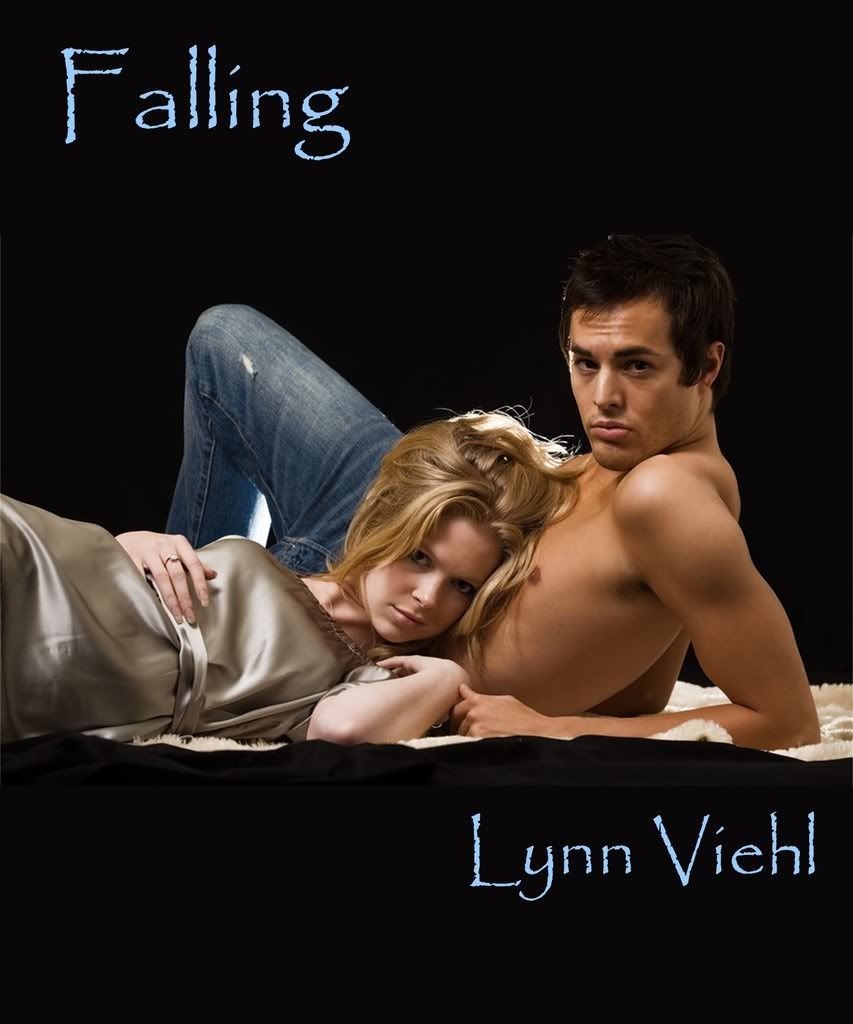
Occasionally I follow advertising links to keep tabs on how much writers are being persuaded to pay for things that should be pretty reasonable. Like cover art, for example. I love to play with images and art, and even make up covers for books I want to write someday, like this one for Falling (in my defense, I found the photo while looking for another on a stock photo site, and it was so perfect I had to buy it and make up a cover with it immediately. It now resides in my Kyan and Melanie file, waiting for me to get back to their story.)

Lots of authors are self-pubbing their backlists now, and not everyone is as crazy as I am, so it's logical to assume that many of them are going to hire someone to design it for them. When I went to this design site, though, and found they charge almost a thousand bucks for one cover, I was stunned. I had no idea it cost so much these days. Naturally I went right to their portfolio, thinking for that kind of money I'd see the most exciting, eye-catching, state-of-the-art covers of all time . . . and found a collection of ho-hum boring stuff I could have done myself in five minutes with standard clip art and Felix Titling fonts.

Even more troubling, it's not the only site charging an arm and a leg for cover art. I did a search and found five others offering the same kind of yawner art for prices that range from astronomical to appalling.

When I make cover art for my e-books -- and I do design and put together most of it -- it generally costs me $0 - $2.00 U.S., depending on if I use my own photos or buy an image from a stock photo site. The fantasy landscape image I purchased for the cover Ravelin, one of my favorite e-book covers, cost exactly one dollar. The most I've ever paid for a stock photo was $50.00, and that was a one-time deal to extend the usage license so my publisher could in turn use it for their digital publication of Master of Shadows. One cautionary note: I was promised full reimbursement for that particular license expense, but the publisher never paid me for it. So if you do supply your publisher with cover art you've paid for, get a check before you send it to them.

I know people believe quality has to cost a lot, but spending many hundreds or even thousands of dollars on cover art for a self-pubbed book is an unnecessary expense, especially if the author is footing the bill. Here's a thought: why not first try to create the cover art yourself? You can do what you want, you don't have to show it to anyone, and you may discover you have more talent for designing than you realized.

If you don't care to fiddle with photoshop programs, stock photos (and the sometimes complicated licensing involved with them) or you simply don't have the inclination to create your own cover art, then you should take some time to compare prices and services before you hire anyone. I've paid designers to do two of the covers for my free e-books (one I got by making the winning bid for her services via a charity auction.) Not only did I pay a very reasonable fee both times, I got exactly the covers I wanted for the books from those designers. I had a terrific experience working with Deena Fisher, who designed this lovely cover for the 2009 reissue of Sink or Swim.

Also, ask around. Author Shiloh Walker blogged about having Angela Waters design the cover for her self-pubbed novel Beg Me, in which she mentioned that Angela's standard fee was $150.00 U.S. (Added: corrected the blog link to take you to Shiloh's post)

If you'd rather work with a company than a solo designer it still pays to shop around. Self-pub companies often provide autonomous cover design services, and I found the ArtBookBindery.com charges $350.00 to design a four-color cover from your art or their stock photos. That's still a bit pricey to me, although it's definitely better than a thousand bucks. I also liked that they posted their fee upfront versus providing a phone number to call for a quote, which is highly annoying. My only other gripe is that the samples they showed were thumbnails (to me a full-size image portfolio gives you a better idea of the quality of the art, because you can actually see it.)

However you decide to handle the cover art for your self-pubbed book, do me a favor -- don't assume paying a thousand bucks or more is going to guarantee you a bestseller. Another thing I noticed about all of the portfolio covers at the very expensive design site? I'd never heard of any of the titles -- or the authors who wrote them.

Do you know a cover art designer who offers great work at reasonable prices? Please let us know (and if you have them, post links to their design service) in comments.

Falling cover art photo credit: © Geo Martinez
Sink or Swim cover art credit: © Deena Fisher
Ravelin cover art photo credit: © Bertrand Benoit | Dreamstime.com

Wednesday, February 16, 2011

ISSN 2159-9424

Last month I wrote to the Library of Congress to find out if I needed a new ISSN for Paperback Writer (I've been using the same one I received for my old weblog ten years ago.)

I have gotten a response, and turns out that I did need a new one:

2/14/2011

Dear Publisher:

This is your official notification that the following ISSN assignment(s) have been made under the auspices of the U.S. ISSN Center at the Library of Congress. Please print or save this notification for your records.

Paperback writer
ISSN 2159-9424

Please note that a separate ISSN is needed for each medium version (e.g., print, CD-ROM, online) you publish. For your convenience, we have reported the ISSN of all medium versions of this title we have in our database even if not all were assigned at this time.The preferred locations for displaying the ISSN on a printed serial are the upper right-hand corner of the cover, or the masthead, or another prominent place. The ISSN should always be printed with the letters ISSN preceding the number as we have listed it above. The preferred location for display of the ISSN on an online publication is the title screen or home page. If you publish a title in both print and online versions, please print both ISSN together on each version, filling in the blanks in the example below with the digits of your ISSN:

ISSN _ _ _ _- _ _ _ _ (print)
ISSN _ _ _ _- _ _ _ _ (online)

An ISSN remains valid as long as the title remains unchanged. Please inform us in advance of any planned changes in your title so we can determine if a new ISSN is needed.

Attached to the email version of this message are documents about uses and benefits of the ISSN, how to present and title your serial, and your Copyright obligations. Our web site at www.loc.gov/issn includes these documents as well as additional ISSN information and an ISSN application form that you can download for future ISSN requests. If you have any questions or if we may be of additional assistance, please feel free to contact us.

Sincerely,

ISSN Publisher Liaison Section staff
lwm


So that's the official ruling on whether or not you need a new ISSN if your weblog name and URL changes. If you would like to apply for an ISSN for your blog or online serial publication, here are the links again:

For U.S. bloggers, go to the Library of Congress's U.S. ISSN center to get started (where you can now even apply for an ISSN online.)

If you reside outside the U.S., you can apply to either the national ISSN center in your country or (if your country doesn't have a center) the ISSN International Centre in Paris.

Tuesday, February 15, 2011

Free for All Ten

Ten Things You Can Have for Free

Anki is "a program which makes remembering things easy. Because it is a lot more efficient than traditional study methods, you can either greatly decrease your time spent studying, or greatly increase the amount you learn. Anyone who needs to remember things in their daily life can benefit from Anki. Since it is content-agnostic and supports images, audio, videos and scientific markup (via LaTeX), the possibilities are endless." This freeware was designed for study, but the features it offers makes it a great multi-media index-card creator, too. For all of you who use them for writing, this one might be worth giving a whirl (OS: Win 98/ME/NT/2K/XP/2K3/Vista/7)

Apophysis is "a windows application made in delphi for creating, editing and rendering fractal flames. Fractal flame is an extension on the IFS fractal." Gerard over at the Presurfer posted this cool animated fractal video which was made using this freeware (OS: All 32-bit MS Windows [95/98/NT/2000/XP])

Kevin Perryman offers two versions of Envelope Print, a freeware which stores and prints return and mail-to addresses; one for Domestic and another for International mailing. This would be a good one for all of you who do a lot of mail-outs (OS: not specified, but looks like Windows)

Fountain Pen is "just what you need to write, with none of the clutter. A menubar, a compositions panel, a toolbar with four buttons… all can be hidden. It’s just you and your writing." I like the sound of that! (OS: Mac Snow Leopard or newer)

Fractalus is a "freeware fractal generator with movie, deep zoom and multiprocessor capability. Hundreds of example parameter files included" (OS: Windows XP/Vista/7)

I liked the look of the free online photo album generator jAlbum so much that I gave it a personal test drive, and found it to be fast, ridiculously easy, nicely customizable and 100% user-friendly (here's my test album, which took me about two minutes to create.) This will be perfect for the pics I take this year at the County Quilt show. A free account begins with 30 MB, but you can get an additional 70MB free by completing a short list of things like taking a tour, creating a profile, inviting friends to have a look, etc. They also have a free desktop app for download. Quite impressed with this one (OS: Windows [all])

KeepNote allows you to "store your class notes, TODO lists, research notes, journal entries, paper outlines, etc in a simple notebook hierarchy with rich-text formatting, images, and more. Using full-text search, you can retrieve any note for later reference. KeepNote is designed to be cross-platform (implemented in Python and PyGTK) and stores your notes in simple and easy to manipulate file formats (HTML and XML). Archiving and transferring your notes is as easy as zipping or copying a folder." Sounds like it would be an excellent program to use to create and update novel notebooks, too. (OS: Windows, Linux, and MacOS X)

LangOver is "a freeware that helps when you tried to type in one language but the result was in another... Annoying, eh?! That's because the keyboard layout was in a wrong language, and you forgot to use "ALT+SHIFT"... NO MORE! With LangOver 5.0 you'll be able to convert your text quickly between languages. Just Click "F10" and your text will be fixed! LangOver 5 is free and Supports ANY language" (OS: Windows NT/2000/XP/2003/Vista/7)

Remind Me Later is "one of the Top 50 downloads on the Mac App Store. You can add events to you iCal in a matter of two clicks. You can also sync the program to an iPhone" (OS: Mac OS X Leopard (10.5), Mac OS X Snow Leopard (10.6), Intel-based Macs, PowerPC-based Macs)

To-Do Desklist is a "Free to-do list software that automatically arranges to-do notes on your desktop. Synchronize your tasks between computers and users. To-Do DeskList has beautiful minimalistic design and multiple themes to choose from. Supports reminders, notes, and more. It is very lightweight, easy and simple to use, and much more efficient than complex task management packages. Features: Simple, nice looking and easy-to-use interface; To-Do Notes placed directly on your desktop; Assigning priority levels to to-dos; All to-dos can have a reminder to a specific date and time
Hotkeys for adding a new to-do and displaying all to-do notes in front of other windows; Sorting To-Do Notes by priority or by date; Well-arranged to-do list on your desktop instead of a complex structure" (OS: Windows 2000/XP/Vista/7)

Monday, February 14, 2011

Wishing You