Wednesday, July 15, 2009

VW #3 -- E-Future Part I

The winners of the VW#1 giveaways are:

AlphaSmart Neo: NinaP

Goodie Bag: Kristen S., whose comment began with Wow, all I can say wow as I copy it so I can print at hubby's comp.

Winners, when you have a chance, please send your full name and ship-to address to LynnViehl@aol.com, and I'll get your prizes out to you. Thanks to everyone for joining in.


I. Say Hello to the E-Future

The world has changed pretty dramatically since I got into the Publishing biz in 1998, and even more so than when I began seriously pursuing publication in 1989. Twenty years ago everyone carried pagers, not cell phones; the cordless phone was just getting big. A few years later people started playing on their new home computers with a service called Prodigy, where folks from all over the U.S. could get together and discuss their interests on community bulletin boards (if you ever stopped by Prodigy's poetry forum, you might have even caught me critiquing formal verse and discussing what a bitch it was to compose a villanelle that didn't sound like one was a schizophrenic off their meds.)

A couple of years after that I turned pro and graduated to the internet, which coincided with the first of the e-publishers opening their doors for business. It caused a lot of uproar, most of it bad. Print published authors began sniping at the e-published authors. E-published authors fought back for their right to be recognized as part of the Publishing community, both online and off. The insults flew back and forth, bylaws were re-written, friends and enemies were made, and somewhere in the middle of the second or third wave of hostility I unplugged and retired to my ivory tower for a year, where I wrote for print publication and gave away other stories in electronic format to my online readers. While I wasn't much of an e-activist in those days, I was one of the first generation of e-published writers (I just used mine as marketing.)

Today you'd be hard-pressed to find an author who isn't published in electronic format. Yes, while many print-published authors take great pleasure in broadcasting how little they think of e-publishing, with the growing popularity of e-readers like Kindle and Sony and the rising demand for electronic books, publishers are rushing to release print novels simultaneously in multiple e-formats. You can throw a rock at the Big Name table at any crowded writers' conference and always hit an author with e-books (not that I'm suggesting you do that.)

Likewise, many e-published authors are also having their novels and stories released in print. The last time I was at a chain book store, titles from e-publishers like Ellora's Cave and Samhain had their own book case. While I don't care to see authors segregated like that, there are now plenty being released in "traditional" print who got their start in the biz writing for e-publishers or who are still publishing e-books with them.

The lines have blurred, the walls are slowly being torn down, and today everyone has e-books on their mind. While some feel this is like letting barbarians through the gate, Rome isn't being sacked, ladies and gentleman. It's being saved and rejuvenated and brought (even when it's dragged, kicking and screaming) into the 21st century. What writers and publishers have to do is not decide if e-publishing is legit or not; that's already been decided by the readers. What we have to do is educate ourselves on electronic format, understand how fast this segment of the market is growing, and make a place for ourselves into this brave new digital World of Publishing's E-Future.

II. Major Publishers

Major publishing houses are beginning to jump on the e-book bandwagon, and while that's not surprising, how they're adapting to this new format (or not) often is. It seems that while traditional publishers are happy to rake in the growing heap of bucks generated by e-books sales, some don't seem to understand this segment of the market very well. From what I've observed, their attitudes range from "this is a temporary fad" to "this isn't worth my time" to "this will make us a quick buck" to "this is the end of the world."

I think the three gargantuan problems publishers have with electronic format are control, pricing and distribution. Keeping e-books from being pirated is a concern, just as is preventing print books from being shoplifted, but Publishing's answer to this -- DRM, or Digital Rights Management, which prevents the buyer from copying or printing out the e-books they buy -- is in my opinion unnecessarily harsh and restrictive. The one reason I still don't buy many e-books is because DRM prevents me from printing them out on paper. For anyone like me who wears heavy-duty corrective lenses and has a hard time reading for a long period from a computer or e-device screen, that simply kills the sale.

There seems to be no industry standard for pricing e-books, and even with the so-called safeguard of DRM, some traditional publishers are putting a hefty $ tag on books in electronic format. I think this is short-term profit greed in a market that is thriving and by its very nature in line to be one of the primary publishing platforms of the future. I'm not sure why the industry isn't seizing the opportunity to use reasonable pricing to generate more sales, but high prices don't result in making readers throw away their devices to run back to buying only print novels. I think it encourages pirating, because why would anyone pay $25.00 for an e-book you can download for free off a bootleg site?

I've already read a couple of online confessions from consumers who have admitted downloading pirated copies of books, so pretending it's not happening is naive. Also, remember that bootleggers aren't interested in making profits off the e-books; they get their money from advertisers who pay them in accordance with how much traffic they draw to their site (which they generate by setting up their rules to basically allow anyone to store pirated copies on their sites.) While the justice system does their best to prosecute a few people and make them into scary examples of why you shouldn't bootleg, no one can ever police all these sites, not even the authors of the works being pirated (pirated copies of my print novels show up about once a month on the internet -- and that's the ones I can find or that someone alerts me to. This past weekend some pinhead tried to sell them on eBay.)

Distribution, the third wrench in the works, is not a problem for the publishers, but is becoming a real headache for me and many other writers who have a substantial readership residing in countries other the U.S. Many major publishers continue to restrict sales of e-books to the U.S. and Canada only. This is sabotaging sales and profits, because one of the great benefits of having a book in electronic format is that it can be shipped in any quantity around the globe to any spot at zero cost. Zero! No matter if you send ten or ten million copies of The DaVinci Code to Tokyo, the cost of shipping them is nothing. Try doing that with print novels.

Rather than seeing the cost-efficient advantages of digital books, major publishers seem determined to try and force the market into adhering to strategies and standards of a business model that was never meant for electronic format. Treating an e-book like a print book is not only inappropriate, it's a little ridiculous. If major publishers are going to be competitive in the E-Future, they have to let go of the mentality of the past and start evolving and adapting to the demands of the present.

III. E-Publishers

I don't think it's as bad as it was ten years ago, but there is still a major stigma involved in being an author who e-publishes as opposed to being published in print by a major publishing house. On behalf of all intelligent and informed professional writers, I apologize for this. They won't let me be in charge of that or things would be a lot different for the e-published authors.

I hope industry perceptions will change as the e-market continues to grow, and e-published authors will stop being automatically assigned to the lowest rung on the biz ladder. Some of the most promising and talented writers I've discovered got their start in e-publishing, like my blogpal Shiloh Walker and my groupblog ringleader Sasha White. To say all e-published authors are inferior writers is like saying all black people should sit in the back of the bus. It's beyond ignorant.

That said, I can't endorse every e-publisher on the market; there are some companies out there that writers should avoid entirely. If you're considering submitting to an e-publisher, the best advice I can give you is to do the legwork and educate yourself. A writer should never sign with an e-publisher before they check out the company thoroughly and nail down all the details. Some of my veteran e-published friends are holding workshops this week on e-publishing; you can start by picking their brains.

To find the right e-publisher, you also have to do the research. If there is an e-publisher whose books you like, check out their submission guidelines and what they offer as payment to their authors. eBook Crossroads has a Directory of ePublishers, as does FictionAddiction.net; Predators & Editors maintains a massive directoryof all publishers along with their recommendations for or against them.

E-published authors are beginning to form their own independent writer organizations, like EPIC, but there are still plenty who are trying to fit in with the old orgs, like Espan. Because so many writer organizations don't have offer decent information on e-publishers, writers have formed their own watchdog groups; some that offer valuable online resources like AbsoluteWrite.com's Bewares and Background Checks forum, Erec (Erotic Romance E-Publishers Comparison site) and Piers Anthony's Internet Publishing site which provide the latest information on the business operations of small e-publishers and presses. Be sure to visit these sites to check and see if the e-publisher you're considering is under scrutiny for any author scams or unfair business practices.

IV. E-Readers

Before you read a word I have to say about them, do stop by Midnight Spencer's LB&LI e-book workshop from Monday, as she has a fabulous, comprehensive list of features and details on a bunch of current e-reader models.

For all that Oprah has done for Kindle, I think the e-reader market is still in a state of flux. At the moment it seems to bouncing between Kindle and Sony, but that could change as soon as someone makes a better/cheaper/more convenient e-reader. It'll probably be a lot like the mobile phone market, with lots of new models offering more and more cool apps and stuff duking it out until a clear leader rises to the top of the heap. My money is on Sony; they seem to be more in touch with the market than Amazon is (inserting ads in e-books? Ick.)

If you're a reader who is shopping for an e-reader, you need to read up on the pros and cons inherent to each model. Fictionwise has a slightly outdated FAQ-type list of Reading Software and Devices. CNET has just published a buying guide for e-readers while Consumer Reports has the lowdown on the new Kindle DX. FreshTech has updated their comparison between the Kindle 1 and Sony E-Reader. But neither Kindle nor Sony has a guaranteed chunk of the e-reader market, as Sarah Rotman Epps reports on some interesting e-reader developments over on the Forrester Blog.

I haven't invested in an e-reader yet because they're not really designed for handicapped users like me (too many buttons for my arthritic fingers, too heavy and/or awkward to hold.) I hope that changes sometime in the future, because of all the readers who can benefit from an e-reader, disabled folks should surely be at the top of the list.

V. E-book Power

I know some of you still aren't convinced as to why writers should even care about the E-Future. You're focused on print publication, and that's all that matters to you: the traditional publishing career.

But while you're planning to become the next front-of-the-bookstore darling, consider a few figures: it’s estimated that in 2008 electronic books netted $1.1 billion dollars, up 68.4% from $67.2 million netted in 2007; and that’s almost double the $54.4 million sold in 2006.* Reports are already being compiled about e-book sales in the first quarter of 2009, and they’re looking very good. While that’s not as dazzling as the $24.3 billion dollar bottom line for the entire industry, compare it to adult hardcover sales dropping 13% and adult mass market sales down 3% percent in 2008.**

I had those front-of-the-bookstore dreams (don't we all?) but from the start of my career I also kept an eye toward the the future. In addition to being a writer, I'm also an e-publisher. Didn't know that, did you? But I am and I have been since 2000, when I self-published my first e-book. The difference between me and all the other e-publishers is that I only publish my own original stories and novels (all of which are exclusive to the internet and have not been published anywhere else) and I distribute them for free, something I consider to date the most effective form of marketing I've ever done.

To say I don't profit from giving away my e-books for free would be like another author saying it doesn't pay to go to reader conferences or hold booksignings. Over the last eighteen months over two hundred thousand readers have viewed and/or downloaded e-books from my free virtual library on Scribd.com.* So when was the last time you marketed directly to two hundred thousand people who were interested enough to come looking for your work, and how much did it cost you? Didn't cost me a dime. *Note 9/3/10: Since Scribd.com instituted an access fee scam to charge people for downloading e-books, including those I have provided for free for the last ten years, I have removed my free library from their site, and no longer use or recommend using their service. My free reads may be read online or downloaded for free from Google Docs; go to my freebies and free reads page for the links. See my post about this scam here.

P.S., for everyone who still thinks Scribd.com is just some hokey e-book pirating site, you should really watch this interview over on BusinessWeek. They just signed a nice deal with Simon & Schuster to sell 4500 e-books direct to their visitors for them, and with 60 million readers visiting the site every month (at present, that's more than The New York Times gets at their site, according to the BusinessWeek.com interview), I imagine they're soon going to become a major industry player.

Tomorrow we'll talk about how we writers can become more active participants in Publishing's new electronic age, different ways to use digital publishing to create new markets and expand existing ones, and where our choices might take us. Because the E-Future isn't coming tomorrow or next month or next year, guys. It's already here.

VI. Related Links

Bookworm is an "experimental platform for storing and reading ePub-format books online."

Keep your head above water with Nancy Nivling's article It Ain't Easy: Navigating the Rapids of E--Publishing.

Scribd opens new market for online texts.

If you're thinking about investing in a Kindle, I recommend reading Tim O'Reilly's rather brilliant take on Kindle's E-Future.

*Stats source: Simba Information BPR April 2009
**Stats source: American Association of Publishers via MediaBistro.com.

Today's LB&LI giveaways are:

1) A eBookWish -- any e-book or combination of e-books of your choice available to purchase from an online e-publisher or e-publisher's bookseller, up to a combined max cost of $30.00 U.S. (or if the e-bookseller has a gift certificate for $30.00 available that I can purchase and send via e-mail to you, that'll work as a substitute.)

2) a goodie bag which will include unsigned new copies of:

The Pajama Girls of Lambert Square by Rosina Lippi (hardcover)

Master of Shadows by Lynn Viehl (author-printed, signed and bound in a three-ring binder)

Animal Attraction by Charlene Teglia (trade pb)
The Missing by Shiloh Walker (trade pb)
Primal Male by Sasha White (trade pb)

Round the Clock by Dara Girard (paperback)
Red Fire and Red Kiss by Deidre Knight (paperbacks)
Pleasure Unbound, Desire Unleashed and Passion Unleashed by Larissa Ione (paperbacks)
Hawkspar by Holly Lisle (paperback)
The Iron Hunt and Darkness Calls by Marjorie M. Liu

plus signed paperback copies of my novels StarDoc and Evermore, as well as some other surprises.

If you'd like to win one of these two giveaways, name an e-published author you've enjoyed reading or comment on this workshop before midnight EST on Thursday, July 16, 2009. I will draw two names from everyone who participates and send one winner the goodie bag and grant the other the eBookWish.

Everyone who participates in the giveaways this week will also be automatically entered in my grand prize drawing on July 21st, 2009 for the winner's choice of either a ASUS Eee PC 1005HA-P 10.1" Seashell Netbook or a Sony PRS-700BC Digital Reader.

As always, all LB&LI giveaways are open to anyone on the planet, even if you've won something here at PBW in the past (and if anyone wants a peek at this year's LB&LI goodie room at Casa PBW, and see what's going in those goodie bags, stop by the photoblog today.)

Other LB&LI Workshop Links -- new links are being added every day, so keep checking the list for new workshops (due to different time zones, some of these will go live later in the day):

E-publishing: From Query to Final Edits and Beyond -- Authors Madison Blake, Paris Brandon, Cerise Deland, Fran Lee, Afton Locke and Nina Pierce provide helpful insights and tips on e-publishing. Today's author: Nina Pierce

Writing Transformative Sex - Part One by Joely Sue Burkhart -- Any writer who has studied much of the craft at all knows that if a scene doesn’t move the story forward, it should be cut. But have you really thought about what that means for a sex scene?

Birds and Flight by Suelder -- first in a series of workshops on birds that will focus on the science as well as how to adapt this information to writing.

How-To Books that Saved My Life by Alison Kent -- a look at the three how-to books the author can't write without, and why.

Break through your fears and write! by Tamlyn Leigh -- One of the biggest obstacles on a writer's path is their fear. It can be for anything: fear people won't like their stories, fear they aren't good enough. In my workshop I want to offer tools to break through that fear, and get everyone writing!

Writing Prompt Series - What? by Rosina Lippi -- On the basis of an image supplied by Rosina, write out the primary conflict between your two characters in dialog form.

Writing in the Labyrinth by Marjorie M. Liu -- first in a series of workshops about different aspects of writing and publishing.

From Pantser To Plotter: How I Joined The Dark Side by Kait Nolan -- Wednesday's topic: What I've Used In My Conversion (Part A)

What eBook publishers look for: Samhain Publishing by Midnight Spencer –- General Submission, Royalty and Contract, How to Submit, and Samhain Frequently Asked Questions.

Epubs-wondering where to start? by Shiloh Walker -- Info for those curious about epubs and where to start.

Killer Campaigns: Trading Cards by Maria Zannini -- How to create trading cards featuring your novel's characters

Tuesday, July 14, 2009

VW#2: Middlemarch


I. Mired in the Middle

When we embark on the journey of writing a story, we are usually excited and wound up and raring to go. Likewise when we come to the end of the writing journey, we are tired and fulfilled and very glad to type those two blessed words that wraps it all up: The End.

Between those two points in the story is a stretch that has neither beginning nor end. It's almost like no man's land, a place where the work seems to slow down and drag out, as if it were caught in a desert of unseen quicksand. When writers refer to working in that place -- usually with a heavy sigh -- we talk about "slogging through" and "pushing on" as if we were in danger of sinking into some vast, unimaginable pit of despair. Few writers enjoy it and most that I know hate it -- the dull, energy- and life-sucking maw that is the middle of a story.

But how did story middles get such a terrible rep, and why do writers have such trouble working through them?

II. Amid the Story

I think the middle of a story is where a several things combine to make turn the pleasures and joys of creating into the slaving away in the workhouse of writing: time line, energy level, story structure and spiritual status. If even one of these four horsemen of the story middle gain enough ground inside the writer's head, they can set off a creative apocalypse. The inevitable result is a half-finished manuscript sitting on someone's shelf and silently gathering dust.

Time line, or the chronology of events, has much to do with turning the middle of the story into a dead zone. In terms of story, very little can be initiated or resolved in the middle. The characters and conflict have already been ushered in during the beginning, and it's not yet time for the climax and resolution. If the writer really hasn't thought out the events, the middle can turn into an empty stretch of time where nothing much happens.

All writers have different energy levels, but I think it's safe to say we're all happiest when we're starting or finishing something. Setting out to explore a bright new shiny idea is fun, and wrapping up a full tour of it is satisfying and bestows a sense of accomplishment. The middle is definitely where the glitter falls away, our enthusiasm starts to ebb and the adrenalin or determination or whatever kickstarted the project drops to a dangerous low, and worse, stays there.

While story structure is largely dependent on the writer's plan or thought process during the writing, it can also meddle with things in the middle. Probably the most common structural mistake writers make is not thinking and/or planning exactly what happens in the mid-story, which creates that endless stretch of nothing much happens.

The writer's spiritual status is hard-wired to the story. When things are going well and we're producing a decent amount of words or pages, we feel good. When things aren't going anywhere, and we stall or become blocked, we feel lousy. And while our writer self-esteem is not entirely dependent on how the work is going, it plays a big part in how we feel about ourselves as writers.

Whatever the cause of getting stuck in mid-story, there are definitely a number of things a writer can do about it.

III. Marching through the Middle

Rather than thinking of mid-story as some horrible Sargasso Sea or endless desert where you're doomed to flounder, take some time to make preparations for that part of the writing journey. The better prepared you are to deal with the least fun part of the work, the more efficiently you'll be able to march through it. Here are some ideas on how to move along:

Putting the Stuff in Stuff Happens -- this is probably the most logical approach to marching through middle, and the one I use most frequently. Instead of allowing the middle of the story to be a gray area where you're not sure of exactly what happens, plot it out. I use a definitive time line approach by listing a sequence of events that take place in mid-story. I don't start writing the book until I've nailed down the middle as well as I have the beginning and the end.

Mid-story Subplots -- the main conflict takes up the most story space, but it's also hampered by the fact that it generally has to begin at the beginning and end at the ending. Mid-story is definitely a place to develop the main conflict, raise the stakes, increase the pressure, etc., but it's also an opportunity to begin and end subplots related to the main conflict. These are the shorter stories-within-a-story that can belong to the protagonist, secondary characters of even the antagonist.

Mock resolution -- this mid- to late-story is a favorite of suspense and thriller writers, which they use to present what seems to be a conclusion of the main conflict. The most common form of the mock resolution is the presentation of a red herring that seems to answer all the story's questions. Some writers use multiple mock resolutions to slog through their middles, but I don't advise using more than two or three at the most as they can get tiresome fast.

All Hell Breaks Loose -- one seasoned writer told me, "When you're bored, blow up something" -- and I've tried this, and it works. The usual form is to introduce into the middle of the story an unexpected or abrupt event that results in short-term chaos (like blowing up something.) And while it seems a bit crude, the all hell breaks loose approach to the middle can be fun and revive the writer's interest in the story.

Support Cast Crisis -- Your secondary characters can prove to be most valuable in mid-story, especially if you've developed them into fully-realized individuals. Look at ways you can use their storylines to create or converge with a secondary conflict in the middle of your story.

Interluding -- I don't recommend stepping out of the story too often, but the interlude approach to fleshing out the middle can be pretty effective. This is when the writer basically puts everything related to the main conflict on hold while the protagonist spends some quality time with another character. For example, in romance it's usually the first consummation point of the sexual relationship between the hero and heroine (which is why most first sex scenes in romance novels seem to start on page 200.) In SF, the characters are inevitably cut off from the rest of their pals or marooned somewhere. The interlude doesn't do much for the plot, and I think it can evolve into lazy writing habits, but it does allow the writer to develop the characters and their relationships with each other a bit more before getting back to the business of wrecking their lives. My advice is to use this one sparingly.

IV. Attitude is Everything

Getting through the middle of a story is generally a lot of work and not much fun. It isn't a place where writers tend to obsess about the details as much as the page or wordcount, and perhaps that is our biggest mistake when it comes to crafting story: whether we run out of ideas, get bored, feel frustrated or begin to doubt the wisdom of trying to realize the story idea, it always seems to comes out on the page.

Making a major attitude adjustment may be the one universal cure for muddling in the middle. Train yourself to stop thinking of mid-story as a boring place where nothing much happens. Instead, see it as a series of windows of opportunity, where you can really shine as a storyteller. Look for ways through the middle of story where you can keep your reader glued to the book by delivering the same quality story you gave them in the beginning and that you will give them in the end.

However you choose to tackle this problem, keep in mind that while the middle of story may not seem as dazzling as the beginning, or as thrilling as the end, it is just as important as both. Don't wander into the middle of your story unprepared for what will (or, more likely) won't happen. Make a plan, draw map, arm yourself with ideas and train yourself to go steadily. Don't just slog through -- make the journey a memorable one.

V. Related Links

Vickie Britton talks about ways to up the wattage with her article Creating an Exciting Middle to the Novel ~ Making the Middle Chapters as Good as the Beginning and End

Romance author Karen Harbaugh has a bit on story structure and middle of the book blues in a section of her On Writing page here

Dr. Vicki Hinze's article Sagging Middles will have you building bridges through your middles and more.

Holly Lisle talks about what we all wrestle with in her article Middles.

Alicia Rasley's article Tightening the Sagging Middle has some interesting suggestions from a mainly RWA-minded POV.

Get plotting tips from Katherine Swarts's article Beginning, Middle, and End ~ A Half Dozen Hints for Creating a Satisfying Story Plot

Photo credit: Bartlomiej Kwieciszewski

Today's LB&LI giveaways are:

1) A BookWish -- any book of your choice available to order from an online bookseller, up to a max cost of $30.00 U.S. (I'll throw in whatever shipping is involved.)

2) a goodie bag which will include unsigned new copies of:

Uncommon ~ Finding Your Path to Significance by Tony Dungy (hardcover)

The Pajama Girls of Lambert Square by Rosina Lippi (trade pb)
Animal Attraction by Charlene Teglia (trade pb)
The Missing by Shiloh Walker (trade pb)

Taken by Sin by Jaci Burton
Temptation and Lies by Donna Hill
Kissing Midnight and Breaking Midnight by Emma Holly (paperbacks)
Hawkspar by Holly Lisle (paperback)
The Iron Hunt and Darkness Calls by Marjorie M. Liu
Wild Thing by Marjorie M. Liu, Maggie Shayne, Alyssa Day and Meljean Brook (paperback; contains Hunter Kiss, Marjorie's very first story in the Iron Hunt universe)

plus signed paperback copies of my novels StarDoc and Evermore, as well as some other surprises.

If you'd like to win one of these two giveaways, comment on this workshop before midnight EST on Wednesday, July 15, 2009. I will draw two names from everyone who participates and send one winner the goodie bag and grant the other a BookWish.

Everyone who participates in the giveaways this week will also be automatically entered in my grand prize drawing on July 21st, 2009 for the winner's choice of either a ASUS Eee PC 1005HA-P 10.1" Seashell Netbook or a Sony PRS-700BC Digital Reader.

As always, all LB&LI giveaways are open to anyone on the planet, even if you've won something here at PBW in the past (and if anyone wants a peek at this year's LB&LI goodie room at Casa PBW, and see what's going in those goodie bags, stop by the photoblog today.)

Other LB&LI Workshop Links -- new links are being added every day, so keep checking the list for new workshops (due to different time zones, some of these will go live later in the day):

E-publishing: From Query to Final Edits and Beyond -- Authors Madison Blake, Paris Brandon, Cerise Deland, Fran Lee, Afton Locke and Nina Pierce provide helpful insights and tips on e-publishing.

The Ten Commandments by Joely Sue Burkhart -- as readers, we all have lines that we don’t want an author to cross, else their book may very well end up denting the wall. Here are a few commandments, either based on my personal reading tastes or something I’ve learned from my lovely talented evil editors.

Birds and Flight by Suelder -- first in a series of workshops on birds that will focus on the science as well as how to adapt this information to writing.

How-To Books that Saved My Life by Alison Kent -- a look at the three how-to books the author can't write without, and why.

Break through your fears and write! by Tamlyn Leigh -- One of the biggest obstacles on a writer's path is their fear. It can be for anything: fear people won't like their stories, fear they aren't good enough. In my workshop I want to offer tools to break through that fear, and get everyone writing!

Writing Prompt Series - Who-two? by Rosina Lippi -- Build another character on the basis of a new image Rosina will provide.

From Pantser To Plotter: How I Joined The Dark Side by Kait Nolan -- Tuesday's topic: My Problems With Pantsing

Word Count and Categories by Midnight Spencer –- take a look at what some of the top eBook publisher’s break up word counts and what type of categories selling on their websites.

Left Behind and Pondering Deadlines bu Charlene Teglia -- the pros and cons of deadlines.

Epubs-wondering where to start? by Shiloh Walker -- Info for those curious about epubs and where to start.

Killer Campaigns: Marketing Calendar by Maria Zannini -- Market planning your book

Monday, July 13, 2009

VW#1: Conceptual Planning, Construction and Development


(click on image to see larger version)

I. The House of Story

Writers wear a lot of different hats whenever we work in FictionLand. We're the architects of story, and whether we formally outline or briefly summarize or scribble something in eyeliner pencil on the back of a cocktail napkin at 2 a.m., we draw up plans to make something out of nothing. As contractors we have to get our plans out there and secure the financing needed for the project, and as site managers we have to make sure the construction goes according to spec. The bulk of the time we spend writing is as construction workers, showing up at the site every day to lay the foundation, install the supports and build the story construct one segment at a time.

All of this time, thought and effort should result in a complete house of story; one that is unique, attractive and finished. A house that hopefully will tempt many people into pre-ordering and purchasing a copy for themselves.

The constructs are all different -- the house of story can be anything the writer desires to build: a huge, ornate showplace, cozy lover's cottage, quiet church, dude ranch, gadget-filled technotower, haunted castle or even a BDSM play pad. Because some constructs sell better than others, the demand changes -- right now a vampire's lair is hot, next year the self-help gymnasium may be all the rage.

Because the house of story only exists on paper and in the minds of the writer and reader, the construct has to be vivid, intriguing and convincing -- a castle in the air people can really live in for a few hours. If it's going to move once it's put up for sale, it should offer something new and exciting to a person who has spent many hours in and has intimate knowledge of thousands of other houses. The house of story should also be polished and finished to the point of perfection. But the most important work for the writer begins in the planning stages, when design decisions are made, and the concept of the construct is determined.

II. Building Versus Selling

You have a great idea for a house of story. It's going to be amazing; you can see it in your head. It came to you in the shower, or woke you up at three a.m., or just appeared out of nowhere. Now it's in your head, and it's demanding to be built. For most writers, this is all the design work we need to start a new project. We want to build it because it already exists for us, so we have to build it in order to show it to others. This is what drives us to build, because we want very badly to get the house of story out of our head and onto the page before it sinks into the bog of forgetfulness and vanishes forever.

This is also the point in almost every writer's work when things go wrong with the house of story. In the beginning we're so focused on the idea for the construct that nothing else matters. It's an occupational hazard; it's how writers are designed to function. If we weren't this intense we'd never build anything. It's also why almost every writer has a closet or file filled with unfinished plans, partial constructs or other projects that didn't work out. Sometimes our brightest ideas just don't work out once we start building; for whatever reason we lose interest or hit a impassible wall and the house of story collapses in mid-construction.

You can build anything based on any idea. You don't even have to have an idea to build; you can just start construction and make it up as you go along (and sometimes this even works.) You can construct an entire neighborhood of story houses based solely on your desire to build. Let's be straight about this, too -- I'm not telling you that you can't build. That's the one thing you never tell another writer.

What I am asking is, can you sell it? Because no matter how hard you work, how well you build and how completely you finish the house of story, if you can't sell it you're basically building it for yourself, and it will end up piled in the closet along with all the other houses no one will ever see or share.

III. Concept Planning

If you're going to be an architect of fiction, you need to think a little like the designers and builders of real houses. Here are some of the things you might want to nail down before you break ground:

A. Neighborhood Zoning (Determining the story's genre/category): What sort of story house are you building, and how should it be sold? And before anyone protests the need for categorization, remember the industry we're working in and how they market our houses -- primarily by the type of construct we build and how well it fits into a certain neighborhood. You need to classify your design before you try to build it because it's unlikely that you will sell a dude ranch to a guy looking to spend time in a haunted castle. You have to accept in advance that if you're building a dude ranch, you're probably not going to sell it to haunted castle fans.

Figure out first where your house of story belongs, or if it utterly defies categorization, the neighborhood where it will best fit in. If you're not sure, talk to other writers, your agent or your editor and run the idea past them. Be aware that some story houses do fit into more than one neighborhood and can be marketed as cross-genre or slipstream. Don't be ashamed of asking for input, either -- often writers are too close to an idea or too wrapped up in its possibilities to clearly see what Publishing zone it belongs in.

B. Design Appeal (Creating the story's main selling point, aka the hook): During the concept planning stage, this is probably the most important (and most frequently ignored) question to answer: What is going to attract publishers and readers to buy this house? You can be the most magnificent builder who ever picked up a brick, but if you can't tempt publishers and readers to even look at your house, odds are it will never sell.

The story hook is generally comprised of a concept (just like the idea you have in your head for the story) that is worded in such a way as to encapsulate it and make it attractive and appealing to others. It doesn't have to relay the entire idea -- that's what the story house is for -- but it needs to present a major enticement that will interest people into taking the full tour. The bigger and more exciting the enticement, the easier it will be to sell your story house.

A hook needs to be a lot of things, but primarily it should be brief, simply-worded, and contain the real power and conflict of the story:

1. A vampire hunter discovers her dream lover is a captive, tortured, blind vampire.

2. The secret lovechild of a powerful politician is the only witness to her father's murder.

3. A half-alien athlete trains as an assassin to kill her rapist father.

4. An outcast prostitute must save her friends and former family by harboring two spies intent on destroying them and their city.

5. A mystery writer haunted by the ghost of her worst critic tries to solve his murder.


Look at the juxtaposition of the concepts contained in the above hooks. The more conflict potential they have, the more powerful they are:

vampire hunter - blind vampire

secret lovechild - powerful politician

half-alien assassin - rapist father

outcast prostitute - enemy spies

mystery writer -- ghost critic


The situation as presented also plays a major part in the impact of the concept. For PBW's neighborhood, it has to be an almost impossible situation; what I think of as the worst possible situation for the protagonist to find themselves in. But whatever your situational preference is, the elements in the predicate you use in the hook (verbs, adjectives, objects of verbs) need to provoke a strong emotional response:

--a vampire hunter loving the a helpless vampire.

--a lovechild witnessing the murder of her powerful father.

--a half-alien assassin training to kill the rapist who created her.

--a prostitute protecting enemy spies to save those who cast her out.

--a mystery writer solving the murder of her worst critic.

IV. Concept Construction

Now that you have your concept, you have to decide how you're going to realize it in the construct of your house of story. It's all well and good to say "A vampire hunter discovers her dream lover is a captive, tortured, blind vampire" but how are you going to build that for your reader? Cross your fingers, hope for the best? You may end up wasting a brilliant hook by not delivering on the promise it makes.

Building means you answer the questions raised by the hook for the reader, or:

A vampire hunter (why is she a vampire hunter?) discovers (how?) her dream lover (who is this?) is a captive, tortured, blind vampire (how does she react to this discovery? What happens after this?)

Answer those questions, and you create plot, backstory, characterizations, motivations, and more:

A vampire hunter (looking for the vampire who murdered her parents) discovers (while searching throughout Europe for the artifact that the vampire stole from her parents in order to identify the vampire) her dream lover (literally, the man with whom she falls in love while she sleeps and dreams) is a captive, tortured, blind vampire (whom she finds, releases and escorts home while protecting him from an enemy who is hunting both of them while she continues her search for the killer.)

Even if you prefer not to outline, I firmly believe you still need some basic schematic (either on paper or in your head) of how to proceed. I also think you need to think about the major plot twist or revelation that is going to stun the reader once you've moved them into your story house. What is inside the construct waiting for them to discover? A secret room? A hidden passage? What if everything they see is not what it appears to be at first glance?

In the above example of the vampire hunter who falls for the blind vampire, there is a huge revelation at the end of the novel that changes everything about the story once the reader discovers it (which I'm not going to tell you; to find out what it is you'll have to read my book Night Lost.) I planned the twist before I ever wrote a single word of the story, and by doing so it guided me through the story and how to present every element in order to build up to the climatic point when everything the reader assumes is basically turned upside-down and inside-out.

V. Concept Development

Once you've worked out the planning and construction of your house of story's concept, there's one more thing you need to think about: how you might develop it beyond the first novel. Can your concept be developed into a sequel, a trilogy, a series, a spin-off, prequel, or some other continuation of the story?

Before every standalone writer out there slaps me in the head, hear me out on this. Suppose you came up with a brilliant concept, say a misfit girl who moves to a new town, meets a beautiful but grouchy and standoffish guy who turns out to be a vampire who cannot resist misfit girl. You write and sell that novel, which becomes an international bestseller that brings in millions of dollars for your publisher and you. Now, guess what they're going to want for the next book? Something brand new that has absolutely nothing to do with the first book? I don't think so.

Okay, everyone is not going the way of Stephenie Meyer. But she is a shining example of why you should at least think about concept development. I can't tell you how many times I've heard a standalone writer say, "I only wanted to write the one book, but now they want more; what'll I do?" It's happened to me; one of my trilogies ended, I was all finished, and then my editor said "Oh, no, we want more." That turned my trilogy into a six-book series (even with a pseudonym change in the very middle.)

Knowing your concept for the house intimately is important for possible further development of the idea. Let's go back to my design for my vampire hunter -- say Night Lost was the first and only Darkyn novel I had planned to write (it's actually the fourth in the series, but the storyline is the most isolated/standalone concept of the seven novels.) I have a vampire hunter, I have a blind vampire, and I have a vampire killer. All of their immediate situations are basically wrapped up and resolved by the end of the novel. End of story.

If I'd written it as a standalone but needed to develop it further, the first place I'd look to are the secondary characters in the story. Who besides the two protagonists were the most interesting? Who had a storyline that I could take a little further and develop? My pick would be Korvel, the vampire captain of the guard who was featured in a subplot of the story. Korvel has the ability to make any female want him, but then falls in love with the one woman he'll never have. The guy is a mess; he'd make a great protagonist.

Another option to consider is where the protagonists go or what they decide to do after the end of the story. Their continuing story could initiate the plot of the next book. Let's say my unlikely pair ride off into the night, but the first vampire they try to free turns out to be bait in a trap meant for them. Now the only hope they have is the bait, and one of their captor's guards, who was once kept prisoner by a vampire . . . and who has fallen in love with the bait.

Extending the development of a single story house into a series of them requires more forethought, more examination of the supporting characters and continuation options available in the first book. As the author of several series, I can assure you that it's not easy to extend a single-novel concept into three, five or even ten novels. For that kind of work, you need to develop a separate series concept that will fuel multiple novels as well as a standalone conflict for each installment.

VI. Concept Troubleshooting

There are an infinite number of problems that come up during the concept process; I could spend all week exploring maybe 10% of them. Over the years, however, I've noticed that three in particular bedevil writers on a frequent basis:

1. The concept is not strong enough to sell the book.

Playing it safe conceptually is a common habit among many writers; they believe it's easier to sell something that won't rock the boat, break any rules or offend the politically correct. The result is a concept that is just okay; a story that has a nice plot, the right sort of characters, an easily-resolved conflict and the requisite happily ever after. Yawn.

There are writers out there who have made careers out of playing it safe, so I won't lie to you -- you can sell books like this, and with some luck and the right conservative publisher, even make a modest living at it. You can also eat library paste. My question is, why would you want to do either?

If your concept lacks the ability to provoke an emotional response, it's weak, and no one wants to live in a house of story that can fall down around them at any moment. Look at each story element and see how you can power it up, invest it with more meaning and significance, and above all more conflict potential. Step outside your comfort zone and play with some new ideas. Be daring, too. The key here is not to hold yourself back (which is the primary cause of weak story houses) but to let yourself go.

2. The concept is too complicated to make clear the design to others.

If I ask you what your story concept is and it takes you half an hour to tell me, you either stutter very badly or your concept is too complicated. A concept that hasn't been distilled into a brief, clear design that can be related easily to others is going to get muddled or lost in translation.

Complicated concepts can have any number of causes, but they all share one thing in common: the writer has lost their grip on the house of story. An idea often grows so large and detailed in the mind of the wandering writer that they get sucked out of the construct and become lost in the Forest of Cool Story Stuff. Then there is the inexperienced/new writer who throws everything and the kitchen sink into their first novel, which results in them burying themselves alive in a towering heap of Earnest Story Stuff. Still another writer will try to relate every single detail possible via the concept, and end up choking it with Endless Story Stuff.

If your house of story concept is too complicated for someone else to understand, my advice is to do two things: a) stop thinking about all the cool stuff in the story and b) start whittling it down. Somewhere lost in or buried under or choked by all that stuff is a story concept; you just have to keep chopping away until you find and uncover it.

3. The concept is unoriginal.

Clones, cliches, knock-offs -- whatever you want to call them -- are concepts that are based on or lifted from another writer's published work. This type of emulation is done by writers at all stages of the game -- from rookies who want to knockoff an established writer's work in order to be read by the same fans (or be viewed in the same light) to veterans who have exhausted their own wells and are looking for concepts they can easily lift and alter just enough to keep them legal.

Unoriginal concepts do sell; we're just now seeing a small flood of Twilight knockoffs hit the market. By next year I expect that will grow to a tidal wave that will leave us up to our necks in angsty teen vampires and their high school hijinks. I kind of doubt that even collectively they'll make the millions that the original did, but Publishing is nothing if not hopeful of (yet another!) vampire trend.

While we're waiting for the YA tsunami to hit, here is my advice on how I think you should properly troubleshoot a concept that is recognizably unoriginal: take it to the nearest trash can, drop it inside, then start over from scratch. Don't waste your talent writing what amounts to a liftjob or fanfic. You're better than that. Tap your interests and your ideas. Building in a popular neighborhood doesn't mean you have to rip off other writers -- take the style and see what you can make of it. Above all, have faith in yourself and what you can do on your own.

Finally, here's one last thought before you head back to the drafting table. Arne Jacobsen said If architecture had nothing to do with art, it would be astonishingly easy to build houses, but the architect's task - his most difficult task - is always that of selecting.

So is yours. Choose wisely, always.

VII. Related Links

Conquering the High Concept by James Bonnet

See how a writer designs and builds the house of story (and why) by reading Dorian Scott Cole's Story development - planning phase for Wife For Sale.

If you want to write a novel but you don't know what to write about, give this workshop a try: Asking the Right Questions by Holly Lisle

Definitive design: High Concept Defined Once and For All by Steve Kaire.

Screewriters are especially well-versed in writing to concept, and Alexis Niki's article The Low-down on High Concept explains why.

QueryTracker.net Blog has an excellent post, Writing the High Concept Hook that includes some helpful links.

For fun: generate your own simple floor plans with smallblueprinter.com's online house plan generator.

Today's LB&LI giveaways are:

1) A brand-new AlphaSmart Neo smart keyboard

2) a goodie bag which will include unsigned new copies of:

Burn by Linda Howard (hardcover)

Writing the Life Poetic by Sage Cohen (trade pb)
The Pajama Girls of Lambert Square by Rosina Lippi (trade pb)
The Write-Brain Workbook by Bonnie Neubauer (trade pb)
Animal Attraction by Charlene Teglia (trade pb)

Talyn and Hawkspar by Holly Lisle (paperbacks)
The Iron Hunt and Darkness Calls by Marjorie M. Liu
The Pocket Muse by Monica Wood (pocket pb)

plus signed paperback copies of my novels StarDoc, Night Lost and Evermore, as well as some other surprises.

If you'd like to win one of these two giveaways, comment on this workshop before midnight EST on Tuesday, July 14, 2009. I will draw two names from everyone who participates and send one winner the AlphaSmart Neo and the other the goodie bag.

Everyone who participates in the giveaways this week will also be automatically entered in my grand prize drawing on July 21st, 2009 for the winner's choice of either a ASUS Eee PC 1005HA-P 10.1" Seashell Netbook or a Sony PRS-700BC Digital Reader.

As always, all LB&LI giveaways are open to anyone on the planet, even if you've won something here at PBW in the past.

Other LB&LI Workshop Links -- new links are being added every day, so keep checking the list for new workshops (due to different time zones, some of these will go live later in the day):

E-publishing: From Query to Final Edits and Beyond -- Authors Madison Blake, Paris Brandon, Cerise Deland, Fran Lee, Afton Locke and Nina Pierce provide helpful insights and tips on e-publishing. Today's author: Cerise Deland

How-To Books that Saved My Life by Alison Kent -- a look at the three how-to books the author can't write without, and why.

Writing Prompt Series - Who? by Rosina Lippi -- Build a character on the basis of an image Rosina will provide.

From Pantser To Plotter: How I Joined The Dark Side by Kait Nolan -- Monday's topic: Why The Pantser Fears Plotting

About eBooks by Midnight Spencer –- A basic understanding of what eBooks are and what types of readers and formats.

Left Behind and Reading Joe Hill by Charlene Teglia -- Charlene explores what hooks a reader via her own experience with Joe Hill's debut novel.

Epubs-wondering where to start? by Shiloh Walker -- Info for those curious about epubs and where to start.

Killer Campaigns: Business Cards by Maria Zannini -- Design your own business cards

Saturday, July 11, 2009

Countdown to LB&LI


I am off to handle incoming stuff and otherwise get things ready for LB&LI. Remember you can e-mail me at LynnViehl@aol.com with your workshop info at any time, from now until midnight EST on July 19, 2009, and I will link to you during my virtual workshops here on the blog. For more details on what to send to me, please see this post.

Created by OnePlusYou

Friday, July 10, 2009

Elsewhere Next Week

Someone (you know who you are) thoughtfully sent me a link to The Galaxy Express's Parallel Universe, which began on July 5th. To quote from the blog, it's "a special science fiction romance online event that will coincide with the RWA 29th Annual National Conference in Washington D.C." with "a series of guest posts, news, and links" for SFR fans. Looks like they've already got a great bunch of stuff posted, so definitely stop in and check it out when you have a chance.

Romance Divas has is having an as yet-to-be-named Not Going to the Conference online event with a number of participating authors, including my blogpal and groupblog ringleader, author Sasha White. Registration at RD is required to join in this one, but it's free.

If you're interested in what's happening at RWA National and/or want to find links to other online virtual events, Jude's Blogging National has gone live and I expect as in years past will be posting continuous updates.

Has anyone heard of any other online events scheduled for next week? Please let us know (and post links if you have them) in comments.

Thursday, July 09, 2009

Winners

I really liked seeing all the great titles you guys are waiting on listed for the No Stampede Required giveaway; you reminded me of a few I need to add to my shopping list.

It seems there is always a stack of books I want right now. This summer I'm especially impatient for Hunting Ground by Patricia Briggs, Pete Dexter's Spooner, and The Fire King by Marjorie M. Liu. Happily I just bumped into Lori Devoti's new venture, Amazon Ink, this week at the bookstore, and that looks really good. Then I have to wait awhile for With Extreme Pleasure by Alison Kent (November) and Larissa Ione's next Demonica novel, Ecstacy Unveiled (and don't make me e-mail and shake you down for a release date, Larissa, because I will.)

We kickstarted the magic hat tonight, and the winners of the giveaway are:

whateverfor, aka Elisa Jankowski, who is waiting for Gena Showalter to finish writing The Darkest Lie (now that's serious anticipation)

Maithe, who doesn't have to wait for Linda Howard's Burn any longer, bwahahaha

Karen W., neither do you, although you will have to keep lusting for Rachel Vincent's My Soul to Take (btw, I've heard that there's a prequel for that up somewhere, maybe on the publisher's web site?)

Crystal Posey, who is waiting on Blood Games by Iris Johansen (me too, I collect all of Iris's novels.)

Winners, when you have a chance please send your full name and ship-to info to LynnViehl@aol.com, and I will get these very hot copies of Burn out to you. My thanks to everyone for joining in.

Wednesday, July 08, 2009

No Stampede Required

As RWA's National Conference looms on the horizon, I've been having recurring nightmares about fondly remembering some of the remarkable behavior I witnessed during the three I attended. You never realize just how charming and endearing your own gender can be until you assemble two thousand of them under the same hotel roof with only three working elevators.

Aside from the grabfests in the goodie room, the con committee deadbolting the press room, and the impromptu booze-soaked cirque du soleil every night in and around the hotel bar, I think the stampede to get to the tables at the guest speaker luncheon was always the defining moment of the conference. Seriously, you have not lived until you've watched hundreds of grown women run and dodge and tussle with each other in an insane version of musical chairs as they try to grab the most desirable gratis hardcovers and paperbacks set out on the seats.

Being a handicapped person caught in that, well . . . you know that running of the bulls thing they do in Spain? This is scarier.

Still, I wanted to do a little personal tribute to RWA and everything I remember about going to their enormous con, so when I saw this today at the book store I thought "Ah, perfect."


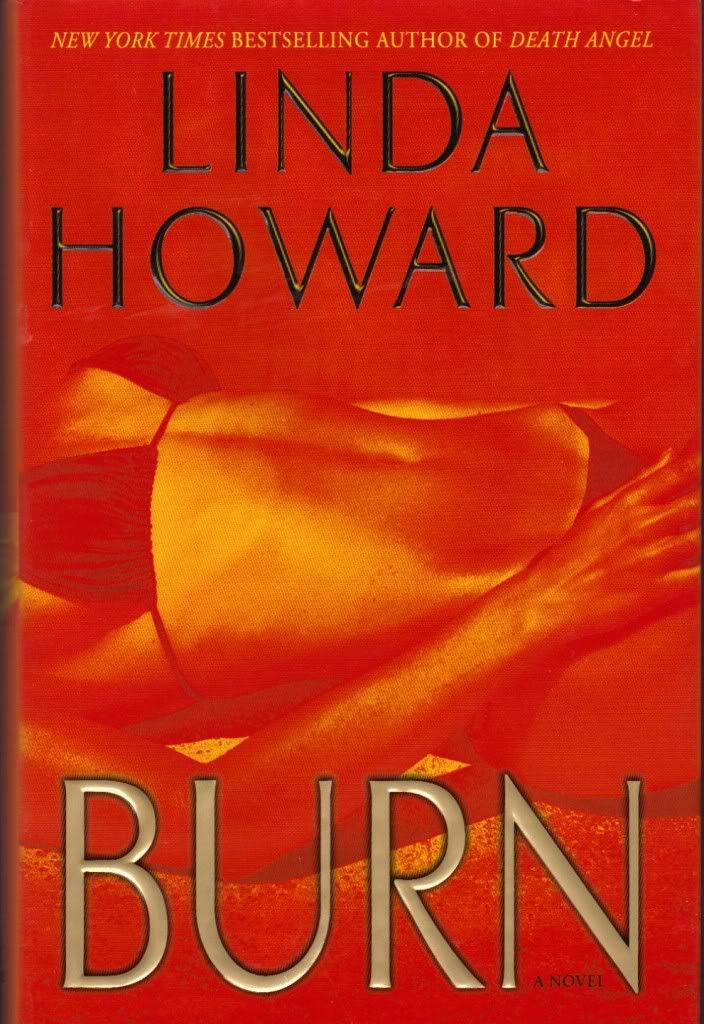
For a chance to win a copy of what I predict will be the most desired and fought-over hardcover at RWA National (no stampede required) in comments to this post name the title of a book to be published in the near future that you are anticipating most (or if you're not waiting on anything to hit the shelves yet, just toss your name in the hat) by midnight EST tonight, Wednesday, July 8, 2009. I will draw four names at random from everyone who participates and send the winners an unsigned hardcover copy of Burn by Linda Howard. This giveaway is open to everyone on the planet, even if you've won something here at PBW in the past.

Tuesday, July 07, 2009

LB&LI Details


In one week we'll kick off Left Behind & Loving It, my fourth annual week of virtual workshops here at PBW. For those of you who would like to join in, hold workshops on your blogs and have me link to them, please read this post for all the details.

Everyone is welcome to participate in LB&LI; there is no application process; you don't have to ask my permission or post on any specific topic. Be creative, share what you know and have fun. All I request of participants is that your workshop be writing- or publishing-related to keep it relevant to the event.

If you would like to have your LB&LI workshop listed here at PBW, send an e-mail to LynnViehl@aol.com with a subject line of LB&LI Info and the following info: your name/pseudonym/online handle, the name of your workshop(s), a link to where you will be posting the workshop(s), the date(s) the workshop(s) will be posted, and a brief description of your workshop topic(s).

Example:

Lynn Viehl
How to Post an LB&LI Workshop
http://pbackwriter.blogspot.com
July 7th
Details on how to participate in the 2009 Left Behind and Loving It virtual conference.


I will post your links daily here on PBW, and I will accept links to other LB&LI workshops at any time from now until midnight EST on July 19, 2009.

The schedule of my own workshops will be as follows:

Monday, July 13th: Conceptual Planning, Construction and Development -- an architectural approach to concept writing.

Tuesday, July 14th: Middlemarch -- plotting and writing the middle of the story.

Wednesday, July 15th: E-Future Part I -- first part of a two-day workshop on digital publishing.

Thursday, July 16st: E-Future Part II -- second part of a two-day workshop on digital publishing.

Friday, July 17th: Art vs. Life -- using your creative talents to find solutions to problems in your writing life and everyday life, especially when the two collide.

Saturday, July 18th: Diversify and Survive -- approaches and strategies to help strengthen your publishing career.

Sunday, July 19th: Agents and Writers -- the reality of literary representation, and how to deal with an agent after signing.

Monday, July 20th: Ask PBW Anything -- Open Q&A where you can grill me on anything writing- or biz-related.

Each day I will be holding a giveaway for my usual LB&LI goodie bags, filled with great books, cool gadgets, and neat writer junk. Along with these bags this year I'll also be giving away:

--A signed set of all seven the Darkyn novels, including an author-printed copy of my December novella e-book, Master of Shadows and an ARC of my first Kyndred novel, Shadowlight, which will not be released until October '09.

--A signed set of all eight StarDoc novels published to date (eight) plus the ninth, Crystal Healer, my August '09 release.

--A Mystery Art prize which may be a painting, quilt, or other artistic creation made by Yours Truly.

--A stack of my favorite how-to writing books, including an author-printed & signed copy of my own Way of the Cheetah

--A brand-new AlphaSmart Neo smart keyboard

--A BookWish (any book of the winner's choice which is available to order online, up to a max cost of $30.00 U.S.; I'll throw in the shipping)

--A MusicWish (any CD of the winner's choice which is available to order online, up to a max cost of $30.00 U.S.; I'll throw in the shipping)

--An ArtWish (a $50.00 U.S. gift certificate from Art.com)

Everyone who participates in the workshop by commenting will be entered into the drawing for that day's giveaway (if you don't want to be entered for the drawing, just note that in your comment.) All giveaways will have a 24-hour entry period, and comments will be closed when the next day's workshop is posted. All workshops will be posted at 12:00 AM EST on the date scheduled (unless there's a power failure or some other unforeseen computer problem, in which case, they'll be posted as soon as I can get back online.)

On Tuesday, July 21st, I will draw one name at random from everyone who participated by commenting at least once during the workshops, and grant the winner my LB&LI grand prize: your choice* of either a ASUS Eee PC 1005HA-P 10.1" Seashell Netbook or a Sony PRS-700BC Digital Reader.

As always, all of my giveaways during LB&LI are open to everyone on the planet**, even if you've won something here at PBW in the past.

*If you prefer another brand of Netbook or eReader I will be happy to substitute the brand/model of your choice as long as the purchase price is equal to or less than the purchase price for the models I've chosen for the grand prize.

**Those of you who are non-U.S. residents, please check into the customs regulations and restrictions regarding shipments of netbooks and eReaders to your country to see if there is any import or duty that you will have to pay for receiving it (wherever I send it, I will be insuring the shipment for my cost.) If you are my grand prize winner and would prefer a netbook or eReader from a vendor or manufacturer located in your country, I will be happy to substitute your preference as long as the purchase price is in U.S. dollars equal to or less than the purchase price for models I've chosen for the grand prize, and your overseas vendor accepts online orders from the U.S.

Monday, July 06, 2009

eReads Ten

Ten Things with Free eReads

Fictionwise currently lists 42 ebooks on their freebie page.

Random House has put up on Scribd Manifold Time by Stephen Baxter and Dark Fever by Karen Marie Moning (both are free for a limited time.) Note 9/3/10: Since Scribd.com instituted an access fee scam to charge people for downloading e-books, including those I have provided for free for the last ten years, I have removed my free library from their site, and no longer use or recommend using their service. My free reads may be read online or downloaded for free from Google Docs; go to my freebies and free reads page for the links. See my post about this scam here.

Finding Free Ebooks Blog is devoted to listing "websites LEGALLY distributing free ebooks, mostly novel length fiction."

Free Ebooks Blog also keeps track of the various freebies being offered, along with download requirements and any expiration dates.

Wiki.mobileread.com has an extensive list of free read links here.

Download unlimited free ebooks anytime at FreeEbooks.net.

From Kindle 2 Review, here's an extensive list of free ebooks for Kindle and Kindle 2.

The "most imitated" free ebook site, OnlineFreeEBooks.net, seems to have a lot of nonfic and manuals to offer.

To keep track of what Random House is putting out for free download (like Red Mars by Kim Stanley Robinson) bookmark their Suvudu.com site's free library page. Note 9/3/10: Since Scribd.com instituted an access fee scam to charge people for downloading e-books, including those I have provided for free for the last ten years, I have removed my free library from their site, and no longer use or recommend using their service. My free reads may be read online or downloaded for free from Google Docs; go to my freebies and free reads page for the links. See my post about this scam here.

Last but not least, as part of my one of my LB&LI workshops, I've posted the first three chapters of my novels Ghost Writer (paranormal mystery) and Lost Lake (paranormal YA) on Scribd. Note 9/3/10: Since Scribd.com instituted an access fee scam to charge people for downloading e-books, including those I have provided for free for the last ten years, I have removed my free library from their site, and no longer use or recommend using their service. My free reads may be read online or downloaded for free from Google Docs; go to my freebies and free reads page for the links. See my post about this scam here.

Sunday, July 05, 2009

Off to Party

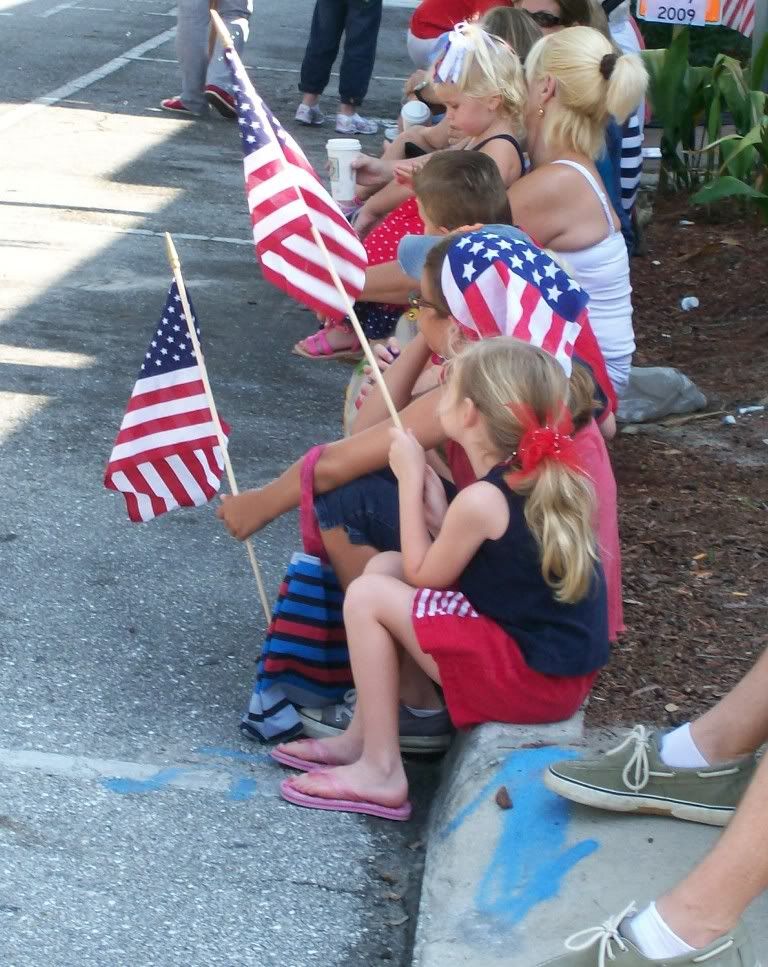
I hope you all are having a great weekend. So far I've had a blast, especially at the Independence Day parade in our town. One of our Congressman (the one I actually like) made an appearance, so I was able to wave and yell Happy 4th at him (although I probably should have yelled "Get back to Washington and do something about these taxes!")

There were plenty of politicians at the parade, but what I love seeing are the little kids -- to me they are the best part of America, our future:


Since my middle teen turns seventeen today, I'm going to bail on you guys again to spend time celebrating with the family. Enjoy the rest of your holidays, or your weekend, wherever you are.

Saturday, July 04, 2009

Wishing You

Friday, July 03, 2009

Buyer be Aware

I noticed when I ran in Books-A-Million the other day that they're having one of their Buy 4 Get the 5th Free paperback promotions. There were plenty of vamp and paranormal books on that table at my BAM; I saw all three of Christina Dodd's Darkness Chosen novels and most of Anne Rice's vampire books. My fourth Darkyn novel, Night Lost, was part of the promotion, too.

B&N.com has discounted minimum shipping for the holiday weekend; you can get free expedited (three biz days or less on in stock items) shipping for online orders of $10 (this is versus the usual $25.) This one is good through Sunday; see official details and the rest of the fine print here.

Anyone know of any bookseller discounts or freebies going on right now? Share the love in comments.

Thursday, July 02, 2009

LB&LI Graphics

I'm still not here, I'm a fig newton of your imagination. Honestly. But once I get this book out of here, which had better be yesterday, I will be answering e-mails and posting more details on the 2009 Left Behind & Loving It workshops.

In the meantime, I have a couple of graphics for LB&LI; mine is nothing fancy but everyone is welcome to use it on their site or blog with their workshop post(s). Also, a couple of neat ones from last year that were made by Alison Kent and Karen Duvall:


This is my 2009 logo.
Direct link: http://i259.photobucket.com/albums/hh289/LynnViehl/LBLIlogosmall.jpg


This one was created by Alison Kent.
Direct link: http://i259.photobucket.com/albums/hh289/LynnViehl/lbli.gif


This one was created by Karen Duvall.
Direct link: http://i259.photobucket.com/albums/hh289/LynnViehl/LBLIGraphic.jpg

Wednesday, July 01, 2009

Mine Again

I'm not really here, I'm still hammering away at the deadline. At least, tell my editor that if she asks.

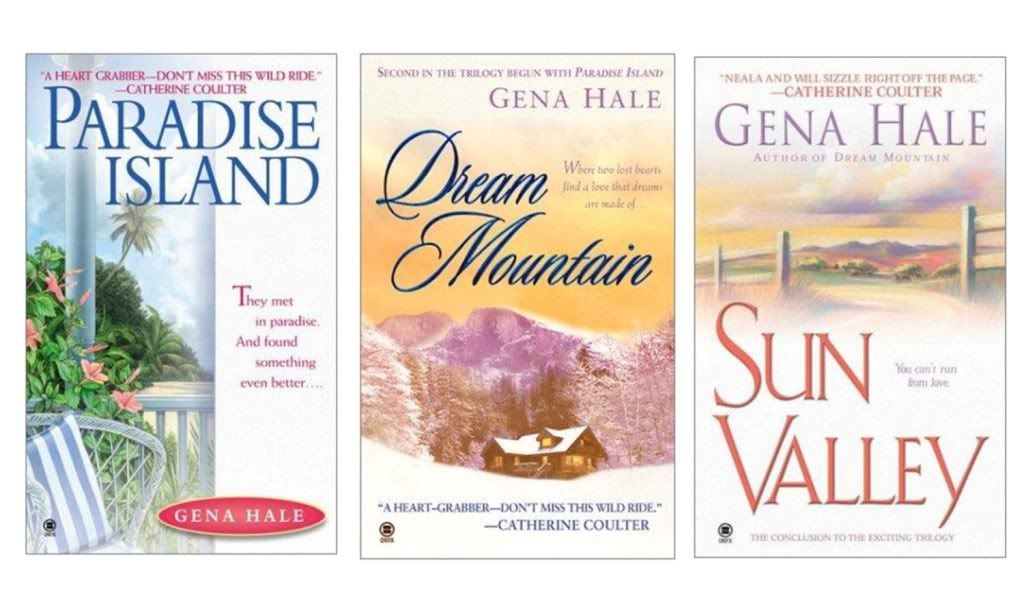
What I stopped in to post is some interesting news: the rights for my three Gena Hale romance novels (Paradise Island, Dream Mountain, and Sun Valley) have reverted back to me. This means the publisher no longer owns the rights to them -- they're mine again -- so I can pretty much do whatever I like with them.


These three novels were my first published romances (I'd classify them as old school contemporary/romantic suspense) and have been out of print for at least seven years. I've heard it's difficult if not impossible to find used print copies of them. Aside from possible bootlegs, there are no electronic copies of the books.

Lately a lot of authors have been self-publishing OOP or backlist titles with rights that have reverted back to them via Amazon or services like Scribd.com's new online store.* I thought about doing that, and it's still an option, but I don't know. I'm not convinced that's the way to go. Maybe it's the thundering of the herd in that direction that is scaring me off. *Note 9/3/10: Since Scribd.com instituted an access fee scam to charge people for downloading e-books, including those I have provided for free for the last ten years, I have removed my free library from their site, and no longer use or recommend using their service. My free reads may be read online or downloaded for free from Google Docs; go to my freebies and free reads page for the links. See my post about this scam here.

I could see if I could publish these again in some sort of limited edition via a small press (or do it myself via Lulu or what have you) but that's going to make them expensive to purchase -- another thing I'm not crazy about.

I also thought about posting at least one of them for free on the internet (Paradise Island, the first one, was the most popular, so that would be my choice.) That would be cool, and a way for me to give something back to the romance readers who followed me as Jessica Hall (before I went all Darkyn on them.)

Not sure what I'm going to do, so I thought I'd ask you guys for some opinions. If you were walking this mile in my moccasins, what would you do with these three books?

Tuesday, June 30, 2009

Off to Write


Create a sticky note online for your blog at Wigflip.com's sticky note generator, Superstickies (link swiped from Gerard over at The Generator Blog.)

Monday, June 29, 2009

Practical Ten

Ten Things That Do Useful Things

Freeware caution: always scan free downloads of anything for bugs and other threats before dumping the programs into your hard drive.

ClocX is a free customizable analog clock for your desktop that can be programmed with alarms that play a sound file, launch a message box or run an application of your choice (OS: Win 9x/ME/NT/2K/XP)

Free Virtual Keyboard is a "lightweight, multilingual and finger friendly virtual on-screen keyboard . . . works on any Windows based UMPC with a passive touchscreen (Ultra-mobile PC, Tablet PC and Panel PC). If you spend a lot of time responding to e-mail or jotting down notes on your mobile computer and find your hardware keyboard awkward or too small, a screen software keyboard may be just the improvement you've been seeking. This handy keyboard has keys large enough to be typed with the fingertips" (OS: Win 2000/XP/2003/Vista/7)

For those of you writing at home with small children, Kid-Key-Lock is "a simple program to lock specific keyboard and mouse functions. You can use kid-key-lock to lock any of the mouse buttons, double clicks and/or the mouse wheel" (OS: Windows XP)

Lens is a free screen magnifier that can measure pixel distance, has zoom factors of 1 to 10, will keep its window in sync with the mouse, has a lock view option to keep to a defined screen area and a user defined refresh rate (OS: Win 9x/ME/2K/NT)

Monitor Bright "reduces with a simple trick the monitor brightness. Useful to use the PC at night without getting blind if the minimum brightness that can be obtained adjusting monitor settings is still too high if compared to ambience brightness. Supports multi monitor systems" (OS: Windows 2000 or higher; Net Framework 2.0 or higher)

Pearls is a "small reminder program" that "periodically displays a line or paragraph of text from a file." Good for people who don't use a timer while on the internet and need a reminder to get off and go back to work (OS: Win9x/Me; designer notes that you'll also need the MS Layer for Unicode)

Quotepad "saves the text selected on the screen without forgetting its source"; has a multilingual interface (OS: Windows 2000/XP/Vista/Windows 7)

Reading Ruler is a transparent virtual ruler to help you keep your place when reading from the screen (OS: Windows XP and Vista; designer notes that Java 6 Update 12 is required)

Sanvient is a "input support utility" that "vastly improves your productivity when you must cut and paste repetitive text" (OS: Windows 2000/XP/Vista)

Transmute will "convert, synchronize, sort, organize and remove duplicates from your bookmarks and more"; helpful if you want to try out or work with different web browsers (OS: Win 9x/ME/NT/2K/XP/2K3/Vista)

Sunday, June 28, 2009

Winners

I'm glad to see I'm not the only one who has a hard time waiting for certain authors -- and there is nothing more flattering for an author, I think, than knowing that your readers are impatient for the next book.

We revved up the magic hat, and the winners of the Unexpected Answers giveaway are:

Katherine Hazen

Tami in Jacksonville

Cybercliper

Anita

Lori T

Bethany K. Warner

Kristi

Rabia

Tez Miller

Carissa Thorp

Winners, when you have a chance please send your full name and ship-to address to LynnViehl@aol.com, and also let me know if you'd like me to send a copy of The Iron Hunt along with your copy of Darkness Calls, and I'll get these packages out to you. Thanks to everyone for joining in.

Saturday, June 27, 2009

Hawks Cry

Brakes are squealing outside the garage window; the guys are here to pick up the recycling bin. Yes, I'm obnoxious, I recycle. There's a huff -- the sound of air releasing -- that follows the high-pitched metallic screeching from the truck because it has air brakes, I think. Not sure. Must look that up.

We have two clocks in the garage, and both tick. They're on either side of me so it should be like stereo ticking, only they're half a second out of sync. I can tell you which clock is which from the type of tick: the tap of the one I bought at the dollar store, and the click of the one the kids gave their Dad for Christmas, which is all silver so their old parents can't see the hands very well (which is why there are two clocks in the garage.) I want to pull the batteries on both and restart them so that they're both in sync. Sometimes I want to throw out all the clocks in the house. I never do either.

My daughter is composing music using a free trial download of Finale Songwriter software on her computer; she has been in semi-secret for some time now. She was finally happy enough with one piece to allow me to hear it yesterday. She didn't like it (of course) but it was just like her -- gentle, whimsical, and haunting. I loved it. It's now stuck in my head and plays on an endless loop. Because it's her music I don't mind, although sometimes what she does with her music scares me a little. I love music but I'm tone-deaf and I can't even read it; I can't help her with this. I'm still buying her the software, of course.

I have chronic bronchitis which gets worse during the first month of summer when it rains almost every day. I'm now just getting over a moderately bothersome flare-up, so when I exhale the remaining constriction tags any deep breath with a little whistle at the end. It's annoying, I feel a bit like a tea kettle that can't decide if it wants to boil.

The wrens are in the yard, and so are the cardinals; I've been here long enough to separate their songs now. We haven't had too many blue jays this spring, so I rarely hear their unpleasant noises. The various hawks that usually hang around our pines at the back of the property are also off somewhere else. Wrens cheep, cardinals beep, blue jays fuss, but hawks really do scream, in a piercing, single-note fashion. I still think of screams as extended sounds, however, so I revise that in my head to a cry. Hawks cry. The two sandhill cranes I discovered in the yard the other day are bitching at each other somewhere in the neighborhood; I can hear the very loud clatter of their bills echoing outside. The little white herons picking bugs out of my neighbor's grass make no sound at all. I was never much of a bird person before we came here; now I'm mildly obsessed with identifying and learning about them.

Someone's lawn man has gone to work a few streets over, but if I listen hard I can hear beyond that. I can hear another neighbor's tractor as he mows his pasture, the faint sounds of rumbling and rushing of traffic from the state road, and the occasional booming and hammering from the construction site a mile away. Then a twin-engine plane hums overhead, the pitch rising and falling as it approaches and departs. It's a week day, a busy day. The world rolls on.

When we first moved here I thought it was too quiet. I grew up three blocks from a private airport and I've always lived in the suburbs or the city; I'm used to a lot of noise. Sometimes the silence seemed so profound I felt as if I were in a vacuum, but now my ears are clearer, sharper. There seems to be a lot more I can hear, so much more when I was living in busier, crowded places. I'm paying more attention, I'm hearing the world differently. How many things did I miss when I wasn't listening?

All right, your turn. What do you hear right now?

Friday, June 26, 2009

Unexpected Answers

The walk started slowly, deliberately. I asked my questions and got my answers. Every time I stood for a moment or two I could feel the energy come up through the soles of my feet. Towards the end I began to feel at one with the pathway. Some unexpected answers came through... -- (unidentified) Alex Champion labyrinth walker

Last summer author Marjorie M. Liu published The Iron Hunt, the first book in her new Hunter Kiss series. The novel simply blew me away, and then went and haunted me for the next twelve months. She did things in that book I didn't think were possible. Like a word magician, she turned prose into poetry and then back into prose. She took urban fantasy to another level, and made it towering and terrifying and epic and wonderful.

It was hard to wait almost an entire year for the next book in the series, Darkness Calls. I often thought about contacting Marjorie and dropping some subtle hints to see if I could get an advanced copy of the manuscript, such as e-mailing her with please let me read anything you have finished even if it's just a couple of chapters I beg you but I was afraid I'd interrupt her writing during a bad writing session and then she'd lose her train of thought and mess up something which would then be the last straw and then she'd quit being a novelist and tell everyone it was all because of me bugging her. So I forced myself to be polite and wait, and while I was sulking I reread The Iron Hunt about a dozen times.

As hard as it was to stay out of her hair, being patient and not bothering the novelist sometimes results in a little good reading karma. Recently (with no hints or bugging whatsoever from me) Marjorie was kind enough to offer me an advance copy of Darkness Calls. Which I of course grabbed in a heartbeat; I'm polite, not stupid.

In the new Hunter Kiss novel, Maxine is back with her boys, a small horde of demons who spend the daylight hours living on her body as tattoos. After the sun sets, the demons leave her skin and come alive to protect Maxine and fight by her side. They have a lot of protecting and fighting to do, as someone wants Maxine dead -- someone who also knows the only moment between daylight and darkness when she is vulnerable. But is the killer trying to get rid of her, or use her to get to her man Grant Cooperon? Grant, an ex-priest demon reformer with a mysterious past, has powers unlike any Maxine has ever encountered -- and she'll need everything he has and more when they discover exactly what is after them both, and why.

Marjorie is writing all sorts of things these days -- manga, paranormal romance, X-men novelizations -- but personally I think this series is the author at her best. There's just something incredibly special about these characters and this labyrinthine storyline. It has it all -- amazing writing, hypnotic storytelling, and wholly unpredictable twists/turns -- and gave me the most fun I've had reading all year.

But as always, you don't have to take my word for it. In comments, name a series or author you find it difficult to wait for (or if you're not in any hurry to read anyone, just toss your name into the hat) by midnight EST on Saturday, June 27, 2009. I'll draw ten names at random from everyone who participates and send the winners an unsigned copy of Darkness Calls by Marjorie M. Liu. Also, if any of the winners have not yet read The Iron Hunt, I'll send along an unsigned copy of that as well so you have both books. This giveaway is open to everyone on the planet, even if you've won something here at PBW in the past.

(If you stop by Genreality for my Friday morning post, I'll also be having another giveaway there for Marjorie's Hunter Kiss novels -- and those will be signed copies.)